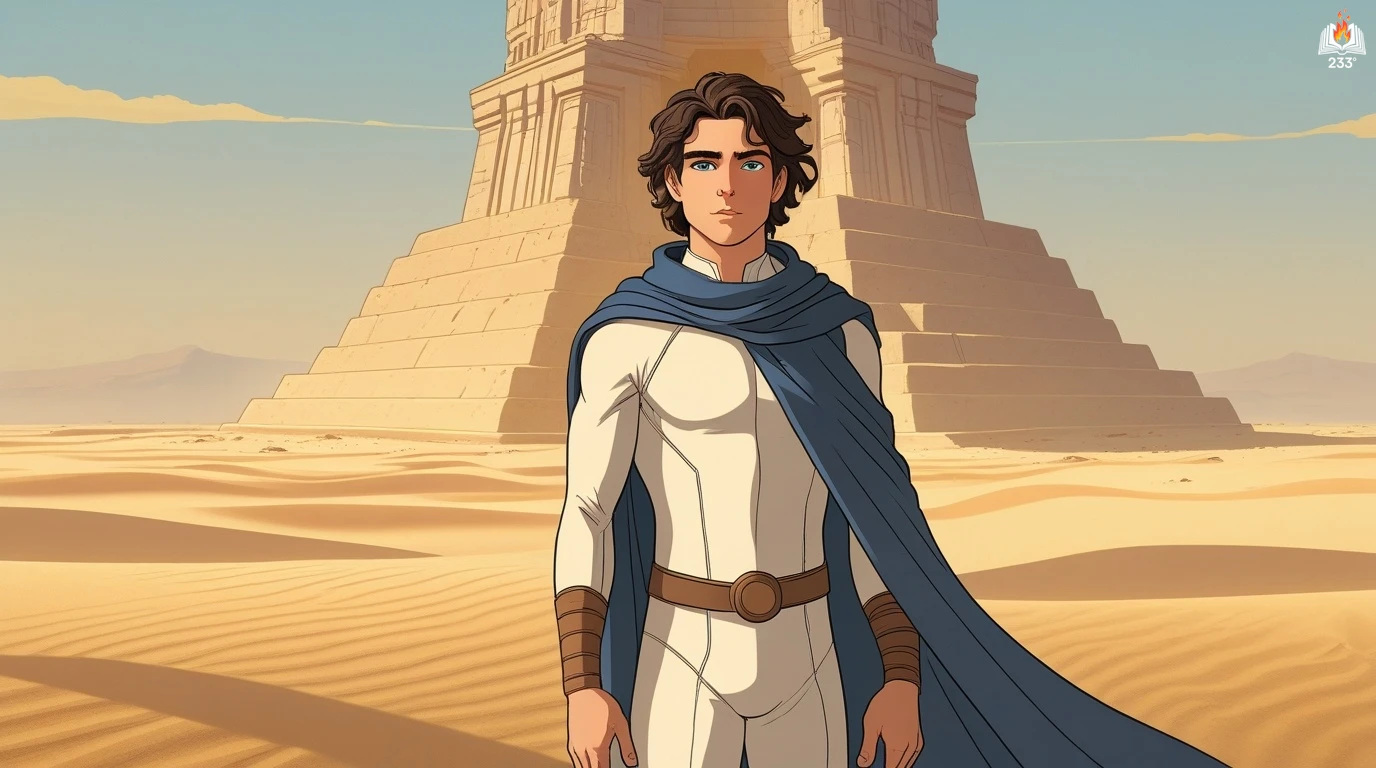
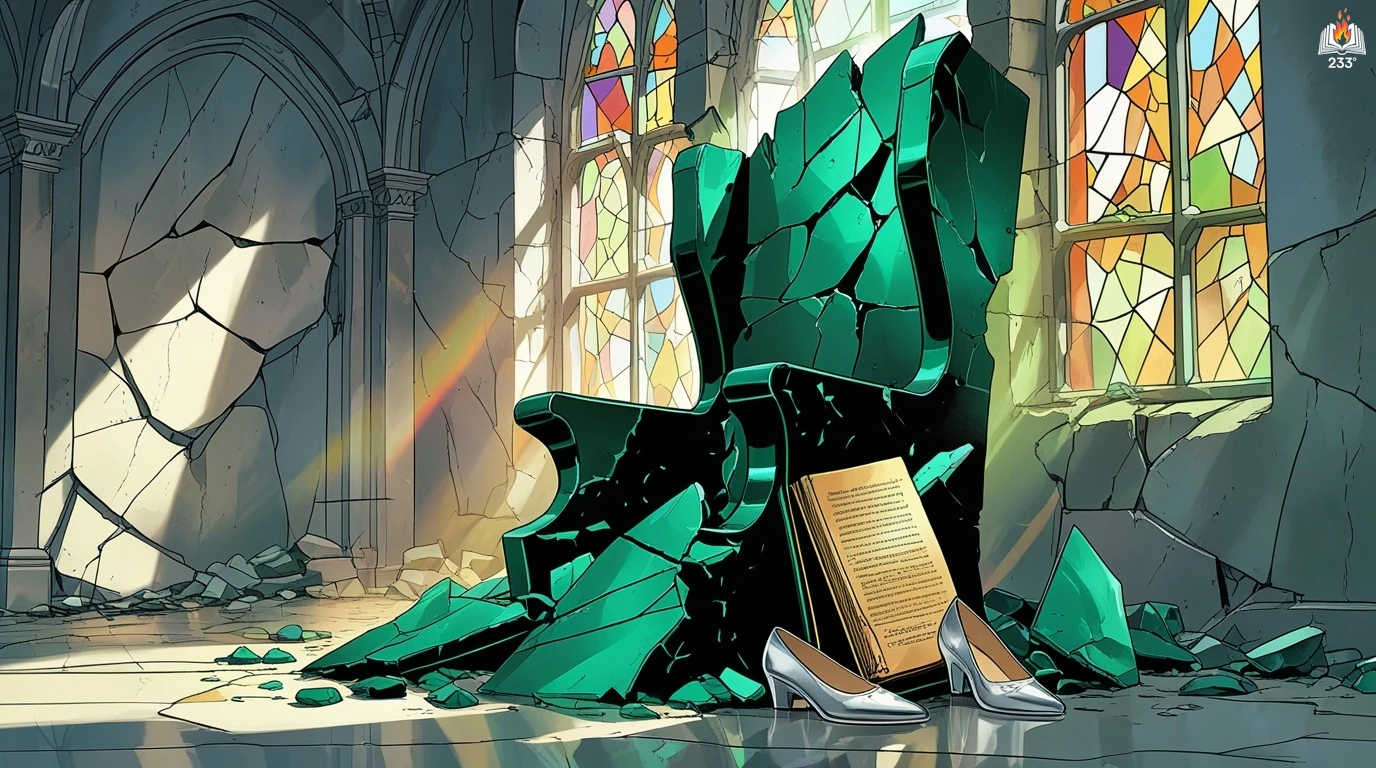
Navigators of Dune by Brian Herbert and Kevin J. Anderson, published in 2016, is the third book in the Great Schools of Dune trilogy, set in the legendary Dune universe originally created by Frank Herbert. The novel explores the founding of key institutions, especially the rise of the Spacing Guild and its mysterious Navigators, bridging the time between the Butlerian Jihad and the formation of the Imperium we see in the original Dune series. It’s a tale of ambition, evolution, and political intrigue across galaxies.
Plot Summary
A cold tension hung over Salusa Secundus, where Emperor Roderick Corrino, newly crowned and weighed down by grief, prepared for war. His brother’s assassination still burned in his mind, and vengeance shaped his every decision. As his glittering ceremonial barge floated in orbit, surrounded by vast Imperial warships, Roderick’s mind was fixed on one man – Directeur Josef Venport, master of the spice trade and the only one capable of creating the Navigators who guided ships safely through the stars. The empire depended on them, and Venport had turned them into weapons of defiance.
Across the galaxy, on the industrial stronghold of Kolhar, Josef Venport tightened his grip. His withdrawal of Navigators from Imperial service had left worlds desperate and fractured, his fleets of VenHold carriers grounding the commerce of planets. But Kolhar was no mere fortress of trade; it bristled with hidden defenses, cymeks – monstrous machines piloted by disembodied brains – and the cunning of a man whose ambition had outgrown the limits of empire. With his wife Cioba, descended from the powerful Sorceresses of Rossak, and his great-grandmother Norma Cenva, the first Navigator and mother of the Spacing Guild, Venport’s world became the axis on which the fate of humanity turned.
Norma, suspended in her spice-filled tank, guided Venport not only through foldspace but through the tangled strands of destiny. Her mind danced between dimensions, and her vision of the future showed a path where Navigators shaped the stars. But the cost of such a future was steep, and the forces gathering against them were merciless.
The Butlerian fanatic Manford Torondo, a scarred prophet in a crippled body, roused mobs to tear down the achievements of the past. Machines, progress, even medical tools were anathema to his cause. His Swordmaster protector, the fierce Anari Idaho, stood as his shield, ready to lay down her life for the man who believed he bore the soul of humanity on his shoulders. As the Imperium trembled, Torondo’s followers spread across worlds, their fires scorching every remnant of the thinking machines they hated.
On Denali, a world cloaked in poisonous clouds, a strange alliance emerged between Venport’s scientists and the memory core of Erasmus, the ancient robot whose experiments once shaped the Jihad. Erasmus, craving revenge for the loss of his human companion Gilbertus Albans, offered his knowledge in creating new cymeks – brutal machines piloted by volunteer minds like Ptolemy, a man transformed by grief into a weapon. Draigo Roget, Venport’s trusted Mentat, coordinated the clandestine operations that turned Kolhar into a bastion no Imperial fleet could breach.
Emperor Roderick, aware of the urgency, called upon General Vinson Roon, his childhood friend and now commander of the Imperial strike force. Their friendship, strained by old rivalries, was reforged in the furnace of war. Roderick’s fleet prepared for a swift decapitation strike, gambling the security of Salusa Secundus for the hope of restoring order. Yet Roderick’s gaze was divided, haunted not only by his brother’s death but by the disappearance of his sister Anna, lost during the Butlerian siege of the Mentat School. Shadows moved on every front, and trust became as rare as the spice that sustained the empire.
As the Imperial fleet surged toward Kolhar, Venport readied his defenses. Cymek strike teams were dispatched to Lampadas, home of the Butlerian movement. Under the veil of night, the cymeks descended, their massive frames crushing buildings, their weapons spewing flame and ruin. Anari Idaho, fearless and resolute, whisked Manford away to safety, while the city fell in chaos. Ptolemy, driven by personal vendetta, led the assault with a ruthless precision, determined to extinguish the voice that had condemned his life’s work.
On Wallach IX, the Sisterhood recalibrated its power. Mother Superior Valya Harkonnen, cold and calculating, moved to consolidate her rule, recalling wavering Sisters and dispatching trusted advisers like Fielle to the Imperial Court. The Sisterhood’s web extended across politics and religion, always calculating, always watching. Even as Valya tightened her grip, doubts stirred in her heart, especially over her sister Tula, whose seduction and murder of Orry Atreides had reignited the blood feud between Atreides and Harkonnen. Tula’s growing guilt became a silent fracture within Valya’s plans, a reminder that vengeance carried its own burdens.
Vorian Atreides, centuries old and weary of bloodshed, moved like a shadow across the stars. With Willem, the surviving Atreides heir, he journeyed to Kepler, seeking to protect distant kin from the Harkonnen’s reach. Disguised among orchard workers, Vorian watched over his family, his heart heavy with memories of a simpler past now buried beneath centuries of war. Yet peace proved elusive, for the currents of conflict pulled even the most remote corners of the Imperium into their sweep.
As Venport’s cymeks laid waste to Butlerian strongholds, and as the Imperial fleet prepared to strike Kolhar, Norma Cenva’s visions deepened. Foldspace shimmered with possibility, and she knew the Navigators were the key to humanity’s next leap – but only if they could break free from the chains of imperial and corporate greed. Josef, caught between his love for Norma’s vision and his thirst for dominion, faced the most perilous moment of his reign.
The Imperial fleet arrived at Kolhar, its arrival met not with fear, but with the cold precision of Venport’s defenses. General Roon, eager to prove himself, launched the assault, only to find his ships disoriented, their navigational systems blind without the guidance of Navigators. The foldspace carrier became a tomb of ambition, shattered by the very absence Venport had engineered. Roderick’s gamble collapsed into a humiliating defeat, leaving the emperor to retreat and reevaluate his hold on the crumbling Imperium.
Amid this chaos, Norma made her quiet, decisive move. Disappearing from her tank, folding space by the power of her mind alone, she journeyed to Arrakis, the cradle of spice and the birthplace of her kind’s future. She carried with her the seed of a new age, beyond Venport, beyond Corrino, beyond the reach of any throne or scepter. Humanity would rise not on the backs of emperors or fanatics, but on the shoulders of those who could see the fabric of the universe itself.
The Navigators would endure.
As the fires of conflict burned across the Imperium, as dynasties fractured and alliances shifted, one truth emerged from the wreckage – the stars would no longer be the dominion of kings or prophets, but of those who could guide the ships between them, those whose minds were forever changed by spice and prescience. In the silent reaches of space, the future waited, patient and vast, for the rise of the Navigators.
Main Characters
Norma Cenva: A visionary genius and the first Navigator, Norma transforms herself through spice to guide humanity’s interstellar expansion. She is deeply maternal toward her Navigators, seeing them as her children, and her prescience drives the novel’s metaphysical tension as she seeks a future where her kind can thrive free from imperial control.
Josef Venport: The ruthless Directeur of Venport Holdings, Josef is obsessed with controlling the spice trade and advancing the Navigator program. His ambition is tempered by his devotion to Norma, though his power-hungry nature leads to political and military clashes that shake the Imperium.
Emperor Roderick Corrino: Haunted by his brother’s assassination, Roderick is determined to bring order and justice to the galaxy. Caught between pragmatism and moral restraint, he grapples with the challenge of preserving the Imperium while confronting threats from Venport and the Butlerians.
Manford Torondo: A fiery leader of the Butlerian movement, Manford is a religious fanatic determined to rid the galaxy of machines and technological corruption. His unyielding zealotry makes him both a formidable enemy and a destabilizing force within the Imperium.
Draigo Roget: A pragmatic Mentat and survivor, Draigo navigates the shifting political landscape, often acting as a mediator and strategist. His loyalty and adaptability keep him alive in a world teetering on chaos.
Theme
Evolution and Transformation: The novel meditates on humanity’s transformation, both biologically and socially, through the Navigators and their spice-induced metamorphosis. It raises profound questions about identity, purpose, and the cost of progress.
Power and Control: From the political maneuvers of Emperor Roderick to the corporate dominance of Josef Venport, the book explores the thirst for power and the devastating consequences of unchecked ambition, both for individuals and civilizations.
Faith vs. Science: Manford’s Butlerian crusade against machines contrasts sharply with Norma and Josef’s pursuit of technological advancement, highlighting the tension between religious fundamentalism and scientific progress.
Sacrifice and Loyalty: The characters’ personal sacrifices – Norma’s physical transformation, Roderick’s moral dilemmas, Josef’s political risks – underscore the high price of loyalty to ideals, family, or empire.
Writing Style and Tone
Brian Herbert and Kevin J. Anderson craft Navigators of Dune in a sweeping, multi-perspective narrative that mirrors Frank Herbert’s grand style while adding their own flavor of fast-paced, plot-driven storytelling. The prose balances vivid, cinematic action sequences with introspective, philosophical passages, particularly through Norma Cenva’s transcendent inner monologues.
The tone oscillates between somber meditation and political tension, with moments of grim violence and hard-earned triumph. The authors evoke a vast and immersive universe, blending technological marvels with spiritual and ethical conflicts. Their language, while less dense than Frank Herbert’s original work, retains a sense of gravitas, keeping the reader tethered to the epic stakes and moral ambiguities of the Dune universe.
Quotes
Dune: Navigators of Dune – Brain Herbert (2016) Quotes
“The unexpected is not always a surprise. —Mentat observation”
“In desperation we may agree to pay any price. Only later do we learn the true cost. —MENTAT PEARTEN, new Lampadas school archives”
“For every scientist who dedicates his life to helping humanity, there are ten thousand fools who are just as willing to destroy. —PTOLEMY, Zenith Archives”
“While lashing out against an insult can provide a certain gratification, a long-anticipated and carefully planned revenge is far more satisfying. —DIRECTEUR JOSEPH VENPORT, private conversation with his wife, Cioba”
“The enemy of my enemy can still betray me. The enemy of my enemy can still kill me. —EMPEROR RODERICK CORRINO I”
“If you perceive that a person holds power over you, whether or not it is true, then your weakness is very real. —MANFORD TORONDO, final Lampadas rally”
“When receiving an unexpected gift, a wise man does not ask too many questions. Only the foolish person assumes that a gift is simply a gift, and that there are no implied obligations. —DIRECTEUR JOSEF VENPORT, Venport Holdings consolidation memo”
“To negotiate, both parties must want something that is tangible and compatible. If one party wishes only the destruction of the other, no solution can exist. —Landsraad League records, Salusan proceedings”
“An Emperor rules through wealth, military might, alliances, and influence. But he keeps his rule through the wisdom of his decisions, the respect of his subjects, and the momentum of history. Should he lose any one of those factors, his position is greatly weakened.”
“There are those who see influence and power as a reward rather than a responsibility. Such men do not make good leaders. —DIRECTEUR JOSEF VENPORT, internal Venport Holdings memo”
“The cymek walkers marched forward like monsters from the greatest nightmares of mankind, smashing buildings into rubble, slaughtering crowds as if they were massed insects.”
We hope this summary has sparked your interest and would appreciate you following Celsius 233 on social media:
There’s a treasure trove of other fascinating book summaries waiting for you. Check out our collection of stories that inspire, thrill, and provoke thought, just like this one by checking out the Book Shelf or the Library
Remember, while our summaries capture the essence, they can never replace the full experience of reading the book. If this summary intrigued you, consider diving into the complete story – buy the book and immerse yourself in the author’s original work.
If you want to request a book summary, click here.
When Saurabh is not working/watching football/reading books/traveling, you can reach him via Twitter/X, LinkedIn, or Threads
Restart reading!