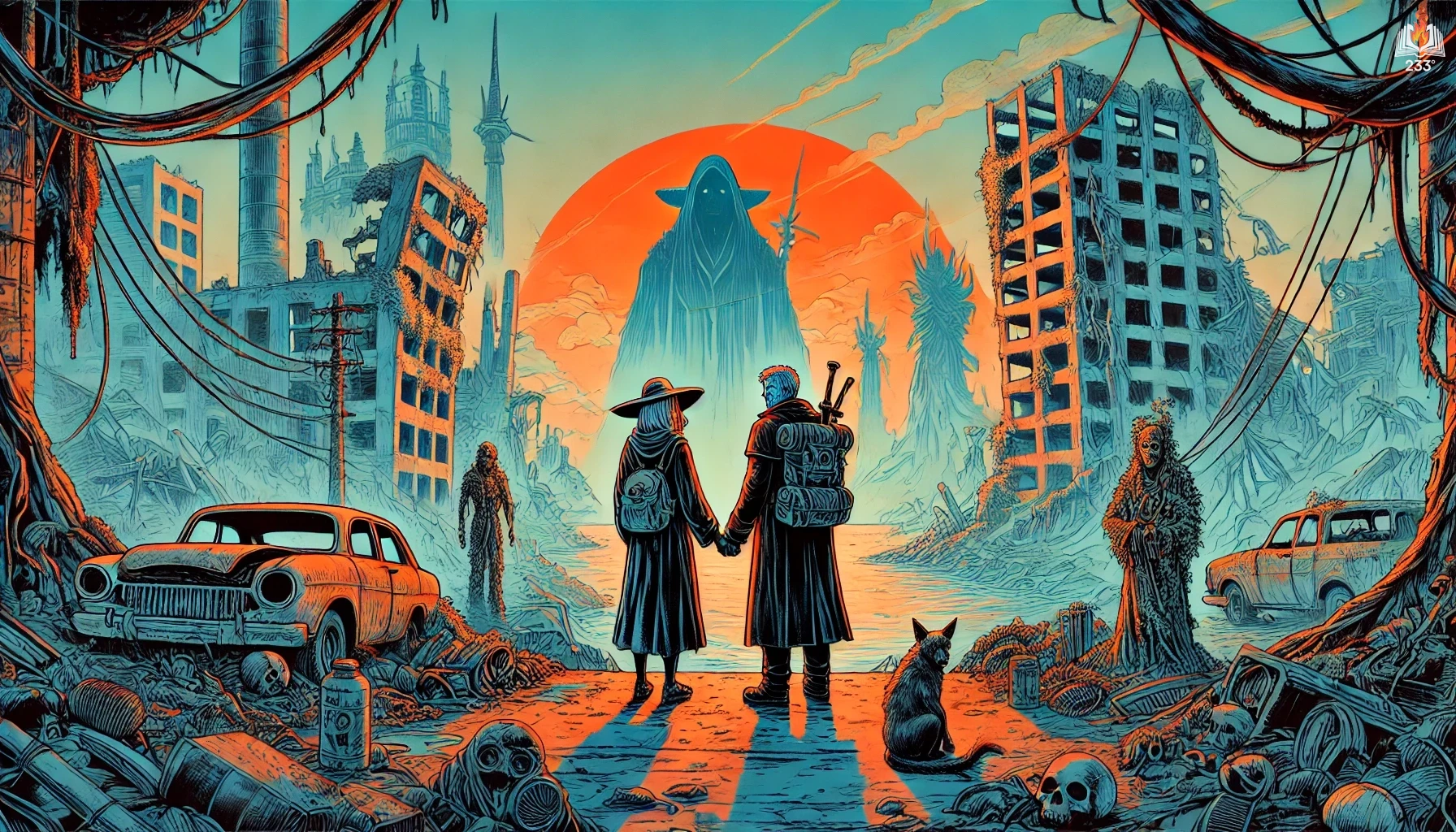
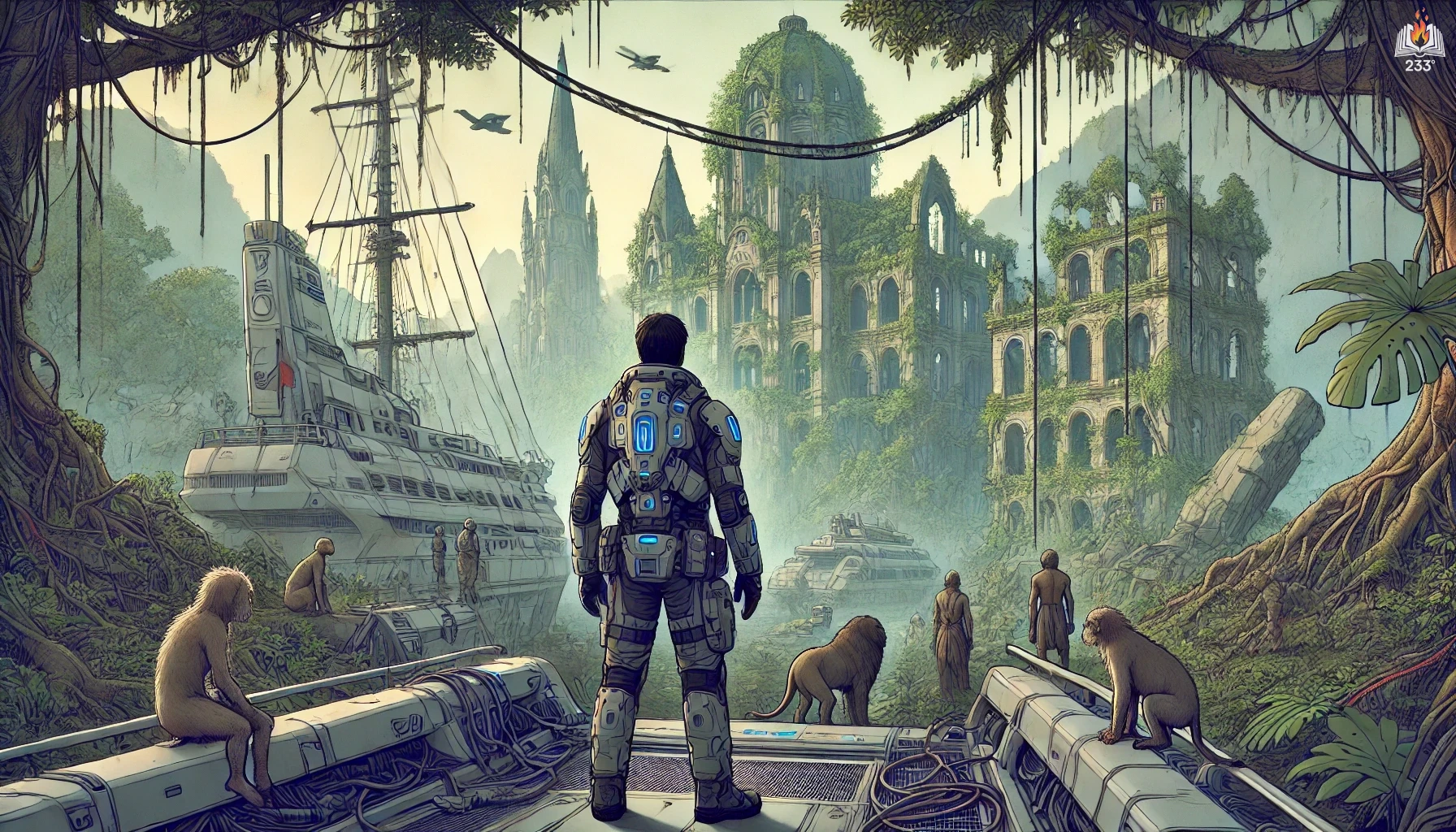
“Brave New World Revisited” by Aldous Huxley, published in 1958, is a thought-provoking series of essays reflecting on the themes of his earlier dystopian novel, Brave New World. With a sharp analytical eye, Huxley examines the socio-political trends of the mid-20th century, exploring how his fictional vision of a totalitarian, hedonistic society was rapidly becoming a plausible reality. This companion work offers insights into propaganda, overpopulation, and human behavior, deepening the original narrative’s philosophical and ethical discourse.
Plot Summary
The world is on the brink of transformation. What once seemed like a distant possibility is now approaching with unsettling speed. The forces of progress, technology, and ideology have aligned to shape societies in ways both remarkable and perilous. Beneath the surface of humanity’s advancements lies a world drifting closer to a state of control, uniformity, and manipulation.
The tale begins with a sobering truth: overpopulation. From the quiet villages to the bustling metropolises, the earth teems with life. Yet, this abundance comes at a cost. Resources strain under the weight of growing demands, and the delicate balance of human needs falters. The trajectory is unsustainable, and the consequences are dire. In regions once abundant, the looming specter of scarcity fosters instability. When nations become overcrowded, individual freedoms fade, yielding to centralized power and authoritarian rule. The population swells, but humanity’s liberty dwindles.
Hand in hand with overpopulation comes the rise of over-organization. Institutions once designed to serve the people grow in scale and complexity until they overshadow individuality itself. Efficiency becomes the highest virtue, reducing human lives to mere cogs in a vast, impersonal machine. The shift from small, self-sufficient communities to sprawling bureaucracies brings with it a chilling uniformity. People lose their uniqueness, their voices muted by the hum of mechanization and the relentless demand for conformity. The pursuit of order, while noble in moderation, veers dangerously into the realm of tyranny.
Against this backdrop emerges a new kind of governance, one that wields propaganda as its primary weapon. Unlike the crude instruments of fear and violence used in darker regimes, these modern methods of control are subtle and seductive. Propaganda takes on a dual face—one that flatters reason while simultaneously exploiting emotion. Rational arguments are deployed alongside manipulative appeals to primal instincts. The result is a populace swayed not by force, but by a sense of voluntary submission. The power of mass communication amplifies this effect, with media streams shaping perceptions, desires, and beliefs until the individual can no longer discern truth from illusion.
Amid these tides of change, a question arises: what of education? Once a beacon of enlightenment, education now stands at a crossroads. It possesses the potential to liberate or indoctrinate. In the wrong hands, the classroom becomes a tool for enforcing conformity rather than cultivating critical thought. Hypnopaedia, or sleep-teaching, emerges as a method of instruction that bypasses reason, implanting ideas directly into pliable minds. The implications are staggering. Minds that could challenge authority and innovate are instead programmed for docility, creating a society content with mediocrity and passivity.
The story weaves through the realm of persuasion, exploring the means by which individuals are conditioned to accept their lot in life. Chemical manipulation, once the domain of fiction, finds a foothold in reality. Substances designed to dull discomfort or heighten pleasure serve as instruments of control. The promise of happiness becomes a chain, binding people to lives of shallow fulfillment. Beneath the bliss lies a calculated effort to suppress dissent, ensuring that no one feels the urge to question or resist.
The arts, too, are swept into this tide of manipulation. Once a reflection of human complexity, art becomes a tool for distraction. In this world, creativity is harnessed not to challenge norms but to reinforce them. Music, literature, and visual expression are stripped of their transformative power, reduced to mere entertainment. The individual is placated, lulled into complacency by a steady stream of diversionary delights.
Yet, amidst these warnings, there is a glimmer of hope. The narrative turns toward the idea of freedom—its preservation, its fragility, and its necessity. Education is reframed as a path to empowerment, one that must emphasize critical thinking, self-awareness, and resilience. The freedom to think, to choose, to dissent—these are the pillars of a life worth living. The path to freedom, however, is not without challenges. It requires vigilance and effort, a willingness to confront the allure of comfort and convenience.
In the closing reflection, the story offers a vision of what might be done to avert the darker possibilities of the future. Awareness, dialogue, and action are the keys to countering the forces of control. By cultivating a society that values individuality, reason, and compassion, humanity can chart a course away from the precipice. The world’s destiny is not fixed; it remains in the hands of those who are willing to think, to question, and to act.
As the narrative concludes, the future hangs in balance—a choice between freedom and submission, individuality and conformity. The question is not whether change will come, but how it will shape the lives of those who inhabit this ever-evolving world.
Main Characters
While not a fictional narrative, the work indirectly revisits the archetypes and social structures from Brave New World, such as the engineered Alphas and Betas, the soma-dependent masses, and the authoritarian World Controllers. These conceptual entities are used as lenses through which Huxley critiques real-world dynamics, including the rise of centralized power and psychological manipulation.
Theme
- Overpopulation and Resource Scarcity: Huxley delves into the impact of population growth on individual freedoms, societal stability, and environmental sustainability.
- The Mechanization of Human Behavior: A key theme is the increasing dehumanization caused by over-organization and technological advancements that prioritize efficiency over individuality.
- Propaganda and Manipulation: Huxley explores the methods of mass control, contrasting the brutal force of Orwell’s 1984 with the seductive pleasures of his envisioned dystopia.
- Erosion of Individual Freedom: The book warns of the subtle ways freedoms can be eroded through consumerism, conformity, and psychological conditioning.
- Ethical Dilemmas in Science and Technology: Huxley questions the morality of scientific progress without consideration for its social implications, highlighting potential abuses of power.
Writing Style and Tone
Huxley’s writing in Brave New World Revisited is analytical and contemplative, blending scientific rigor with philosophical inquiry. His tone alternates between alarmist urgency and reflective skepticism, engaging readers with vivid analogies, historical references, and logical arguments. The essays are structured to challenge conventional assumptions while fostering critical thinking. Huxley’s mastery of prose allows him to articulate complex ideas with clarity, making the book both accessible and intellectually stimulating.
Quotes
Brave New World Revisited – Aldous Huxley (1958) Quotes
“Ironically enough, the only people who can hold up indefinitely under the stress of modern war are psychotics. Individual insanity is immune to the consequences of collective insanity.”
“An unexciting truth may be eclipsed by a thrilling falsehood.”
“Unlike the masses, intellectuals have a taste for rationality and interest in facts. Their critical habit of mind makes them resistant to the kind of propaganda that works so well on the majority. Among the masses „instinct is supreme, and from instinct comes faith...”
“Any culture which, in the interests of efficiency or in the name of some political or religious dogma, seeks to standardize the human individual, commits an outrage against man’s biological nature.”
“Our epoch has been give many nicknames--the Age of Anxiety, the Atomic Age, the Space Age. It might, with equally good reason, be called the Age of Television Addiction, the Age of Soap Opera, the Age of the Disk Jockey.”
“Nonsense which it would be shameful for a reasonable being to write, speak or hear spoken can be sung or listened to by that same rational being with pleasure and even with a kind of intellectual conviction.”
“In 1984 the lust for power is satisfied by inflicting pain; in Brave New World, by inflicting a hardly less humiliating pleasure.”
We hope this summary has sparked your interest and would appreciate you following Celsius 233 on social media:
There’s a treasure trove of other fascinating book summaries waiting for you. Check out our collection of stories that inspire, thrill, and provoke thought, just like this one by checking out the Book Shelf or the Library
Remember, while our summaries capture the essence, they can never replace the full experience of reading the book. If this summary intrigued you, consider diving into the complete story – buy the book and immerse yourself in the author’s original work.
If you want to request a book summary, click here.
When Saurabh is not working/watching football/reading books/traveling, you can reach him via Twitter/X, LinkedIn, or Threads
Restart reading!