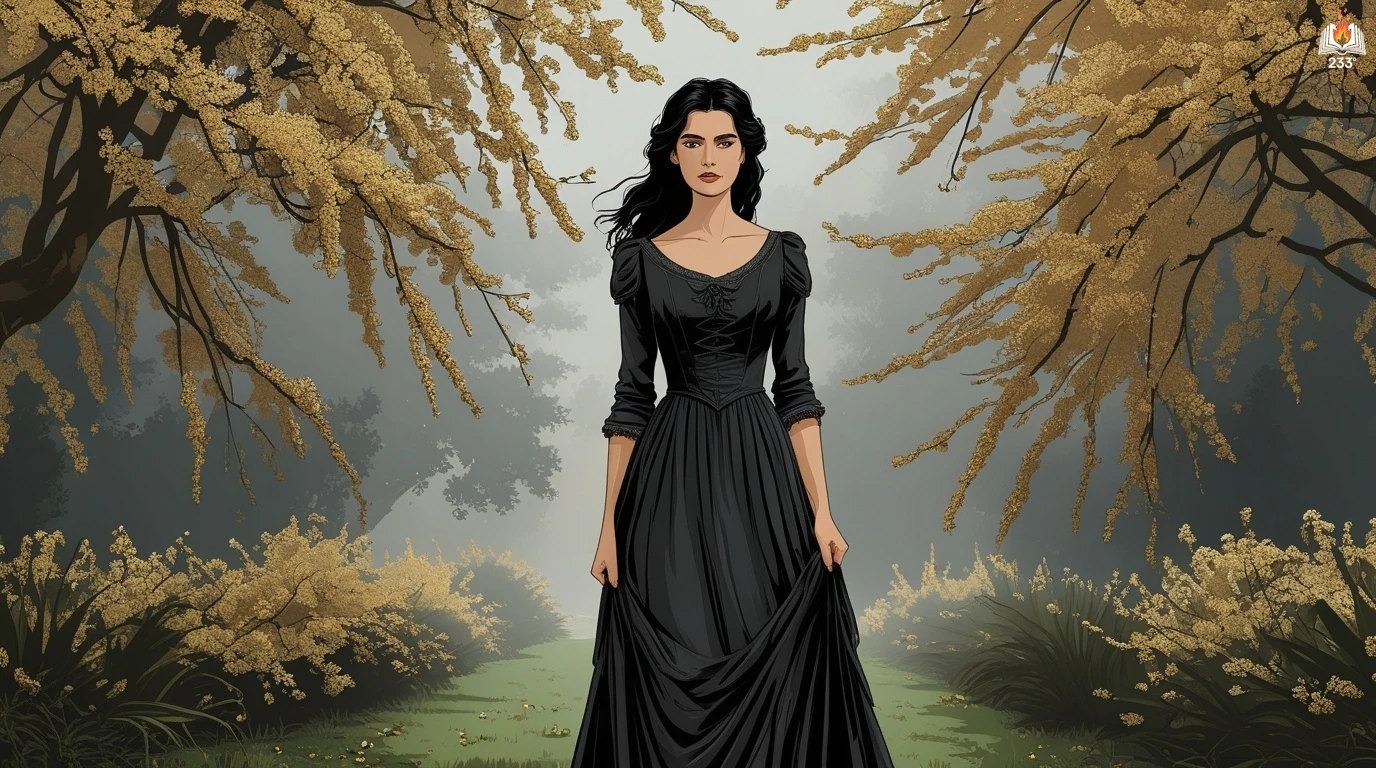
Laughter in the Dark by Vladimir Nabokov was first published in 1932, originally written in Russian under the title Kamera Obskura and later translated into English by Nabokov himself. Set in interwar Berlin, the novel follows the tragic downfall of a middle-aged art critic who becomes infatuated with a much younger woman. The book is a masterful study of obsession, manipulation, and blindness—both literal and metaphorical. Although not part of a series, it stands as a poignant and sharply satirical example of Nabokov’s early European fiction.
Plot Summary
In Berlin, during a time when art flickered on canvas and desire lay dormant behind respectability, a man named Albinus lived a life most would envy. He had wealth, a genteel career as an art critic, a gentle wife named Elisabeth, and a quiet daughter, Irma. But a man can be both settled and restless. Beneath the cultivated surface of Albinus’s world stirred a longing, indistinct and persistent, for beauty unframed and untamed. This longing took form in a cinema usherette named Margot – pale, sulky, provocatively young.
Margot Peters had emerged from hardship, the daughter of a coarse, embittered house-porter and a mother with knotted fists. Her beauty bloomed not with innocence but with defiance, forged in narrow hallways and cheap rooms, polished in front of cracked mirrors. She had no illusions about virtue and nurtured dreams of stardom with all the calculation of someone who knew how fleeting affection could be. Men came and went – none lasted. None mattered. But Albinus, with his tailored dignity and trembling hunger, presented an opportunity that gleamed.
Their meeting, accidental and yet inevitable, led Albinus into an infatuation that consumed his reason. He followed her through the shadows of the cinema, then through rain-drenched streets, until she finally turned to acknowledge the man who always lingered. She smiled. That was all it took. From that smile, Albinus fell into a slow, irreversible decline.
He lied to his wife. He lied to himself. He took Margot to cafés, whispered dreams into her ear, and, soon enough, set her up in a private apartment, hiding her like a painting too scandalous for public view. To her, he promised everything – to leave his family, to support her film ambitions, to be hers entirely. And Margot, smiling like an actress waiting for her cue, played the part he cast her in.
But behind the curtain, another man watched. Axel Rex, Margot’s former lover and a cartoonist of cruel talent, returned to the scene like a flame relighting a burnt page. With his razor-like wit and contempt for decency, Rex saw Albinus as a joke waiting to be delivered. He moved in with Margot, unseen and unannounced, while Albinus, so blinded by desire, failed to notice the game being played in the very apartment he paid for.
Margot, bored by Albinus’s sincerity and eager for amusement, kept both men close – one for money, the other for pleasure. Albinus continued his descent, eventually abandoning Elisabeth and Irma, believing love could be rebuilt in rented rooms. He rented a villa in the countryside, thinking that a change in scenery could soften Margot’s sharpness. But the only change was in his dignity, which grew more tattered each day.
By now, Margot’s contempt barely needed hiding. She mocked his affections, insulted his intelligence, and flaunted her indifference. Albinus endured it, feeding on scraps of tenderness and still believing himself in love. Rex, always nearby, found the situation hilarious and indulged in it with theatrical cruelty. To Albinus, Rex appeared only as a business acquaintance, a harmless presence. He never imagined the depth of the betrayal.
Then came the darkness – swift and absolute. An accident, sudden and cruel, left Albinus blind. Not metaphorically, not merely unaware – but truly, irreversibly blind. And into that darkness, Margot and Rex stepped fully. Now, his world depended entirely on what he was told, on what he heard and felt. Margot took control of everything – his home, his fortune, his isolation. She claimed to care for him, yet left him alone for hours. When she touched him, her fingers no longer trembled. When she spoke, her voice grew sharp. Rex moved freely through the house, laughing softly in the shadows, feeding Albinus lies.
Yet even blindness could not fully erase suspicion. The absence of affection, the unfamiliar silences, the echo of unfamiliar footsteps – it all swelled into a certainty. Albinus, once content to be fooled, now found himself desperate for truth. He enlisted the help of a loyal friend, Paul, who brought clarity where vision had failed. The affair between Margot and Rex was exposed. The extent of their manipulation, their cruelty, lay bare before Albinus, who could see now with terrible precision.
But there was no retribution waiting, no triumphant reckoning. When Albinus attempted to flee, to reclaim his daughter and dignity, he was met with disaster. He stumbled through betrayal and blindness into violence. In a moment born of desperation and fury, he struck out – and was struck down. Rex, with his talent for theatrics, ensured the ending was suitably grotesque.
Albinus died alone, discarded like a broken statue. Margot disappeared into the shadows she had always belonged to, her ambitions flickering like failing film. Rex, ever amused, vanished into anonymity, leaving behind the wreckage of a man who had once believed in beauty.
In the quiet that followed, there was no laughter, only the echo of what had been lost in the dark.
Main Characters
Albinus – A well-to-do art critic and the story’s central figure. Albinus begins the novel as a seemingly content husband and father but is gradually consumed by an obsessive desire for a young usherette, Margot. His descent is marked by self-deception, moral weakness, and eventually, literal blindness. His arc reflects the tragic irony that he can see beauty in paintings but is blind to the intentions of those closest to him.
Margot Peters – A cunning, opportunistic young woman with a traumatic and impoverished background. Margot dreams of becoming a film star and manipulates Albinus for personal gain. Her blend of sensuality, calculation, and cold ambition makes her both alluring and dangerous. Margot’s rise is directly tied to Albinus’s ruin.
Axel Rex – A charismatic and sadistic cartoonist who is both Margot’s former lover and eventual partner in deceiving Albinus. Rex is a nihilist with a flair for cruelty, embodying the archetype of the artistic predator. His contempt for Albinus fuels much of the novel’s darkest turns, and he becomes the architect of Albinus’s final humiliation.
Elisabeth – Albinus’s gentle and trusting wife, who embodies bourgeois decency and stability. She is blind to her husband’s infidelity until it is too late, and her passive nature contrasts sharply with Margot’s aggressive self-interest. Her suffering highlights the collateral damage of Albinus’s delusions.
Irma – The young daughter of Albinus and Elisabeth, whose innocence serves as a counterpoint to the corruption around her. Though not central to the plot, her presence underscores what Albinus sacrifices in pursuit of Margot.
Theme
Blindness and Vision – The most prominent motif in the novel, both literal and symbolic. Albinus’s profession as an art critic underscores the irony of his inability to “see” Margot’s manipulation. His eventual physical blindness serves as a grim metaphor for his moral and emotional blindness throughout the story.
Obsession and Desire – The novel explores the destructive nature of obsession, particularly the middle-aged male fantasy of youth and beauty. Albinus’s infatuation with Margot leads him to abandon reason, family, and dignity. Desire, in Nabokov’s hands, becomes a force that dismantles identity.
Deception and Betrayal – Lies and performance are pervasive throughout the narrative. Margot deceives Albinus, Rex deceives both of them, and Albinus deceives himself. These betrayals are not merely interpersonal—they reveal the fragility of reality when shaped by fantasy.
Social Class and Ambition – Margot’s desire to escape poverty and rise into celebrity mirrors the class tensions in Berlin society. Her ambition is portrayed as ruthless, yet understandable within her limited means. The novel critiques both the exploitative upper class and the scrabbling desperation of the poor.
Art vs. Life – Nabokov blurs the lines between aesthetic appreciation and life’s ugly realities. Albinus is deeply immersed in art but fails to grasp the artifice in his own relationships. The motif of cinema, with its illusions and performances, reinforces this theme.
Writing Style and Tone
Nabokov’s prose in Laughter in the Dark is elegant, precise, and tinged with irony. He constructs his sentences with a painter’s eye, often layering imagery and metaphor to evoke mood or character psychology. His descriptions are vivid yet economical, frequently laced with double meanings or ironic juxtaposition. This polished style serves to contrast with the crude machinations of the plot, emphasizing the disconnect between aesthetic beauty and moral ugliness.
The tone is coolly sardonic, even when the events turn tragic. Nabokov never allows the reader to become too sentimental; instead, he encourages a detached amusement at Albinus’s plight, akin to watching a slow-motion car crash. The title itself reflects this tone – “laughter in the dark” suggests both absurdity and menace. It’s a comedy of cruelty, where the laughter is hollow and the darkness all too real.
Quotes
Laughter in the Dark – Vladimir Nabokov (1932) Quotes
“A certain man once lost a diamond cuff-link in the wide blue sea, and twenty years later, on the exact day, a Friday apparently, he was eating a large fish - but there was no diamond inside. That’s what I like about coincidence.”
“Death often is the point of life's joke.”
“[...] leaving for a day or two that hopeless sense of loss which makes beauty what it is: a distant lone tree against golden heavens; ripples of light on the inner curve of a bridge; a thing impossible to capture.”
“This is the whole of the story and we might have left it at that had there not been profit and pleasure in the telling; and although there is plenty of space on a gravestone to contain, bound in moss, the abridged version of a man's life, detail is always welcome.”
“No you can't take a pistol and plug a girl you don't even know simply because she attracts you.”
“Death," he had said on another occasion, "seems to be merely a bad habit, which nature is at present powerless to overcome.”
“Although there is plenty of space on a gravestone to contain, bound in moss, the abridged version of a man's life, detail is always welcome.”
“[S]urely the Cupid serving him was lefthanded, with a weak chin and no imagination.”
“Everything was too quiet to be natural. It seemed as if the silence was rising, rising—would suddenly brim over and break into laughter.”
“Everything, even what was saddest and most shameful in his past life, was overlaid with the deceptive charm of colours. He was horrified to realize how little he had used his eyes - for these colours moved across too vague a background and their outlines were singularly blurred”
“Something was destroyed forever [...], everything would henceforward be tainted with a poisonous flavour of doubt”
“The past was safe in its cage. Why not have a look?”
“he loved; was not loved; and his life ended in disaster”
“Death often is the point of life’s joke.”
“An electric milk van on fat tires rolling creamily.”
“He could not even see the bluish glimmer of a window or those faint patches of light which come to stay with the walls at night”
“Her love was of the lily variety”
“so that beautiful idea, which otherwise would have lingered on and perhaps found a wall on which to hang and blossom, had strangely faded and shrivelled in the course of the last week.”
We hope this summary has sparked your interest and would appreciate you following Celsius 233 on social media:
There’s a treasure trove of other fascinating book summaries waiting for you. Check out our collection of stories that inspire, thrill, and provoke thought, just like this one by checking out the Book Shelf or the Library
Remember, while our summaries capture the essence, they can never replace the full experience of reading the book. If this summary intrigued you, consider diving into the complete story – buy the book and immerse yourself in the author’s original work.
If you want to request a book summary, click here.
When Saurabh is not working/watching football/reading books/traveling, you can reach him via Twitter/X, LinkedIn, or Threads
Restart reading!