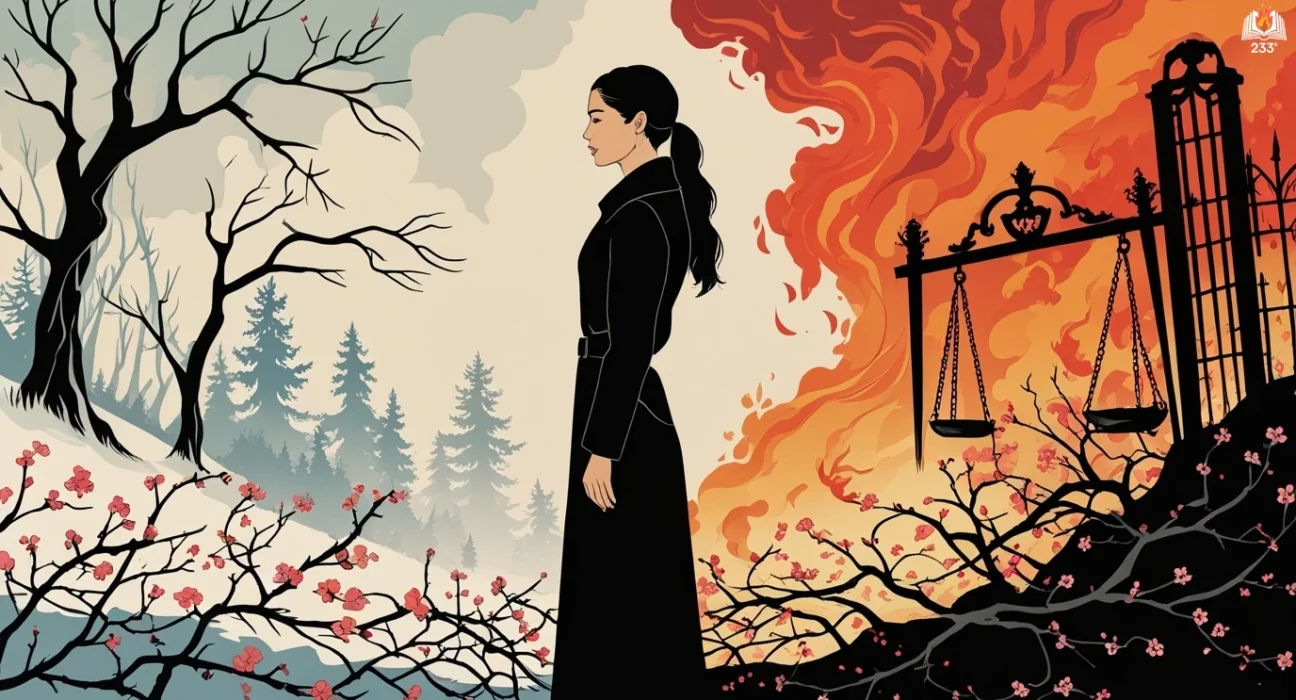
Shadow Heir, published in 2011, is the fourth and final installment in Richelle Mead’s Dark Swan series. The story centers around Eugenie Markham, a powerful shaman and reluctant queen navigating the perilous divide between the human world and the magical Otherworld. As threats gather from all sides, Eugenie must protect her unborn children – prophesied to bring ruin or salvation – while reconciling her torn loyalties, haunted past, and uncertain future. Set amidst war, betrayal, and political intrigue, Shadow Heir brings a climactic conclusion to Eugenie’s journey.
Plot Summary
In the sweltering heat of an Ohio summer, Eugenie Markham found her sanctuary in the sterile calm of a women’s health clinic. Pregnant with twins, she clung to this pocket of safety, far from the gentry courts and prophecies that haunted her like ghosts. But even this fragile peace cracked when the skies turned unnaturally dark and storm magic curled through the air. Forces from the Otherworld had found her again, tearing open the illusion of safety and forcing Eugenie, Jasmine, and young Pagiel into a desperate escape through a magical gate. On the other side waited the Honeysuckle Land and a war that refused to let her rest.
Word spread quickly. The queen of Thorn and Rowan had been attacked. Her pregnancy – and the prophecy that her son might one day conquer humanity – made her a beacon, a symbol, a target. Dorian, king of the Oak Land and Eugenie’s former lover, welcomed her into his court with wine, mockery, and veiled concern. Though their romance had collapsed in betrayal, he still sought to entwine himself with her fate. Offering to adopt her children, to legitimize them in the eyes of the gentry, Dorian played a long game, his motivations always layered, never simple.
But Eugenie could not stay still, even when Dorian urged caution. Her obligations pulled her in every direction – to her subjects, her friends, and above all, to her unborn children. Rurik and Shaya, once comrades in war and now lovers, were soon to be wed, and Eugenie agreed to host the festivities in the pastoral beauty of the Rowan Land. Among cherry blossoms and enchanted roses, political guests poured in from across the Otherworld. There were smiles, gifts, and oaths of loyalty, but beneath the silk and celebration pulsed suspicion and strategy.
Ilania, a polished ambassador from the distant Yew Land, arrived bearing statues and sweet intentions. Her queen, Varia, ruled not one kingdom, but many – not through conquest, but by gathering vassal monarchs beneath her. She extended an offer: a haven far from Eugenie’s enemies, where the twins could be born in peace, away from prophecy and war. Eugenie declined, uncertain of Varia’s true motives, wary of any gift that came wrapped in diplomacy. Yet even Volusian, her undead servant bound by magic, reacted with unusual emotion upon seeing the jade statues. Damarian jade, he called it, and with it came the bitter taste of history. The Yew Land, it seemed, had secrets older and darker than any had spoken aloud.
As wedding bells faded and the scent of roses lingered, Eugenie’s attention turned inward. Kiyo, the father of her children, once her partner and protector, had become the sharpest blade at her throat. Alongside Maiwenn, queen of the Willow Land, he sought to end the prophecy before it could take root. To him, Eugenie’s pregnancy was not a miracle, but a threat to be eliminated. The betrayal still burned in her blood, but she knew better than to waste grief on a man who had chosen war over fatherhood.
Determined to keep moving, Eugenie set out once more into the human world, seeking another place where magic might not find her. She traveled with a careful escort, navigating gates and veiled paths, always balancing the urgency of her cause against the fragility of her body. Yet peace remained elusive. The ambush in Ohio had been only the beginning. Attacks came again and again – spirits summoned from the dead, elementals forged from storm and stone. Each battle forced her allies to risk their lives while she held back, her power coiled and restrained for the sake of her unborn children.
In the Thorn Land, dissent brewed. Her allies questioned the wisdom of her travel. Even those loyal to her – like Pagiel, whose strength in battle astonished everyone – faced pressure from their families to abandon her cause. Yet he stayed, driven not just by friendship, but by quiet love for Jasmine and a belief that prophecies did not bind the future. Meanwhile, Eugenie struggled with her own doubts. Was she bringing danger to everyone she loved? Could she truly protect her children from the world that hunted them?
Amid the uncertainty came whispers from the past. Volusian, whose allegiance to her was forged in chains, began to speak more freely, his knowledge of ancient magic and old enemies hinting at dangers even deeper than those posed by Kiyo and Maiwenn. He recognized Varia’s name. Her court, her jade, her thirst for alliances – all of it reeked of the long-buried ambitions of a forgotten queen. Eugenie realized that the gentry’s games of power reached far beyond her borders, and her choices would ripple across lands she had never seen.
With no safe harbor in sight, Eugenie made a decision that would alter the course of her children’s lives. She journeyed into the mountains, to a place of wild magic where no kingdom held dominion. There, hidden from scrying eyes and magical spies, she gave birth. Alone but for a small, trusted circle, she brought her twins into the world. A boy and a girl, each marked with the potential for greatness – or ruin. Holding them, Eugenie saw not prophecy, but promise. Not fate, but possibility.
She named them after the winds and the land, anchoring them to both human and gentry heritage. And then, with grief heavy in her chest, she made the most painful choice of all. To protect them, she would let them go. She left her son in the care of a human couple, far from magic, hidden even from those who knew to look. Her daughter she kept close, shielded within her kingdom’s heart, where she could raise at least one child free from fear. Kiyo would never stop hunting them, and Eugenie knew the war was far from over. But for now, there was breath, and warmth, and a flicker of peace in the midst of shadows.
As snow fell on the mountainside, silence wrapped around the newborns. One cradled in a mother’s arms. The other, swaddled and sleeping beneath human stars. Two lives, bound by blood, torn by prophecy. And somewhere, between the worlds, their mother stood watch – warrior, queen, exile, and guardian of hope.
Main Characters
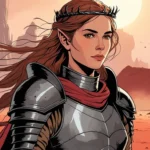
Eugenie Markham: The half-human, half-gentry protagonist and queen of both the Thorn Land and the Rowan Land. Once a ghost banisher, Eugenie is now a ruler entangled in political chaos and maternal fears. Pregnant with twins foretold in a prophecy that could doom humanity, she constantly wrestles between her duty and her conscience. Determined, strong-willed, and emotionally torn, Eugenie’s internal battles drive the narrative’s core tension.
Dorian: The charismatic and manipulative king of the Oak Land and Eugenie’s former lover. Dorian is politically astute and ever-calculating, often playing the long game with charm and guile. Though he offers Eugenie protection and power – even proposing to adopt her children – his motivations remain suspect. His complicated relationship with Eugenie is riddled with betrayal, lingering attraction, and strategic alliance.
Kiyo: Eugenie’s ex-boyfriend and the biological father of her unborn children. Once a loving partner, Kiyo now sees her and the prophecy as a threat to humanity. His transformation from protector to enemy deeply wounds Eugenie and underpins much of her emotional turmoil throughout the novel.
Jasmine: Eugenie’s younger half-sister, also a powerful magic user. Formerly an enemy, Jasmine is now fiercely loyal, forming a bond that transcends bloodlines. Her evolution from antagonist to trusted companion highlights the theme of redemption and the enduring strength of chosen family.
Pagiel: The teenage son of Ysabel and grandson of the domineering Edria. Gifted with strong magical abilities and a budding romantic interest in Jasmine, Pagiel plays an important role in supporting Eugenie during dangerous missions, demonstrating courage and moral clarity uncommon for his age.
Volusian: Eugenie’s undead minion, bound to her service. Though he harbors deep hatred toward her, Volusian is loyal only through magical compulsion. His knowledge and actions often foreshadow deeper threats, and his presence provides a chilling, strategic advantage.
Theme
Prophecy and Destiny: The central conflict revolves around a prophecy that claims Eugenie’s son will conquer humanity. The narrative constantly questions whether fate is immutable or shaped by choice. Eugenie’s resistance to prophecy symbolizes the broader struggle against predetermined roles and the desire for agency.
Motherhood and Sacrifice: Eugenie’s pregnancy is not just physical – it’s symbolic of burden, hope, and fear. She must make harrowing decisions to protect her children, even if it means isolating herself or risking war. The maternal theme is layered with questions of legacy, identity, and responsibility.
Power and Politics: The tension between various gentry kingdoms reveals the cutthroat nature of Otherworldly politics. Alliances, betrayals, and shifting loyalties form the backdrop of the story, showing how personal relationships are often weaponized for political gain.
Duality and Identity: Eugenie’s struggle as a half-human, half-gentry being reflects broader themes of belonging and alienation. Her dual heritage positions her uniquely in both worlds, but also isolates her from fully claiming either. This motif extends to her children, symbolizing a bridge between realms.
Love and Betrayal: Romantic entanglements with both Dorian and Kiyo explore trust, manipulation, and heartbreak. The push and pull of desire and disillusionment underscore Eugenie’s emotional journey and the painful cost of love in a world where affection is rarely pure.
Writing Style and Tone
Richelle Mead’s writing in Shadow Heir is sharp, immersive, and emotionally resonant. Her prose balances witty, first-person narration with dark, often poetic reflections on power and morality. Eugenie’s voice is both sardonic and vulnerable, revealing a narrator who is self-aware, cynical, yet deeply human in her fears and hopes. Mead skillfully uses internal monologue to delve into Eugenie’s psyche, making readers intimately feel her indecision, frustration, and fierce protectiveness.
The tone of the novel shifts fluidly between urgency and introspection. Action sequences are swift and intense, often juxtaposed with slow-burning political intrigue or introspective meditations on fate and identity. The magical setting is rendered vividly but never indulgently, always serving the character-driven narrative. Mead’s signature blend of fantasy, emotional depth, and feminist undertones grounds the story, making Shadow Heir not just a tale of magical kingdoms, but a meditation on choice, strength, and the burden of legacy.
Quotes
Shadow Heir – Richelle Mead (2011) Quotes
“But it's not the name I'd give to a conqueror of worlds... I would've gone with Thundro or Ragnor. I might just call him Thundro anyway.”
“Mistress, I have never asked anything of you in my servitude. But now, I beg you this: do not make me keep passing these adolescent sentiments back and forth all night.”
“My smile faded, and I suddenly felt confused. My heart leapt in my chest. "Why would you do that for me?" "What wouldn't I do for you?”
“Everything_s fine,” I said, with a tight smile. “Kiyo was just giving me his latest explanation about how my son is a terror to be feared.” Dorian scoffed. “Little Thundro? A terror? Hardly, unless perhaps we_re discussing diapers.”
“He stepped forward and punched Dorian in the face, hard enough that I heard a thwack. "Ow," moaned Dorian, wincing from the pain. "My greatest asset.”
“How do you know it was the blighted pile? Did you recognize Maiwenn’s gift?” “No, but there was a marble bust of Dorian in there, which I figured must have been his kingdom’s ‘humble’ gift.”
“My life was split by two worlds, but he kept me whole.”
“If we could manage any sort of trust again... Well. That would make me happier than you can imagine”
“A man can never compete with a woman's father”
“I did, however, manage to do it without hurting those dogs. Very considerate of me. Don't let it be said I'm not an animal lover-that wretched kitsune aside.”
“We can't do this without you," I managed at last. "Everyone talks about my powers, but you're the badass here.”
“Why not wear a scar of Motherhood? Better than a tattoo or a mark of Honor. Let the world know what you've achieved.”
“People get too caught up in what they don't have and get bogged down as a result. There's joy in the present. It's important to just make the most of the these moments we have. Keep an eye on the future, but don't forget to enjoy NOW.”
“I lifted the lid and found a piece of bread and some water—and a rat that quickly darted off the tray. Talk about adding insult to injury.”
We hope this summary has sparked your interest and would appreciate you following Celsius 233 on social media:
There’s a treasure trove of other fascinating book summaries waiting for you. Check out our collection of stories that inspire, thrill, and provoke thought, just like this one by checking out the Book Shelf or the Library
Remember, while our summaries capture the essence, they can never replace the full experience of reading the book. If this summary intrigued you, consider diving into the complete story – buy the book and immerse yourself in the author’s original work.
If you want to request a book summary, click here.
When Saurabh is not working/watching football/reading books/traveling, you can reach him via Twitter/X, LinkedIn, or Threads
Restart reading!