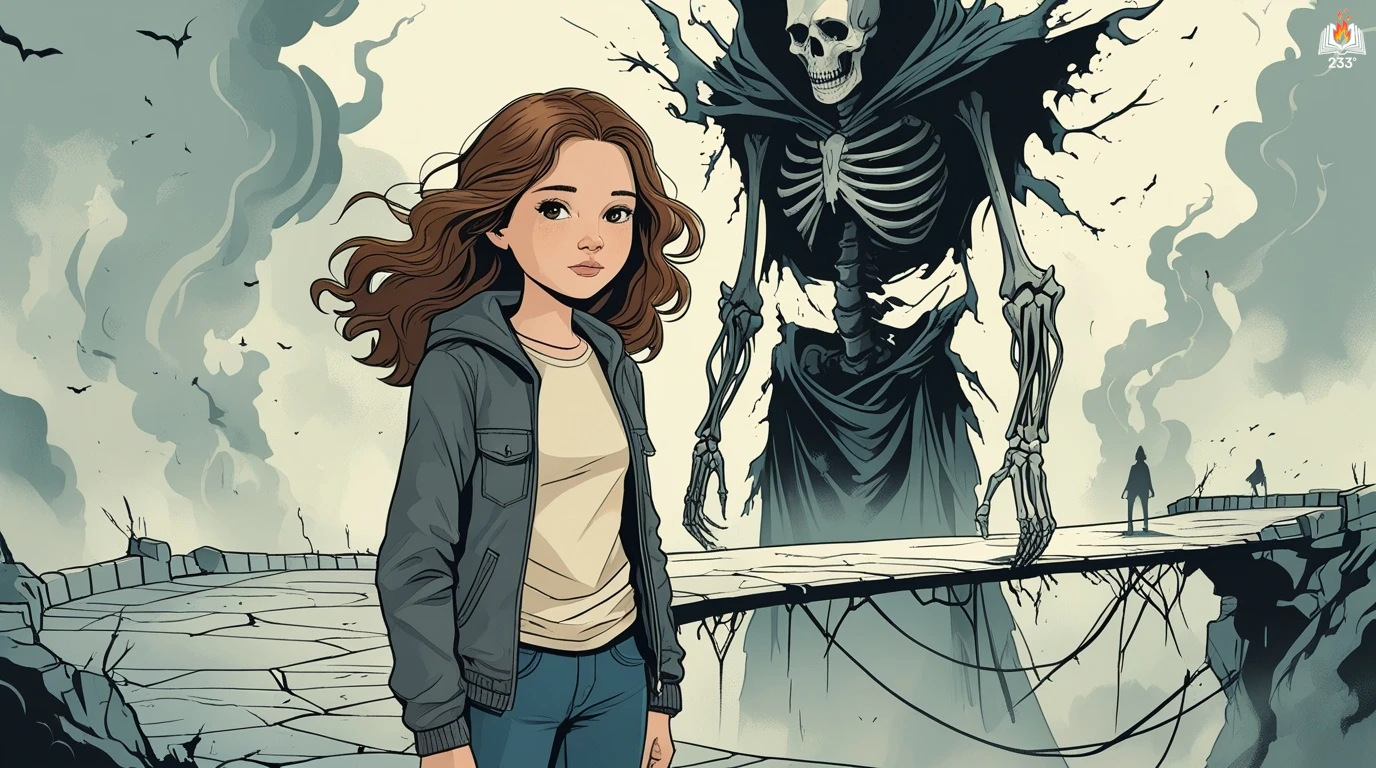
The Monarch of the Glen by Neil Gaiman, published in 2006, is a novella set in the same myth-rich universe as his acclaimed novel American Gods (2001). It follows Shadow, the enigmatic protagonist of American Gods, as he journeys through the wilds of northern Scotland. This story is part of the larger American Gods series and serves as both an epilogue to Shadow’s previous adventures and a prelude to further tales. Gaiman blends myth, folklore, and the uncanny with masterful subtlety, immersing readers in a world where gods walk among mortals and ancient stories echo through remote landscapes.
Plot Summary
Shadow had been on the road for eighteen months. A quiet giant of a man, drifting through Europe and North Africa with the patience of someone who no longer expected answers, only the occasional rhythm of peace. His latest path had brought him to the far north of Scotland, where the land was wind-bitten and steeped in silence. In a seaside town where everything seemed damp and ancient, he intended to walk, to rest, and to think as little as possible.
At the edge of this remote place, a strange little man with a pipe and theatrical charm named Dr. Gaskell approached him in the empty bar of a cold hotel. With the ease of someone who’d rehearsed the conversation a thousand times, the doctor proposed a job – a weekend of quiet security work for a private gathering at an old estate near Cape Wrath. The money was good. The danger, supposedly low. Yet something about the conversation was off-kilter, as if the words were weighted with something invisible and sharp.
Shadow agreed, and with that decision the walls of the world shifted slightly.
He met Jennie that same evening – the barmaid with moon-pale hair and a clipped Scottish accent, who offered him coffee, then stories. She led him through the cold town to a small stone cottage and spoke of hulder women from the old woods, of creatures who married farmers and lived among them with hollow backs and long regrets. She claimed to be one of them, or perhaps simply identified with their sorrow. When she touched his hand, the air grew thinner.
The next day, Shadow walked the coastline, finding beauty in the sharpness of the hills and the solitude of the sea. Jennie joined him briefly, slicing an apple with a knife and asking if he would give it to her. She spoke again of monsters, of stories rooted in places where things lasted longer in the shadows. As she pointed out a distant stone building nestled in the hills – the house where Shadow would be working – she warned him, softly and without pretense, not to go. He did not listen.
He dreamt that night of ships made from the fingernails of the dead, of Norse warriors stranded on an endless ocean, calling him Baldur and asking to be brought back or set free. When he woke, the cold clung to him like a second skin.
The next morning a man named Smith arrived to escort him to the house. A wiry Londoner with charm worn thin by too much practice, Smith spoke of discretion and parties, of rich guests and indulgence best unspoken. Shadow listened, asked little, and noticed much. The road twisted, narrowed, and vanished into a trail fit only for sheep. The estate itself rose up like a forgotten thought – part castle, part ruin, wholly ancient. Its stones whispered, though the language was lost.
Inside, Shadow was shown to a servant’s room, furnished with a bed too small and a chill too deep. The house had the particular cold of buildings that had never learned to be warm. Servants arrived by helicopter, carrying crates of food and wine. Security men, trained and armed, appeared with their earpieces and silent authority. Amid all this, Shadow was told his presence was simply to deter locals who might object to the noise.
He met Mr. Alice, a pink, round man with a soft voice and far-reaching influence. There was nothing theatrical about him, only stillness and power. Smith deferred to him, and Shadow understood then that something more than a party was being arranged.
As dusk drew the shadows long, Shadow walked the grounds. He mapped the perimeter, noting the false isolation, the guards in tuxedos with weapons beneath. He returned to find the party underway. Elegant people, the kind who hid their secrets behind polish and privilege, laughed in the courtyard with wine and careless ease. One woman smiled at him, and Smith muttered his warning again – hands off the posh totty.
That night, the dreams deepened. Shadow wandered into memories and places that did not exist. He saw a child’s corpse posed like an art piece, Dr. Gaskell crouched beside it, camera in hand, chewing on candy. He slipped through cracks in stone and flowed across oceans, drawn again to the ship of the dead, where the warriors wailed and begged. He saw a familiar face in a strange place – Wednesday, the one-eyed god he’d once followed, now sipping beer in a dream-diner and reminding him that death had changed the rules. Beowulf was no longer his path. Now it was chess, or go, or something stranger.
Shadow awoke to darkness and the sounds of revelry echoing through the walls. Laughter, voices, fragments of conversations floated up like the scent of old smoke. No one had come to claim him for duty, no locals had arrived with pitchforks or protests. He stayed in his room, waiting.
The following day, the party deepened into something ancient. Shadow’s role, he realized, was not about protection but spectacle. He was being watched, weighed. The elite guests, full of wine and old appetites, gathered not just for pleasure but for something older. A rite dressed as indulgence. A ritual disguised as entertainment.
Shadow was led to the center of the courtyard as twilight bled across the hills. The partygoers stood in a circle, champagne in hand, laughter giving way to expectation. Mr. Alice addressed them with the ease of a host who had performed the same introduction for centuries. Smith stood by, impassive. Gaskell grinned in the firelight.
It was a contest, they told him. An old one. Shadow was to fight. A man, they claimed, had challenged him – for sport, of course. Just tradition. Harmless enough, if you survived.
Shadow stepped into the makeshift arena as a man emerged – pale, tall, hairless, and wrong. The man who had glared at him in the hotel bar, who had said he could hear everything. No longer shy or awkward, he moved like something not built for kindness. His mother, the birdlike woman who had trailed behind him in the village, now stood among the guests with eyes cold as glass.
There were no rules. There was no mercy. But Shadow did not die. He fought, and something vast and old uncoiled inside him. It was not rage, nor even survival – it was memory. The memory of a god nailed to a tree, of a sacrifice made and a life returned.
When it was done, he stood bloodied and silent beneath the watchful eyes of people who no longer smiled. Whatever they’d expected, it had not been this. Mr. Alice nodded once, and turned away.
By morning, Shadow was gone.
From the hills, the house seemed to vanish, as if it had never been there. Only the cold remained, and the stories.
Main Characters
Shadow Moon – A quiet, stoic man with a mysterious past, Shadow has recently survived the events of American Gods. Now wandering through Europe, he ends up in Scotland seeking solitude and peace, but is soon drawn into a sinister and mythical encounter. His brooding nature and physical strength mask a complex internal struggle as he questions his place in a world where myth and reality overlap.
Dr. Gaskell – A cryptic, unnervingly cheerful local who recruits Shadow for a supposed security job at a remote estate. Gaskell speaks in riddles and veiled threats, quickly establishing himself as more than just a semiretired doctor. His interest in Shadow is both eerie and strategic, revealing deeper layers of the novella’s mythic undertones.
Jennie – A barmaid with white-blonde hair and a haunting aura, Jennie may be more than she appears. Her cryptic conversations and strange allure suggest ties to Norse or Scandinavian folklore, and she speaks of being a hulder – a seductive woodland creature from myth. Her interactions with Shadow blend seduction with warning, casting her as both guide and potential threat.
Mr. Alice – The portly, soft-spoken man in charge of the enigmatic gathering at the remote Scottish estate. He wields quiet authority and is clearly the orchestrator of the weekend’s dark proceedings. His interactions reveal a deep knowledge of mythic forces and an agenda that puts Shadow in grave danger.
Smith – A brusque, streetwise fixer from London tasked with managing logistics for the weekend event. Smith is affable but hides a ruthless pragmatism. He functions as the liaison between the guests and the house staff, and his constant evasions underscore the sinister nature of the gathering.
Theme
The Persistence of Myth – Central to the story is the idea that myths and legends endure, not just in memory but in active existence. Shadow’s journey brings him face-to-face with living embodiments of old tales, highlighting how ancient narratives still exert power over the modern world.
Monstrosity and Humanity – The line between man and monster is repeatedly blurred. Shadow is called a “monster” several times, prompting questions about what defines monstrosity. Is it strength, otherness, or the capacity for violence? The novella probes the hidden darkness within seemingly ordinary people and the eerie familiarity of the truly monstrous.
Isolation and Identity – Shadow’s journey through Scotland is also a personal odyssey, a search for identity following the transformation he underwent in American Gods. His solitude mirrors the desolation of the Scottish landscape, and the eerie, almost liminal atmosphere amplifies his internal sense of displacement.
Power and Sacrifice – The gathering Shadow becomes part of is steeped in ritual and hierarchy. There is a strong undercurrent of power dynamics, hidden agendas, and sacrificial rites – both literal and symbolic. The story critiques elite decadence and the quiet cruelty of those who manipulate myths for personal gain.
Writing Style and Tone
Neil Gaiman’s prose in The Monarch of the Glen is atmospheric, poetic, and richly layered. He captures the rugged, desolate beauty of the Scottish Highlands with an eye for both its natural majesty and its haunting isolation. Dialogue is spare but impactful, often veiling meaning in folklore and misdirection. The writing balances mythic grandeur with grounded realism, allowing readers to experience a world where gods and monsters exist just beneath the surface.
Gaiman employs a tone that is both eerie and intimate, building unease with quiet details rather than overt horror. The narrative voice lingers in the twilight space between reality and dream, infusing even mundane scenes with a sense of the uncanny. This subdued tension—an ever-present hum of menace and mystery—mirrors Shadow’s own liminal existence as a man shaped by divine conflict yet yearning for peace. The tone ultimately evokes both melancholy and awe, echoing the ancient epics it draws upon.
Quotes
The Monarch of the Glen – Neil Gaiman (2006) Quotes
“My grandpa sells condoms to sailors, He punctures the tips with a pin, My grandma does back-street abortions, My God how the money rolls in.”
“It was the fight of man against monster, and it was as old as time: it was Theseus battling the Minotaur, it was Beowulf and Grendel, it was every hero who had ever stood between the firelight and the darkness and wiped the blood of something inhuman from from his sword.”
“A flash of teeth in a hatchet-blade face.”
We hope this summary has sparked your interest and would appreciate you following Celsius 233 on social media:
There’s a treasure trove of other fascinating book summaries waiting for you. Check out our collection of stories that inspire, thrill, and provoke thought, just like this one by checking out the Book Shelf or the Library
Remember, while our summaries capture the essence, they can never replace the full experience of reading the book. If this summary intrigued you, consider diving into the complete story – buy the book and immerse yourself in the author’s original work.
If you want to request a book summary, click here.
When Saurabh is not working/watching football/reading books/traveling, you can reach him via Twitter/X, LinkedIn, or Threads
Restart reading!