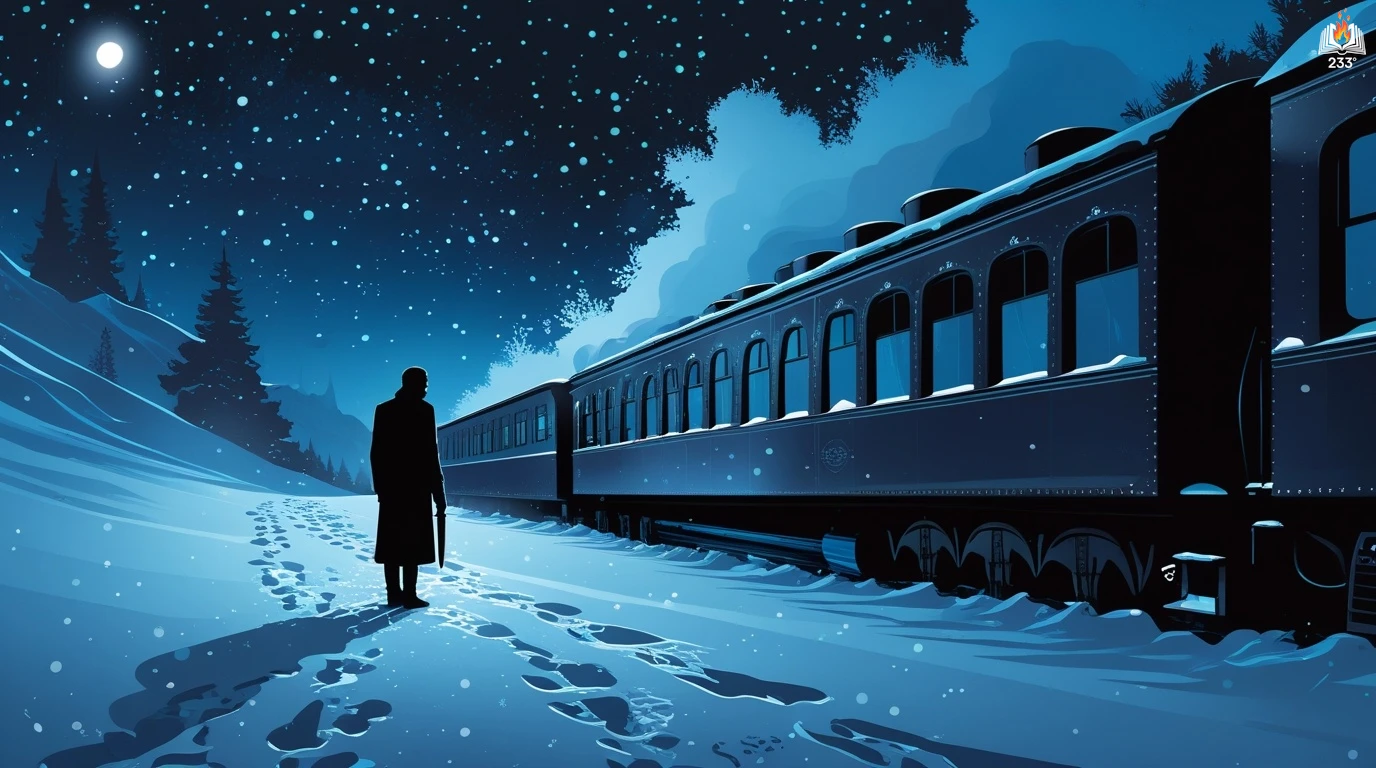


Taken at the Flood, published in 1948 by Agatha Christie, is part of the renowned Hercule Poirot mystery series. Set in post-World War II England, the novel revolves around the Cloade family, whose lives are upended when their wealthy benefactor, Gordon Cloade, dies in a bombing raid, leaving his fortune to his young, enigmatic widow, Rosaleen. As tensions rise and secrets surface, Hercule Poirot steps in to untangle a web of greed, deception, and murder.
Plot Summary
The air of postwar England hung heavy over Warmsley Vale, a sleepy village where the weight of loss and the pull of old comforts kept its residents anchored. Lynn Marchmont, freshly returned from her wartime service, stepped into this world of damp hedgerows and sagging rooftops, her heart eager for home but restless for the thrill she had known overseas. Her family, the Cloades, lived in the shadow of a promise – the promise of Gordon Cloade, the family patriarch, who had long assured them that his wealth would be their safeguard. But a bomb from the Blitz had swept Gordon away, leaving his fortune to his young bride, Rosaleen Cloade, and severing the lifeline the family had always counted upon.
Rosaleen, a delicate figure with wide, uncertain eyes and a manner of one too easily led, stood at the center of a storm she barely understood. Beside her towered her brother, David Hunter, a sharp-featured, calculating man whose easy charm masked a watchful, predatory nature. The Cloades – Jeremy the reserved solicitor, Frances his cool, elegant wife, Adela Marchmont fading into genteel poverty, and Rowley the sturdy farmer – watched from their drawing rooms, resentment simmering just beneath polite words. All that was left was to endure, or to hope for an unlikely change in fortune.
Into this uneasy quiet came a whisper from the past. Robert Underhay, Rosaleen’s first husband, thought long dead in Africa, stirred in the shadows. Mrs. Lionel Cloade, a flighty woman with a passion for spiritualism, sought out Hercule Poirot, the renowned Belgian detective, pleading that he investigate a message from the beyond. Though Poirot turned her away, the embers of curiosity began to glow. Rumors soon swept the village: Robert Underhay was alive, and with his return, Rosaleen’s marriage to Gordon would be invalid, casting her fortune into chaos.
As if conjured by fate, a stranger arrived in Warmsley Vale – a man calling himself Enoch Arden, claiming knowledge of Robert Underhay’s fate. He stirred old suspicions and new fears, his every word sending ripples through the Cloades. He knew too much, hinted too boldly, and soon enough, he was found dead in his lodging house, his life ended by a blow in the dark. The fragile web holding the family together threatened to unravel entirely.
Poirot, drawn at last to the village, moved with deliberate calm through the tangle of secrets. He watched and listened, his careful eyes missing nothing: the anxious flutter of Rosaleen, the coiled tension in David, the quiet despair in Adela, and the restless energy in Lynn, who found herself torn between Rowley’s solid devotion and the dangerous allure of David Hunter. Poirot understood that beneath the surface of wealth and inheritance, deeper currents ran – jealousy, fear, greed, and the desperate wish for deliverance.
The investigation revealed layers of falsehoods. Enoch Arden, it emerged, was no innocent messenger but a blackmailer, exploiting the whisper of Robert Underhay’s survival to extort money from the desperate. Yet his death was no simple act of revenge. As Poirot pulled back the veil of pretense, it became clear that the Cloades were not only victims of circumstance but prisoners of their own desires. Each had a stake in the fortune Rosaleen held, and each had reason, however hidden, to wish harm upon the man who threatened to bring it tumbling down.
Lynn, caught between loyalty to Rowley and a gnawing sense of dissatisfaction, found herself watching David with sharp, searching eyes. There was a spark between them, a magnetic pull she scarcely understood, even as she clung to the life she was supposed to want. Rowley, steadfast but heavy with his own disappointments, wrestled with jealousy and the bitter taste of helplessness. Frances, with her cool pragmatism, maneuvered carefully, seeking a way to secure her and Jeremy’s precarious future. Even Adela, weary and worn, harbored unspoken hopes that the fortune would save her from a quiet collapse into poverty.
As Poirot pieced together the truth, the delicate picture of Rosaleen’s innocence began to crack. It was David, always David, who wielded the hidden hand – manipulating his sister, shaping her choices, and drawing the family into his web. Yet the true heart of the mystery lay not in David’s schemes but in Rosaleen herself. For beneath the wide eyes and soft voice hid a woman far more calculating than anyone had guessed.
The night came when Poirot gathered them all, his voice soft but unyielding, as he laid bare the chain of events. Robert Underhay had died long ago; the blackmailer’s story was a fabrication, but one that rattled the delicate house of cards the Cloades had built around themselves. David, desperate to protect the fortune, had set events in motion, but it was Rosaleen who had struck the fatal blow to silence Enoch Arden – an act not of terror, but of cool preservation.
The truth landed like a quiet thunderclap. Lynn, watching David in the cold light of revelation, felt the last threads of fascination snap. She turned, at last, to Rowley, the man whose steadfast love was no less thrilling for its quiet depth. Frances and Jeremy, shaken but not shattered, faced the slow work of rebuilding what had been lost. Adela retreated into her small house with the dignity of one who has known defeat and chosen grace. And Rosaleen, stripped of her mask, remained in her white house, her fortune intact but her innocence gone.
Poirot, his task complete, walked away from Warmsley Vale as the village exhaled its long-held breath. The war had ended, the bombs had stopped falling, but the tremors they had left behind would ripple through the lives of the Cloades for years to come. In the hush that followed, the village stood as it always had, quiet beneath its elms, holding its secrets close as the tide rolled out.
Main Characters
Hercule Poirot: The meticulous Belgian detective, known for his sharp intellect and methodical approach. Poirot’s calm demeanor and piercing insight are central to unraveling the mystery, and he serves as the moral compass amid a cast of conflicted and desperate characters.
Rosaleen Cloade: Gordon Cloade’s young and timid widow, Rosaleen is childlike and overwhelmed by her sudden inheritance. Though seemingly fragile, she is at the heart of the family’s tensions, caught between loyalty to her controlling brother, David, and her own desires.
David Hunter: Rosaleen’s charismatic and ruthless brother. Ambitious and manipulative, David drives much of the conflict, pushing his sister and orchestrating schemes to protect their fortune, all while exuding charm that conceals darker motives.
Lynn Marchmont: A spirited and perceptive young woman recently returned from war service, Lynn is engaged to Rowley Cloade. Torn between duty and longing for excitement, she becomes entangled in the family drama and represents the changing postwar generation.
Rowley Cloade: A solid and dependable farmer, Rowley is Lynn’s fiancé and part of the Cloade family. He is practical and honorable but struggles with jealousy and the pressure of family expectations, particularly regarding the lost inheritance.
Adela Marchmont: Lynn’s mother, a once-comfortable woman now facing financial ruin. Adela’s quiet desperation and pride paint a poignant picture of middle-class collapse after the war, and her interactions reveal much about the family’s unraveling.
Major Porter: The club bore whose gossip sets off the initial chain of events. Though a minor figure, his news of Gordon’s death and Rosaleen’s marriage fuels the family’s resentments and the story’s intrigue.
Theme
Greed and Inheritance: The novel is driven by the destructive power of greed, as the Cloade family, once dependent on Gordon’s promises, scramble for a share of his fortune. This theme exposes the fragility of familial bonds when wealth is at stake and sets the moral stakes of the narrative.
Illusion vs. Reality: From Rosaleen’s innocent façade to David’s charming ruthlessness, the tension between appearances and truth runs deep. Characters wear social masks, and Poirot’s challenge is to see through them to the motives and deceptions beneath.
Postwar Disillusionment: Set against the backdrop of post-World War II England, the novel captures the exhaustion, social shifts, and economic uncertainties of the time. Lynn’s longing for a life beyond provincial limits mirrors the national mood of restlessness and rebuilding.
Moral Responsibility: Poirot, as always, stands for the triumph of order, justice, and moral clarity. Throughout the novel, characters grapple with guilt, duty, and the consequences of their choices, and Poirot’s investigation forces a reckoning with these moral debts.
Writing Style and Tone
Agatha Christie’s writing in Taken at the Flood is elegantly concise, combining sharp dialogue with precise descriptions that bring both characters and settings vividly to life. She balances domestic intimacy with atmospheric tension, often shifting between light social observation and moments of dark psychological insight. Christie’s language is accessible yet layered, allowing readers to engage with the mystery while reflecting on deeper human motivations.
The tone of the novel blends understated irony with suspenseful foreboding. Christie captures the genteel surface of English village life while probing the undercurrents of envy, betrayal, and desperation that lie just beneath. Poirot’s calm, almost playful manner provides a counterpoint to the simmering tensions among the Cloades, and his eventual unraveling of the mystery restores a sense of moral order. Throughout, the novel maintains a quietly ominous atmosphere, reminding readers that in the shadow of war, even the most respectable faces can hide dangerous secrets.
Quotes
Taken at the Flood – Agatha Christie (1948) Quotes
“The Coroner said graciously: "I have heard of you, M. Poirot," and Poirot made an unsuccessful attempt to look modest.”
“Character, mon cher, does not stand still. It can gather strength. It can also deteriorate. What a person really is, is only apparent when the test comes—that is, the moment when you stand or fall on your own feet.”
“We will sit here and drink coffee, and you shall all three listen to Hercule Poirot while he gives you a lecture on crime.”
“What a person really is, is only apparent when the test comes—that is, the moment when you stand or fall on your own feet.”
“Fellow has the wrong clothes and all that. French chap-or Belgian. Queer fellow, but he's got the goods all right.”
“What a queer topsy turvy world it was. It used to be the man who went to the wars, the woman who stayed at home. But here the positions were reversed.”
“Underhay’s death from fever in Africa had been established”
“Poirot did not enter into a controversy. He had already learnt that every single individual had a different version of the theme "What did we fight the war for?”
“Now we can talk," said Poirot. "When I say that, I mean, really, that I shall talk.”
“Nineteen, twenty, my plate’s empty.’ But the reader’s plate is full”
“What was one to do, thought Adela, with someone who didn't talk gardening or dogs - those standbys of rural conversation.”
“She had been so used to being waited on all her life that she took it for granted without self-consciousness, and she had the same appreciation of a good cook or a good parlourmaid as she would have had for a good pianist.”
“She went downstairs, walking in a dream. Dreams, she thought, could be very dangerous things...”
“She's quite harmless, you know.' 'I wonder,' said Poirot. 'What do you mean?' 'Is anybody—ever—quite harmless?”
“It's the human interest that's getting you?' 'Yes,' said Poirot. 'It is always the human interest.”
“The truth is that one never believes for a minute, no matter what danger you’re in, that you yourself are going to be killed. The bomb is always going to hit the other person!”
““I see theyâ€TMve got the announcement of Gordon Cloadeâ€TMs death in the Times,†he said. —
“People are like that—not quite bad or quite good. I don’t suppose I’m particularly straight myself—I have been because there hasn’t been any temptation to be otherwise. But what I have got is plenty of courage and I’m loyal!”
“It is always easier, Madame, to tell a thing to someone who already has a very good idea of what it is.”
“The world is becoming a difficult place to live in—except for the strong.”
We hope this summary has sparked your interest and would appreciate you following Celsius 233 on social media:
There’s a treasure trove of other fascinating book summaries waiting for you. Check out our collection of stories that inspire, thrill, and provoke thought, just like this one by checking out the Book Shelf or the Library
Remember, while our summaries capture the essence, they can never replace the full experience of reading the book. If this summary intrigued you, consider diving into the complete story – buy the book and immerse yourself in the author’s original work.
If you want to request a book summary, click here.
When Saurabh is not working/watching football/reading books/traveling, you can reach him via Twitter/X, LinkedIn, or Threads
Restart reading!