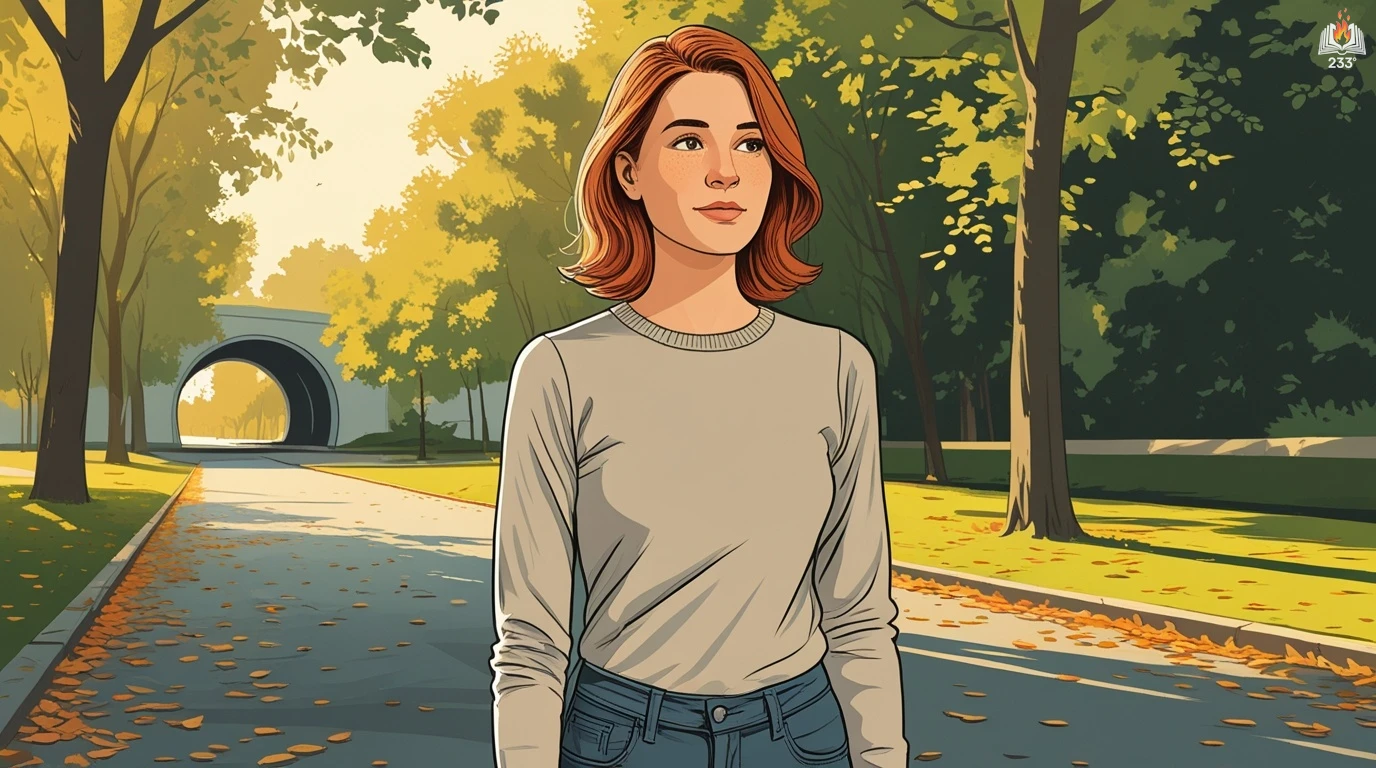


Finding Chika by Mitch Albom, published in 2019, is a deeply emotional memoir chronicling the true story of Chika Jeune, a spirited Haitian orphan whose life irrevocably alters Albom’s own. Best known for books like Tuesdays with Morrie, Albom departs from his fictional narratives to deliver a heartrending tribute to a child who becomes his daughter in every meaningful way. This work is not part of a series but is intimately connected to Albom’s humanitarian work at the Have Faith Haiti Mission. With tenderness and urgency, Albom recounts the joys and sorrows of bringing Chika to the United States for medical treatment, blending memoir with a soulful meditation on parenthood, grief, and love.
Plot Summary
A man named Mitch arrives in Haiti following a devastating earthquake, expecting only to offer aid. What he finds is a mission filled with children, laughter, and an unexpected tug on his soul. Among the children eventually brought into the mission is a three-year-old girl named Chika Jeune. Born in a modest home near a breadfruit tree and carried into the aftermath of destruction, Chika has already lost much – her mother to childbirth, her home to the earth’s trembling rage. Yet she arrives at the mission with ribbons in her hair and fire in her spirit, unafraid, commanding attention with her bold gaze and bossy demeanor.
Chika is not one to wait in the shadows. Within weeks, she asserts herself as the informal leader of the children – declaring who goes first for the bathroom, what toy is appropriate, where lines should be drawn. Her voice carries more authority than her size would suggest, and soon, even the older children begin to defer to her. She’s tough, sharp, endlessly curious, and not above theatrical tantrums, which become endearing emblems of her fiery nature.
But as time passes, subtle changes appear. Her smile begins to lean to one side. Her walk grows unsteady. When her mouth droops and her gait falters, the mission’s director calls Mitch in the United States. Something is wrong. An MRI is performed in the only available scanner in Haiti. The results are as vague as they are terrifying – a mass in the brain, its nature unknown. No one in Haiti can help.
She is flown to America, wrapped in a sweater too warm for the season, wide-eyed at hot water from a faucet, and unsure what to make of televisions in multiple rooms. Mitch and his wife, Janine, open their home to her, thinking it a temporary stay – a few months, a quick procedure, and then a return to Haiti. They welcome her with blankets, dolls, and hope, unprepared for how fully she will settle into their lives.
The diagnosis arrives like a blow to the chest: DIPG – diffuse intrinsic pontine glioma, a rare, inoperable brain tumor found mostly in children. The prognosis is brutal, the survival rate virtually nonexistent. At most, a few months, maybe more with radiation. But Mitch and Janine do not accept this quietly. They decide to fight. Chika, as always, seems ready for a challenge. With her mischief and stubborn streak, she gives no indication of surrender.
What follows is a winding, desperate journey across cities and countries in search of any miracle, any treatment, any spark of possibility. Hospitals in Ann Arbor, New York, Los Angeles. Consultations in Germany. An extended stay in Mexico, where experimental treatments are tried with cautious optimism. The couple uproots their lives to care for her, adjusting to the rhythms of parenting a terminally ill child. They become her protectors, her nurses, her teachers, her parents.
Yet even as her body weakens, Chika remains irrepressible. She sings, demands bedtime stories, plays dress-up, and interrogates her adoptive parents with pointed, innocent questions. Why don’t they have children of their own? Why did she get sick? Will she get better? Her presence becomes the center of their home, and love unfurls in places they hadn’t known existed. In her, they discover a kind of family neither had expected but now couldn’t imagine being without.
The days stretch and contract with the rhythm of tests and appointments, of good days and bad, of quiet moments holding her hand and loud ones full of laughter. Mitch watches as Janine rises to motherhood with gentle strength, comforting Chika through scans and sleepless nights. The home becomes a sanctuary of resilience, every corner filled with drawings, dolls, and the soft echo of a child’s voice.
Time, however, does not bend to love’s pleading. The treatments lose their edge. The body, small and brave, begins to falter. Walking turns to shuffling. Talking grows slurred. Yet Chika’s spirit, radiant and commanding, never dims. She remains the teacher even as she fades, reminding Mitch and Janine of the importance of joy, of presence, of love given without conditions.
Her favorite question, asked again and again, becomes a lesson in its own right – how did you find me? Not how did I come to you, but how did you find me? As if she were always waiting, always meant to be theirs. And in the quiet hours, when her voice no longer fills the rooms, her memory continues to teach them. About courage. About vulnerability. About the exquisite pain of loving and losing a child who was never theirs, yet wholly theirs.
Chika’s visits do not end with her last breath. She returns in dreams, in flickers of memory, in imagined conversations at Mitch’s desk. She challenges him still, urging him to write, to remember, to not forget. Through her absence, she remains – bright-eyed, clever, forever six.
In telling her story, Mitch finds that he is not only recounting a life, but preserving it. Chika is no longer a child in need of saving. She becomes the guardian of their growth, the flame that refuses to go out, the proof that love – even when it ends in loss – is never wasted.
Main Characters
Chika Jeune – A lively, courageous girl from Haiti, Chika bursts with energy and an assertive personality that commands attention from the moment she arrives at the Have Faith Haiti Mission. Diagnosed with a terminal brain tumor at age five, she becomes the emotional core of the narrative. Her presence challenges, teaches, and transforms the lives of those around her. Her voice—mischievous, thoughtful, and wise beyond her years—is brought to life through imagined conversations with Mitch, offering a moving portrayal of a child’s spirit in the face of immense adversity.
Mitch Albom – The author and narrator, Albom transforms from journalist and philanthropist into a devoted parental figure. His journey is one of awakening, as he opens his heart to the responsibilities and vulnerabilities of fatherhood. Through his reflections, we witness the evolution of a man learning to love unconditionally, to grieve profoundly, and to find beauty in the act of caregiving.
Janine Sabino Albom – Mitch’s wife, Janine, plays a quieter yet equally crucial role. Her nurturing presence and emotional resilience provide a steadying force throughout Chika’s illness. Through her gentle guidance and compassion, we see how love and motherhood transcend biological bounds.
Theme
The Transformative Power of Love – Central to the memoir is the idea that love—pure, selfless, and unreserved—can reshape lives. Chika’s presence expands Mitch and Janine’s understanding of parenthood and connection. Love becomes the force that sustains them through fear, uncertainty, and eventual loss.
Grief and Memory – Albom explores grief not as a single moment of mourning, but as a lifelong reckoning with memory and absence. Through imagined dialogues with Chika, Albom attempts to preserve her presence, affirming that remembrance is a way of keeping love alive.
Faith and Providence – Faith, both religious and existential, underpins much of the narrative. From Chika’s survival after the Haitian earthquake to the inexplicable comfort her spirit brings after death, the story leans into the mysterious workings of divine will and the hope it provides amid despair.
The Innocence and Wisdom of Children – Chika, though young, possesses an uncanny ability to probe life’s biggest questions. Her perspective is a blend of childlike wonder and intuitive wisdom, offering lessons about joy, courage, and the value of being present.
Writing Style and Tone
Mitch Albom’s writing is clear, poignant, and infused with warmth. His prose carries the rhythm of intimate storytelling, drawing the reader into each moment as though it’s being whispered across a quiet room. Shifting between real-time narration and internal conversations with Chika, Albom builds a unique structure that mirrors the emotional duality of parenting a dying child—clinging to the present while being haunted by the future. His language is accessible, rich with metaphor, and always guided by emotional truth rather than embellishment.
The tone of Finding Chika is deeply compassionate and often elegiac, but it never loses sight of joy. Albom delicately balances sorrow with humor, allowing Chika’s vivaciousness to shine through even in the darkest moments. There’s an undercurrent of spiritual reflection, lending a meditative quality to the text. The blend of memoir, tribute, and imagined dialogue creates a tender portrait that is both heart-wrenching and hopeful.
Quotes
Finding Chika – Mitch Albom (2019) Quotes
“There are many kinds of selfishness in this world, but the most selfish is hoarding time, because none of us know how much we have, and it is an affront to God to assume there will be more.”
“The most precious thing you can give someone is your time, Chika, because you can never get it back. When you don’t think about getting it back, you’ve given it in love.”
“What we carry defines who we are and the effort we make is our legacy.”
“But none of us are assured of tomorrow. It's what we do with today that makes an impact.”
“Children wonder at the world. Parents wonder at their children’s wonder. In so doing, we are all together young.”
“Hopelessness can be contagious, but hope can be too. And there is no medicine to match it.”
“Children are not a distraction from more important work. They are the most important work.” —Dr. John Trainer”
“A child is both an anchor and a set of wings. My old way of doing things was gone.”
“C. S. Lewis, the man who wrote the Narnia books you so loved, once said it is easy to trust a rope as long as you’re using it to wrap a box. But when you’re clinging to it over a deadly precipice, it’s something else entirely.”
“It began, as many good things do, with a coincidence.”
“The most precious thing you can give someone is your time, Chika, because you can never get it back. When you don’t think about getting it back, you’ve given it in love. I learned that from you.”
“Everything in this world is music if you can hear it.”
“Dying is only one thing to be sad about, Mitch. Living unhappily is something else”—”
“One of the best things a child can do for an adult is to draw them down, closer to the ground, for clearer reception to the voices of the earth.”
“We adults can be a wretched lot Chika, yet in every child's face we see the Lord has not given up on us.”
“Hopeless change be contagious, but hope can be too. And there is no medicine to match it.”
“A child is both an anchor and a set of wings.”
“because children, especially sick children, have a toughness unique to their young souls, one that can comfort even the fretting adults around them.”
“But none of us are assured of tomorrow. It’s what we do with today that makes an impact.”
“Look. It's one of the shortest sentences in the English language. But we don't really look, Chika. Not as adults. We look over. We glance. We move on.”
“Families are like pieces of art, they can be made from many materials. Sometimes they are from birth, sometimes they are melded, sometimes they are merely time and circumstance mixing together, like eggs being scrambled in a Michigan kitchen.”
“Your voice was a weather vane, it told us how your wind was blowing.”
“But none of us are assured of tomorrow. It’s what we do with today that makes an impact. Chika filled every day. She drank it in. She lived it up. And always, always, she affected someone, most often by making them smile.”
“but the most selfish is hoarding time, because none of us know how much we have,”
“It takes a special strength to take care of a child, Chika, and a whole different strength to admit you cannot.”
“You took a huge part of us with you, Chika, the best part, but it was yours to take, and I hope it will always be close to you.”
We hope this summary has sparked your interest and would appreciate you following Celsius 233 on social media:
There’s a treasure trove of other fascinating book summaries waiting for you. Check out our collection of stories that inspire, thrill, and provoke thought, just like this one by checking out the Book Shelf or the Library
Remember, while our summaries capture the essence, they can never replace the full experience of reading the book. If this summary intrigued you, consider diving into the complete story – buy the book and immerse yourself in the author’s original work.
If you want to request a book summary, click here.
When Saurabh is not working/watching football/reading books/traveling, you can reach him via Twitter/X, LinkedIn, or Threads
Restart reading!