Ramses the Damned: The Reign of Osiris (2022) is the third installment in the Ramses the Damned series, co-authored by Anne Rice and her son Christopher Rice. Set against the rising tensions of World War I, the novel expands the lore of immortals created by an ancient elixir, delving deeper into the politics, passions, and perils of an eternal existence. The story orbits a secretive, powerful alliance of immortals grappling with the temptation to intervene in a war that threatens the fragile veil between their secretive world and that of mortals.
Plot Summary
In the sultry heat of July 1914, amidst the gathering clouds of a world war, a Russian nationalist named Nikolai Vasilev moved through the canals of Saint Petersburg with a secret – one that pulsed with ancient power. In a case he carried were stones gleaming with immortal potential, remnants of an elixir lost to time and myth. With each step, he came closer to reshaping the future. His target: those tied to Lawrence Stratford’s final discovery in Cairo. On his list were immortals and mortals alike, guardians of a secret that refused to remain buried.
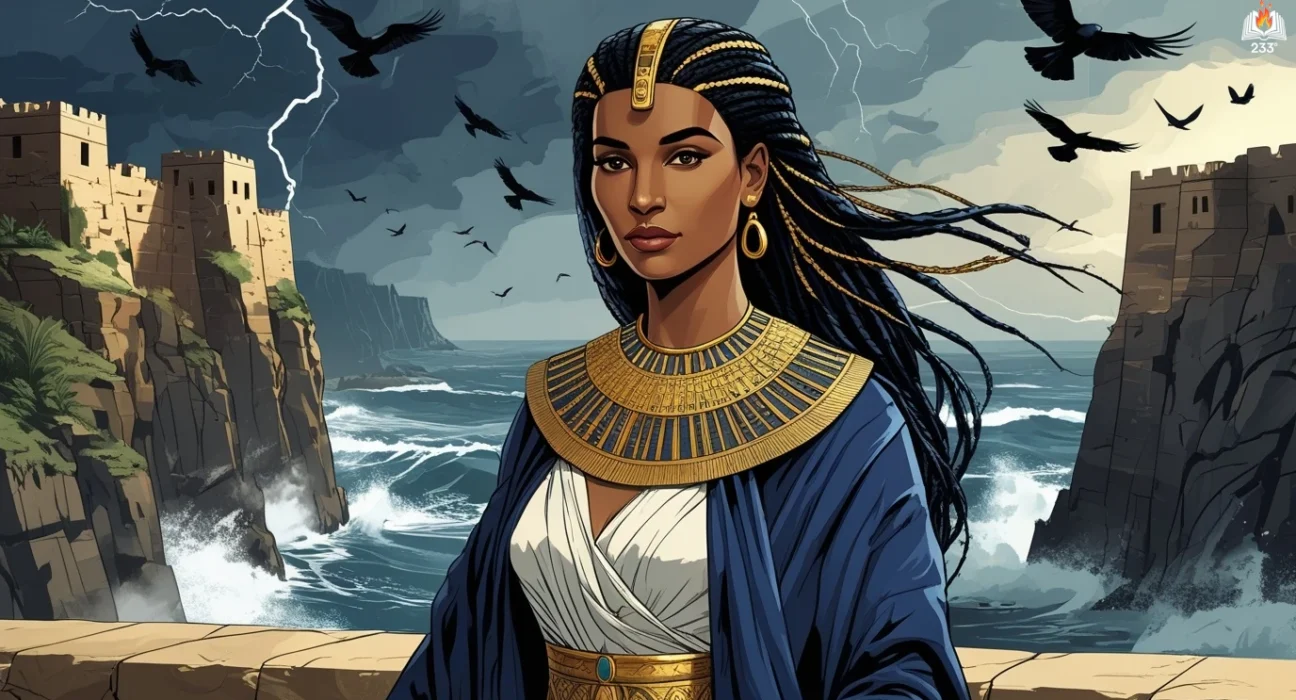
Far from the icy streets of Russia, on the windswept cliffs of Cornwall, an ancient queen stirred in her stone-walled citadel. Bektaten, bearer of eight millennia, sensed the unrest swelling in the mortal world. The war that loomed was not like others she had witnessed. This would be a conflagration of machines and fury, beyond the reach of reason. Within her castle, she penned letters to her newly forged circle – immortals brought together by chance, betrayal, and the miraculous elixir she once devised.
Julie Stratford, now transformed by the same elixir that revived Ramses the Great, stood in her London home, haunted by grief and bound by duty. The journals of her murdered father were entrusted to the British Museum, but memories lingered like ghosts in the Egyptian Room. Her beloved, the resurrected Ramses, struggled under the weight of Bektaten’s decree – no immortal intervention in the war to come. Though once a pharaoh who strode through centuries, Ramses now found himself subject to a queen’s will.
The letters reached all corners of their dispersed alliance. Elliott Savarell, an aristocrat who once wandered Europe in hedonistic freedom, received his summons amidst the hush of a gentleman’s club. Though newly immortal, Elliott was no longer a man defined by indulgence. The letter urged him north, to reunite with his estranged son, Alex – now the mortal lover of a woman who might be the resurrected Cleopatra.
On the Isle of Skye, under the sharp Scottish light and whispering winds, Sibyl Parker found herself at the center of a mystery she never imagined. An American novelist by trade, she had followed dreamlike visions across the Atlantic only to discover that her mind was tethered to Cleopatra’s soul. Cleopatra, fierce and fragmented, had been brought back to life by Ramses in a moment of reckless longing. But it was Sibyl’s presence, her memories channeled through fiction, that gave the queen her sense of self once more. They shared not only vision and memory, but also passion – along with Alex, the once-stoic son of Elliott, now transformed into a man remade by love.
Together, the three built a fragile sanctuary in the highlands. Yet Cleopatra remained uneasy. Bektaten’s letter offered forgiveness and protection, but also veiled warnings. The queen who had once ruled Egypt now bristled at the notion of a new sovereign claiming dominion over her fate.
Elliott heeded the call and journeyed to Skye. He found his son changed, drawn deeper into immortal secrets and lost in the intoxicating orbit of Cleopatra and Sibyl. Father and son stood at a precipice of truth and silence. Elliott, guided by Bektaten’s words, chose reconciliation over distance, seeking not only to protect his blood but to understand the tide that had carried them both into this strange, eternal current.
Meanwhile, in London, Julie prepared for departure. The war cast its shadow across Europe, and the time had come to leave. She and Ramses would sail for America, seeking refuge far from the conflict and the temptations it might stir. But their home, filled with relics of her father and memories of a life now passed, refused to let go easily. The plants in the conservatory, fed with drops of the elixir, bloomed beyond nature’s command. To protect their secret, Julie was forced to consider their destruction. But the act, like so much else in her life, felt like a betrayal of love.
Before they could leave, Ramses and Julie paid a silent visit to Lawrence Stratford’s grave. Beneath the weight of immortal years and the ache of grief, they honored the man whose death had begun this new chapter. There, amidst the stone markers and quiet winds, they burned Bektaten’s letter, as instructed. Its ashes scattered among the dead, carrying with them the vow that no immortal hand would shape the course of war.
Elsewhere, Nikolai Vasilev set his plans into motion. With the stones in his possession and a fury against the corruption of Europe, he began a series of assassinations meant to sever the ties that bound the immortals to their past. His vision was pure – a restored Russia, led by those who wielded the elixir not for peace, but for domination. The power to destroy, to unmake, to elevate, all rested in the ancient formula.
Yet Bektaten’s network was vast, her Heralds of the Realms ever watchful. She knew of Nikolai. She read the signs in the rivers and whispers of couriers. Her warnings were clear: the war that loomed would tempt even the wisest among them. But any immortal who intervened would face her wrath.
Across the globe, her council took form – not of rulers, but of witnesses. Immortals born of empires, scholars, lovers, and dreamers, each bound by an elixir and a queen who demanded restraint. While the world marched into fire and steel, they retreated to the shadows, where ancient powers watched with immortal eyes, bound not by fear, but by the burden of eternity.
And as the cannons thundered across the fields of Europe and the skies filled with ash, the immortals waited – not as saviors, but as guardians of a fragile silence, lest their truths burn brighter than the fires of war.
Main Characters
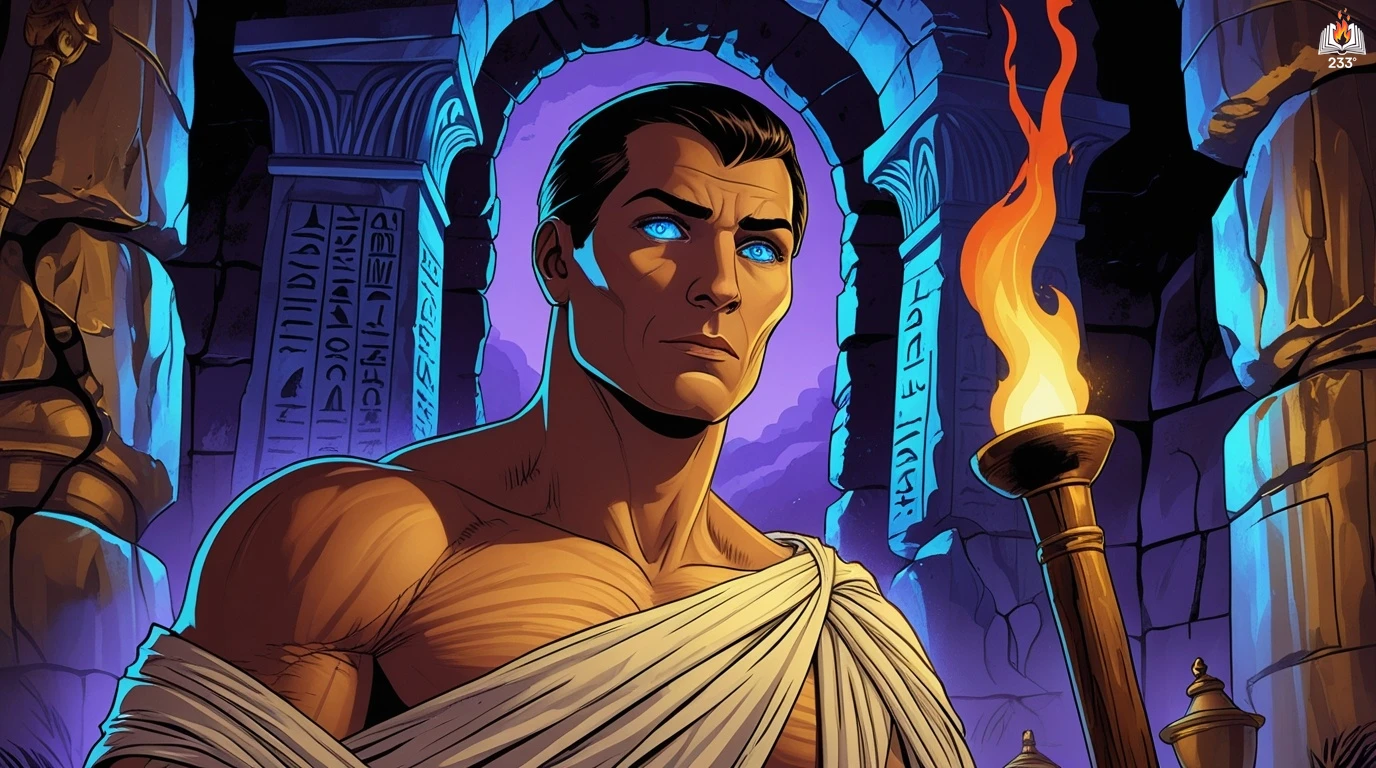
Ramses (Mr. Reginald Ramsey): Once the great pharaoh of Egypt, Ramses is now an immortal man burdened with centuries of solitude and regret. Wise yet impetuous, he struggles with his newfound allegiance to Bektaten and the responsibility of maintaining peace among his kind. His enduring love for Julie Stratford anchors him, even as he bristles against Bektaten’s authority.
Julie Stratford: Formerly a mortal scholar and daughter of famed Egyptologist Lawrence Stratford, Julie becomes immortal after Ramses shares the elixir with her. Intelligent, passionate, and fiercely independent, she must navigate a new identity shaped by power, love, and grief. Julie represents a bridge between ancient knowledge and modern sensibility.
Bektaten: A sovereign immortal over eight thousand years old, Bektaten is the creator of the elixir of life. Regal and commanding, she assumes a matriarchal role over the newer immortals. Her power is matched by her depth of experience, but her protective decrees often clash with the desires of those she guides.
Cleopatra: Resurrected by Ramses, Cleopatra is a complex figure—at once regal, broken, and passionate. She shares a deep psychic and emotional link with Sibyl Parker, which raises questions about identity, soul, and memory. Her resurrection brings danger, possibility, and echoes of a long-lost empire.
Sibyl Parker: A novelist from America, Sibyl’s uncanny visions of Cleopatra’s past lead her to Britain and into the fold of the immortals. Introspective and empathetic, she becomes Cleopatra’s lover and mental anchor, embodying the novel’s exploration of spiritual entanglement across time.
Elliott Savarell: A recently turned immortal aristocrat with a history of detachment and indulgence, Elliott finds himself grappling with fatherhood, responsibility, and his place in the immortal world. Witty, restless, and resourceful, he is both a diplomat and a potential disruptor.
Alex Savarell: Elliott’s son, formerly a buttoned-up aristocrat, undergoes a transformation through his love for Cleopatra. His acceptance of immortality and its implications puts him at the center of a deeply emotional and metaphysical journey.
Nikolai Vasilev: A Russian zealot driven by ideological fury and a fanatical devotion to preserving a “true” Russia. He becomes a major antagonist as he seeks to harness the power of the elixir to remake the world according to his vision.
Theme
Immortality and Power: At the heart of the story lies the elixir of life, a symbol of both miracle and menace. The novel probes the burden of eternal life – how power distorts, liberates, and isolates those who wield it.
War and Temptation: Set against the backdrop of World War I, the narrative explores the moral dilemma of whether immortals should interfere in human affairs. Bektaten’s firm edict to abstain from involvement underscores the fragility of balance between godlike power and human suffering.
Identity and Memory: Through Cleopatra and Sibyl’s psychic connection, the novel examines the nature of selfhood. Are we our memories, our choices, or something more eternal? This theme challenges notions of linear identity and reincarnation.
Love Across Time: Love in this narrative transcends centuries and mortality. Whether it’s the rekindled passion between Ramses and Cleopatra or the blossoming bond between Sibyl and Alex, love is shown as a force that reshapes lives and destinies.
Legacy and Lineage: Characters like Elliott and Julie grapple with the legacies of their forebears. The ghosts of Lawrence Stratford and the fractured relationship between Elliott and Alex reflect how familial inheritance can either chain or liberate.
Writing Style and Tone
Anne and Christopher Rice craft the novel with a richly atmospheric style that fuses historical detail with fantastical grandeur. Their prose is lush, poetic, and often operatic, lending a mythic tone to the characters and their internal dilemmas. The story flows with a heightened sense of drama, reminiscent of gothic literature, where emotions surge and stakes remain grandly existential. The language is dense with emotion and ornate description, ideal for the genre’s sprawling scope.
Narratively, the book weaves multiple perspectives with smooth transitions, using letters, inner monologues, and vivid scenes to build tension and character depth. The tone is contemplative, passionate, and at times tinged with sorrow. It juxtaposes the ancient with the modern – immortal beings reacting to typewriters, telegrams, and trench warfare. The result is a seamless blend of fantasy and historical fiction, anchored by the authors’ deep philosophical inquiries into power, morality, and the human soul.
Quotes
The Reign of Osiris – Anne Rice (2022) Quotes
“We are all born without our consent. Should it really be so thoroughly shattering to be reborn the same way.”
“You have balanced power with wisdom, despite your rash acts.”
“Life is too strong to be contained. It is never destroyed. Divorced from the flesh, it moves through all matter and form to find flesh again.”
“All life seeks rebirth when removed from the mortal realm. All life, through its very nature, returns.”
“No mortal lives long enough to forget their great loves entirely, do they?”
“His sudden need and urgency a reminder of how recently he’d been freed from the dark, from death. And how easily convinced he was it might try to reclaim him.”
“I have lost you, my king, these words said. I sent you forth on this mission and now I have lost you. And it is my burden to retreive you.”
“There is no weakness in grief. There is no weakness in love. No one can rule without them.”
“It doesn’t weaken us as women, as immortals, to follow our love, even if it leads to a man.”
“You were mortal when you raised him. And he was a miracle to you as he was for me. And I imagine you grieve for him much as I do.”
“Never ad his ancient mortal past and his immortal present collided with such clarity and force.”
“This was a living, radiant being. A woman, she realized, but dressed in the smart clothes of a wealthy man, with a head of brown curls and eyes so startlingly blue Anya lost her breath.”
“It would be a living thing once more soon, his embrace said, and so even now it required tenderness.”
“In ones so ancient, submission is but a quiet veil before a cosmos of private thoughts. It’s not submission so much as seclusion.”
“For with solitude had come freedom.”
“There is no weakness in grief. There is no weakness in love.”
“Again it was words that healed. Words and memory.”
“No mortal lives long enough to forget their great loves entirely, do they.”
“I am...unfinished.”
“Death is the collapse of time.”
“Sometimes we are blinded by the translation we want to be true, and not the one that is correct.”
“But truly, who has greater power than the god of death?”
“The will of a single god can be felt by all but those who are lost in delusion.”
“I believe a single god waits for us beyond the dark”
“Only if, upon stepping into the next great realm of existence, the afterlife itself, you insist on looking backwards, of turning away from the dazzling experiences that await you in favor of clinging to the physical past. Only then is it not transcendence.”
“When it comes to death, I fear I shall be met by nothing, but I hope I will be embraced by everything.”
“I like to think I'm too humble to declare there's nothing. After we die, that is.”
We hope this summary has sparked your interest and would appreciate you following Celsius 233 on social media:
There’s a treasure trove of other fascinating book summaries waiting for you. Check out our collection of stories that inspire, thrill, and provoke thought, just like this one by checking out the Book Shelf or the Library
Remember, while our summaries capture the essence, they can never replace the full experience of reading the book. If this summary intrigued you, consider diving into the complete story – buy the book and immerse yourself in the author’s original work.
If you want to request a book summary, click here.
When Saurabh is not working/watching football/reading books/traveling, you can reach him via Twitter/X, LinkedIn, or Threads
Restart reading!