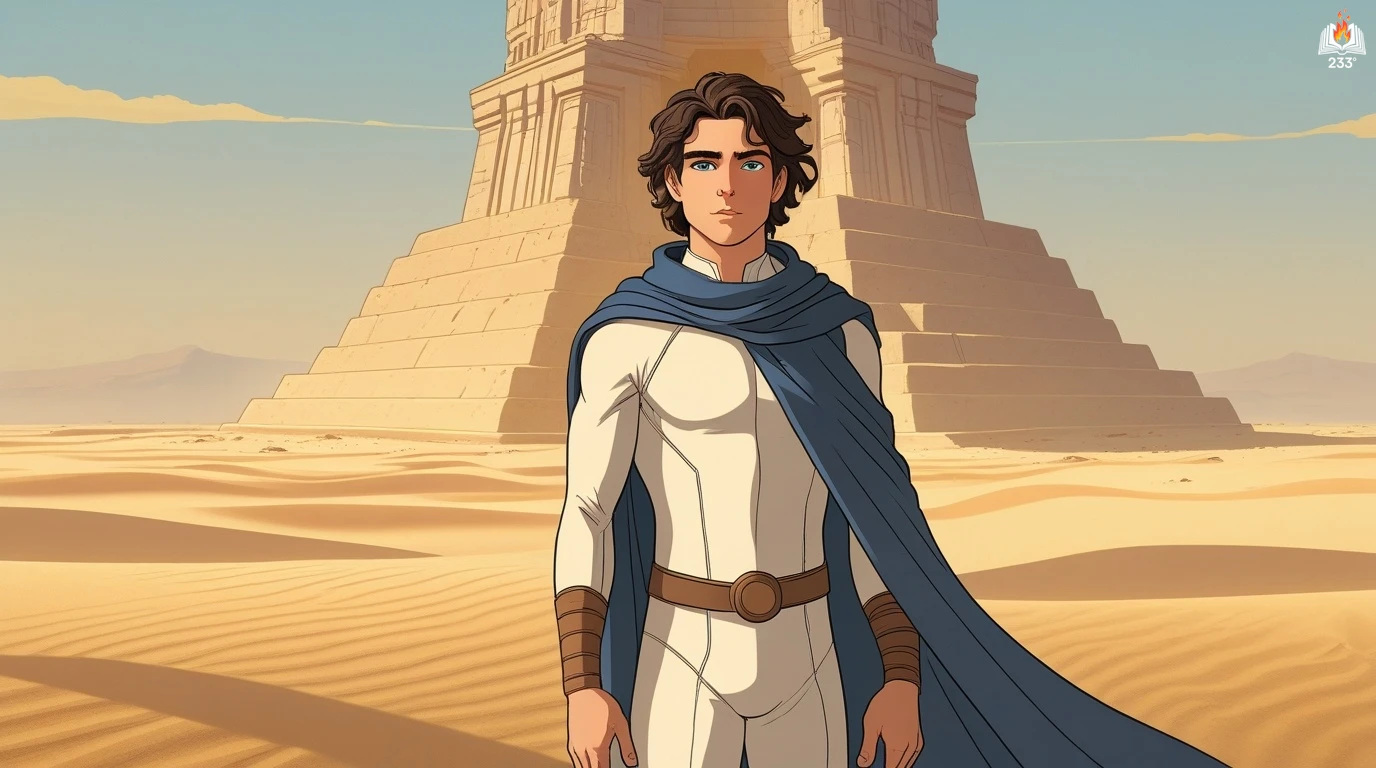
How Much Land Does a Man Need? by Leo Tolstoy, first published in 1886, is a parable-like short story that scrutinizes the destructive nature of human greed and the illusion of material success. Written during Tolstoy’s later, spiritually reflective period, the story follows a peasant’s obsessive quest for more land and the eventual tragic consequences of his insatiable ambition. It embodies the moral clarity and spiritual urgency characteristic of Tolstoy’s work after his religious conversion.
Plot Summary
In a quiet Russian village, two sisters sat over tea, one from the town, polished and proud, the other a peasant’s wife, sun-worn and modest. Their conversation turned to the merits of their lives – the luxury of the city against the simplicity of the soil. The peasant’s husband, Pahóm, listened silently from atop the stove. Inwardly, he agreed with his wife’s defense of rural life but felt a flaw in it all: the lack of land. If only he had enough land, he thought, not even the Devil could tempt him.
The Devil, it seemed, was listening. Amused by Pahóm’s arrogance, he decided to test him, planting temptations along his path. Soon, an opportunity arrived. A nearby lady was selling her land, and Pahóm, envious of others making purchases, scraped together money with his wife’s help to buy forty acres. At first, it brought joy. He ploughed and sowed on his own soil, walked through his meadows with pride, and believed himself secure at last.
But the peace did not last. Neighbors’ cattle trespassed, and though he tried to be civil, Pahóm eventually resorted to the courts. The community turned cold toward him. Then came the rumors of fertile lands across the Volga. A traveling peasant spoke of rich black soil, endless fields, and generous grants for settlers. The promise was too much. Pahóm sold his land and moved with his family to the new settlement.
There, he was granted five shares of land – a bounty compared to before – but still, it was not enough. The best lands were scattered or already taken. He rented additional fields, grew wheat, and prospered. Yet the toil of chasing after good land, the disputes over boundaries, the frustrations of renting year after year, all gnawed at him. He longed for land of his own, all in one place.
Another rumor arrived like wind in a dry field. A dealer told of the Bashkírs – a simple, generous people far away who sold land for almost nothing. The dealer had bought thirteen thousand acres for a mere thousand roubles and some gifts. Pahóm was electrified. Why settle for a few hundred acres when entire miles could be his for the same price?
He traveled with his servant, loaded with gifts, across hundreds of miles until he reached the land of the Bashkírs. Their tents stood scattered over the plains, their horses grazed freely, and their lives seemed untouched by greed. The Bashkírs welcomed Pahóm warmly, accepted his gifts, and offered him land – as much as he could walk around in a day, for a thousand roubles.
The Chief explained the rules. Start at sunrise, walk all day, marking the land with a spade, and return before sunset to the point of origin. Whatever area he circled would be his. But if he failed to return by sundown, he would lose both land and money. It was a tempting challenge. Pahóm imagined walking thirty-five miles, securing a vast estate. That night he lay awake, giddy with dreams of wealth, planning the path in his mind.
Just before dawn, he dozed and dreamt. In the dream, he saw the Bashkír Chief laughing, then the dealer, then the peasant from the Volga – and finally, the Devil himself. Before the Devil lay a man, barefoot and lifeless. When Pahóm looked closer, he saw it was himself.
He awoke with a start. The morning had come. He urged the Bashkírs to rise, and they set out into the steppe. The sun was just breaking over the horizon as they reached the starting point. Pahóm took off his coat, tightened his belt, and stepped forward.
He walked steadily at first, stopping every few miles to dig a turf marker. The land was flat and lush, stretching endlessly. As the day warmed, he removed his boots, eager to cover more ground. The longer he walked, the richer the land appeared, and he kept going, pushing the boundaries of his imagined estate. Noon came, and with it, fatigue. But the sight of a fertile hollow coaxed him into walking further still. Only after he circled it did he finally turn toward the hill where the Bashkírs waited.
The third leg of the journey dragged beneath the heat. He tried to shorten this stretch but was now a great distance away. When he began the final return leg, he realized the danger – the sun was already leaning toward the west, and he had ten miles to go. His feet were blistered, legs trembling, throat parched. He pressed forward, but the effort was immense.
As the sun dipped lower, panic gripped him. He dropped his coat, his boots, his water flask, his hat – everything but the spade – and ran. His heart pounded, breath heaved, vision blurred. The people on the hill beckoned frantically, and still he ran, the cap with the money glinting in the fading light.
The sun met the horizon. From his place below, it seemed to have set. He cried out in despair but realized the people above still saw it. Summoning the last of his strength, he climbed the slope, reached the cap, and collapsed.
The Bashkírs cheered. He had succeeded. But blood flowed from his mouth. Pahóm lay still. He was dead.
His servant picked up the spade and dug a grave. It was just enough for Pahóm – six feet from head to heels. That was all the land he needed in the end.
Main Characters
Pahóm – A poor but hardworking Russian peasant whose simple desire for more land spirals into unrelenting greed. Initially modest and industrious, Pahóm’s increasing ownership of land brings about a shift in his character – from hopeful and enterprising to prideful and obsessive. His journey from contentment to discontent, and ultimately to ruin, reflects a poignant moral decline driven by unchecked ambition.
The Devil – A metaphysical presence who overhears Pahóm’s boast that he would not fear even the Devil if only he had enough land. The Devil, amused and provoked, manipulates events to trap Pahóm through temptation, making him an unseen but pivotal antagonist who embodies the corrupting influence of desire.
The Bashkírs – A nomadic group depicted as generous and naïve. They offer land to Pahóm under seemingly simple terms, serving as the final catalyst for his downfall. Though not malevolent, their customs and openness ironically lure Pahóm into making the fatal mistake of overreaching.
Pahóm’s Wife and Family – Though not deeply explored, they represent the life of humble stability that Pahóm leaves behind in pursuit of wealth, highlighting what is sacrificed in his quest.
Theme
Greed and Ambition: The central theme of the story is the corrupting nature of greed. Pahóm’s desire for more land initially stems from a rational wish for stability, but soon becomes a relentless pursuit of excess. His belief that happiness lies just beyond the next acquisition blinds him to the cost.
The Folly of Materialism: Tolstoy critiques the idea that wealth brings freedom and security. As Pahóm accumulates more land, he becomes more entangled in conflict and anxiety. Instead of liberating him, ownership becomes a burden and a trap.
Human vs. Nature: Throughout the story, land is both a symbol of prosperity and a silent force that outlasts human ambition. Pahóm attempts to conquer nature for personal gain, but in the end, it is nature – in the form of exhaustion and death – that reclaims him.
Irony and Justice: The story’s conclusion delivers a stark irony – after striving for vast lands, Pahóm is ultimately allotted only six feet of earth, enough to bury him. This final twist serves as poetic justice and a sobering reflection on the limits of human desire.
Writing Style and Tone
Tolstoy employs a direct, almost fable-like narrative style that mirrors the clarity and austerity of folk tales. His prose is deceptively simple, yet packed with moral weight and philosophical resonance. There is little ornamentation in the language – instead, the rhythm and repetition evoke the oral tradition of storytelling, making the moral lesson all the more impactful.
The tone is didactic yet empathetic, reflecting Tolstoy’s belief in the spiritual dangers of modernity and material wealth. Though Pahóm is ultimately condemned by his own choices, the narration does not mock or scorn him; rather, it views him as emblematic of a broader human failing. The gradual shift from pastoral calm to existential urgency is masterfully rendered, with the final scenes imbued with tension and tragic inevitability. The ending, with its stark imagery and grim finality, resonates like a moral bell tolling across the reader’s conscience.
Quotes
How Much Land Does a Man Need? – Leo Tolstoy (1886) Quotes
“A moment's pain can be a lifetime's gain.”
“I understood that men only think that they live by caring only about themselves: in reality they live by love alone.”
“If a man has the will he can learn anything.”
“An hour to suffer, a life-time to live.”
“You live in better style than we do, but though you often earn more than you need, you are very likely to lose all you have. You know the proverb, 'Loss and gain are brothers twain.' It often happens that people who are wealthy one day are begging their bread the next.”
“There is plenty of land," thought he, "but will God let me live on it? I have lost my life, I have lost my life! I shall never reach that spot!”
“At first, in the bustle of building and settling down, Pahom was pleased with it all, but when he got used to it he began to think that even here he had not enough land.”
“An hour to suffer, a lifetime to live.”
We hope this summary has sparked your interest and would appreciate you following Celsius 233 on social media:
There’s a treasure trove of other fascinating book summaries waiting for you. Check out our collection of stories that inspire, thrill, and provoke thought, just like this one by checking out the Book Shelf or the Library
Remember, while our summaries capture the essence, they can never replace the full experience of reading the book. If this summary intrigued you, consider diving into the complete story – buy the book and immerse yourself in the author’s original work.
If you want to request a book summary, click here.
When Saurabh is not working/watching football/reading books/traveling, you can reach him via Twitter/X, LinkedIn, or Threads
Restart reading!