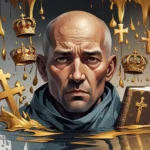
Three Questions by Leo Tolstoy, written in 1885 and translated into English by Louise and Aylmer Maude in 1906, is a profound moral tale that explores the nature of wisdom and ethical action. Set in an unnamed kingdom, the narrative centers around a king who seeks answers to three fundamental questions he believes will enable him to rule wisely and lead a fulfilled life. Though brief in length, the story’s simplicity belies the depth of its philosophical insight, drawing the reader into a contemplative parable about time, human connection, and the nature of doing good.
Plot Summary
A certain king, troubled by the uncertainty of life and the weight of his responsibilities, longed for wisdom that would guide him through all affairs. He believed that if only he knew the right time for every action, the right people to listen to, and the most important thing to do, he would never falter in any undertaking. These three questions consumed him, and he proclaimed throughout his kingdom that he would richly reward anyone who could provide the answers.
Men of learning came with replies, but none satisfied him. Some declared that to act at the right time, one must draw up a strict schedule and adhere to it unflinchingly. Others argued that decisions must arise from attentive awareness of the moment, for no plan could anticipate all that would come. Still others suggested that a wise council was needed to guide such choices, while some believed only magicians, with their knowledge of the future, could provide certainty. The answers to the second and third questions varied just as widely – some claimed that the king needed his councillors most, others said priests, doctors, or warriors. For the most important occupation, some argued for the pursuit of science, others for warfare or religious devotion. The king found no agreement among these views and gave no reward.
Yet the questions remained in his heart, and he determined to seek out a hermit known across the land for his great wisdom. The hermit lived alone in a forest, receiving only simple folk. So the king set aside his royal garb, left behind his guards, and journeyed alone, on foot, to the hermit’s hut.
He found the old man outside, bent and frail, digging the earth with effort. The king greeted him and explained his purpose, asking his three questions. The hermit gave no reply, only continued his slow work. Seeing the old man’s fatigue, the king offered to dig, and the hermit yielded the spade. The king worked for hours, breaking the soil and turning the beds, while the hermit sat watching in silence. The sun began to sink behind the trees, and still no answer came. At last, weary and frustrated, the king again begged for a reply.
Before the hermit could speak, a man came stumbling out of the woods, blood streaming from a wound in his stomach. The king and the hermit rushed to him. Together they unfastened the man’s clothing, revealing a deep gash. The king washed the wound and bound it with his own handkerchief and a towel from the hut. The bleeding continued, and the king dressed the wound again and again, until the flow finally ceased. The man, weak and gasping, asked for water. The king fetched it and helped him drink.
As night fell and the air grew cool, the king and hermit carried the wounded man into the hut and laid him on the bed. Exhausted, the king crouched on the threshold and soon fell into a deep sleep, where he remained through the short summer night.
When morning came, the king woke slowly, disoriented, until his gaze met the eyes of the man on the bed, who watched him with quiet intensity. The man, his voice frail, asked for forgiveness. He confessed that he was once the king’s enemy – his brother had been executed, and his land taken by royal order. The wounded man had lain in ambush to take revenge, but when the king did not return from the forest, he emerged and was caught by the king’s bodyguards, who wounded him. He had fled, bleeding, and would have died had the king not cared for him. Now, ashamed and moved, he pledged loyalty, promising to serve the king faithfully, and to teach his sons to do the same.
The king, deeply moved, forgave him and promised to restore his land and ensure he was cared for. He left the man resting, and stepped outside to find the hermit sowing seeds in the garden they had dug together the day before. The king approached and once again asked for the answers he had sought.
The hermit, still kneeling, looked up and spoke. The king had already found his answers, though he had not realized it. Had he not stayed to help the hermit with his garden, the wounded man would have attacked him, and the king would have missed his chance at peace. So the time spent digging was the most important time. The hermit, in that moment, had been the most important man. Helping him had been the most important act.
Later, when the wounded man stumbled from the woods, tending to him became the most crucial task, for his life hung in the balance, and with it, the chance to heal a long-standing enmity. In that moment, the man was the most important person, and saving him the most urgent duty.
The hermit reminded the king that there is only one time that truly matters – now. It is the only moment over which any man has power. The most important person is the one who is with you now, for none can know whether they will meet another. The most important thing to do is to do good to that person, because that is the very purpose for which man was sent into life.
With these words, the king understood what his searching mind and restless heart had failed to grasp. He had come seeking wisdom in lofty truths, and found it in quiet labor, simple compassion, and the presence of another soul. And in that understanding, he found peace.
Main Characters
The King – A thoughtful and conscientious ruler, the king is tormented by three essential questions: when is the right time to act, who are the most important people, and what is the most important task. His willingness to humble himself – abandoning royal attire, seeking wisdom from a hermit, and even performing manual labor – speaks to his sincerity. His arc is one of self-discovery and enlightenment, moving from abstract concerns of power to a personal understanding of presence, compassion, and moral duty.
The Hermit – A reclusive and wise man known for his spiritual insight, the hermit does not directly answer the king’s questions but allows the king to experience the answers through his actions. Frail and humble, the hermit is a living embodiment of Tolstoy’s moral vision: simplicity, patience, and service to others.
The Bearded Man – Once the king’s enemy, this character seeks revenge for past wrongs but is unexpectedly wounded and saved by the king. His presence in the story illustrates the transformative power of mercy and forgiveness. His change of heart reinforces the story’s message about the importance of living in the present and treating others with compassion.
Theme
The Importance of the Present Moment – The story’s central message is that the most crucial time is “now.” Tolstoy underscores that the present is the only time in which we have power to act, and that true wisdom lies in using this time to do good. This theme is realized through the king’s unwitting answers to his own questions as he engages with the hermit and the wounded man.
Compassion and Moral Duty – Tolstoy emphasizes the ethical imperative to help those around us. The king’s acts of kindness – digging the hermit’s garden and tending to the wounded man – are presented as the highest forms of action. Through these moments, the story argues that doing good for others is the most important task one can undertake.
The Illusion of Control and the Limits of Human Knowledge – The king begins with a desire to control life through perfect knowledge. However, the story demonstrates that life’s meaning emerges not from control, but from responsiveness to others and openness to the unexpected. Wisdom is not in planning for all contingencies, but in acting rightly in each moment.
Transformation Through Action – The king, the hermit, and the wounded man all undergo subtle yet significant transformations through their interactions. These changes are not the result of philosophical debate, but of simple, selfless acts that reveal deeper truths about human nature and morality.
Writing Style and Tone
Tolstoy’s prose in Three Questions is spare, direct, and purposeful. The language is stripped of ornament, mirroring the parable-like quality of the story. This simplicity is not a limitation but a strength, focusing attention on the moral essence of the tale. Dialogue is minimal and functional, while narration is steady and unobtrusive, allowing the unfolding actions to carry the philosophical weight of the narrative.
The tone is meditative and sincere, tinged with a quiet urgency that reflects the king’s internal struggle and the broader existential questions at the heart of the tale. Tolstoy avoids didacticism by embedding his message in the plot itself – readers are not told what to think, but are instead led to discover the truth alongside the king. This narrative restraint, paired with deep moral clarity, gives the story its enduring resonance.
Quotes
Three Questions – Leo Tolstoy (1885) Quotes
“Remember then: there is only one time that is important - Now! It is the most important time because it is the only time when we have any real power.”
We hope this summary has sparked your interest and would appreciate you following Celsius 233 on social media:
There’s a treasure trove of other fascinating book summaries waiting for you. Check out our collection of stories that inspire, thrill, and provoke thought, just like this one by checking out the Book Shelf or the Library
Remember, while our summaries capture the essence, they can never replace the full experience of reading the book. If this summary intrigued you, consider diving into the complete story – buy the book and immerse yourself in the author’s original work.
If you want to request a book summary, click here.
When Saurabh is not working/watching football/reading books/traveling, you can reach him via Twitter/X, LinkedIn, or Threads
Restart reading!