The Scapegoat by Daphne du Maurier, first published in 1957, is a psychologically complex and haunting tale of identity, morality, and the malleability of self. Departing from the gothic romanticism of her earlier works like Rebecca, du Maurier crafts a gripping psychological drama steeped in existential malaise and post-war disillusionment. The story follows an Englishman, John, who encounters his exact double in France – a wealthy, morally compromised French aristocrat named Jean de Gué. Their chance meeting leads to an unexpected and eerie exchange of lives, setting the stage for a chilling exploration of family secrets, personal transformation, and the slippery nature of truth.
Plot Summary
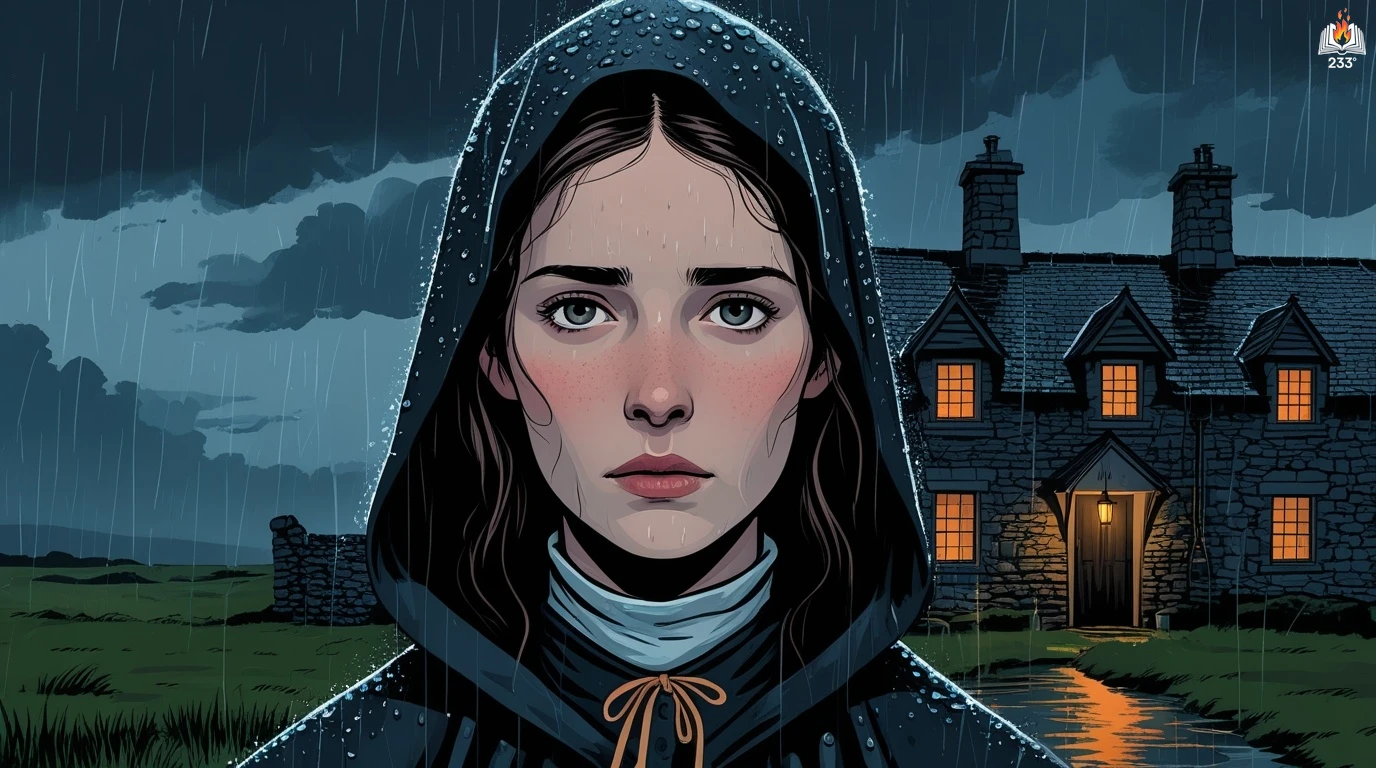
On a rain-slick day in Le Mans, a solitary English historian wandered through the market square, his heart heavy with the weight of futility. He had spent his years studying the history of France, fluent in its language and lore, yet he remained forever an outsider. His lectures, though detailed and precise, seemed hollow – polished facades with no living pulse. He yearned not for facts, but for feeling, for a life that mattered. In the blur of his melancholy, he contemplated retreating to a Trappist monastery, to find solace in silence or, perhaps, some meaning in the void left by a life unlived.
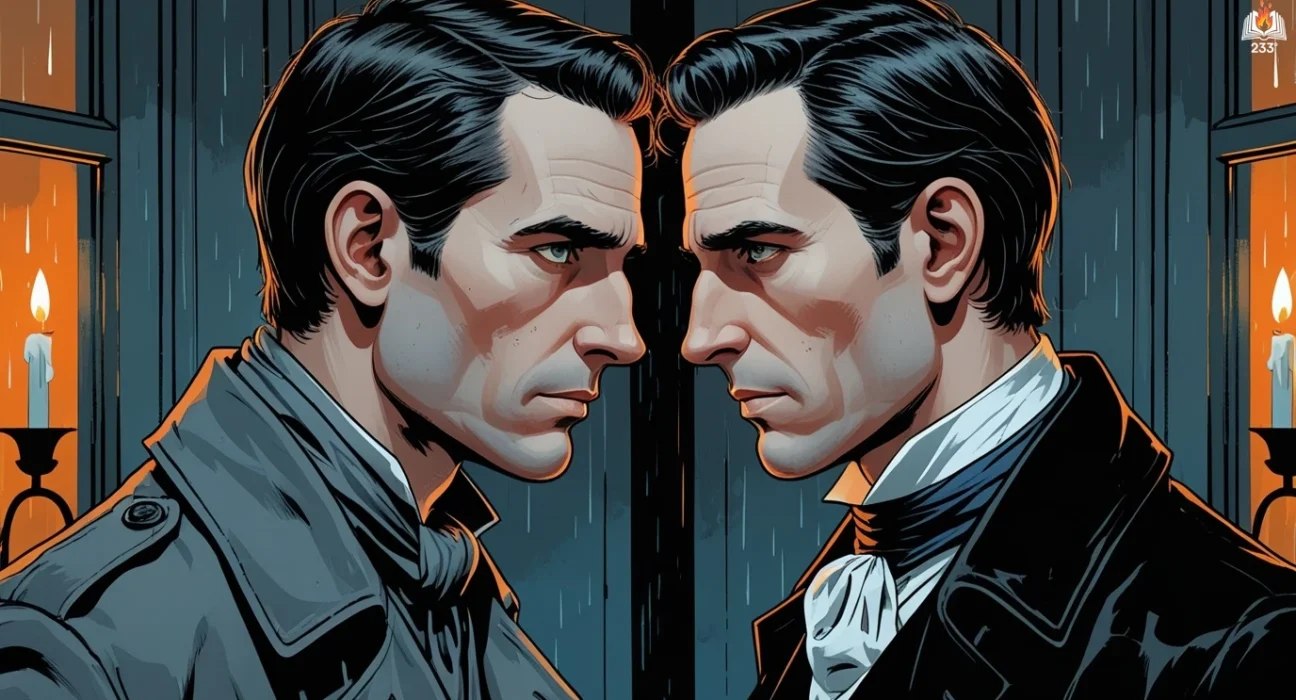
And then, as though summoned by that silent despair, a man stepped into his path at the station buffet – his exact double. Not a mere resemblance, but a perfect mirror: the same face, the same voice, the same gestures. His name was Jean de Gué, a man of land, lineage, and tangled affections. The two drank together, watched each other through fogged mirrors and flickering candles, their twin reflections both fascinating and unnerving. One was rootless, the other rooted in burden; one starved for connection, the other drowning in it. Jean, with a sly glint, proposed an absurd idea – to trade places, just for a while. And before thought could catch up to caution, the Englishman awoke in a hotel room, bruised and altered, wearing another man’s clothes.
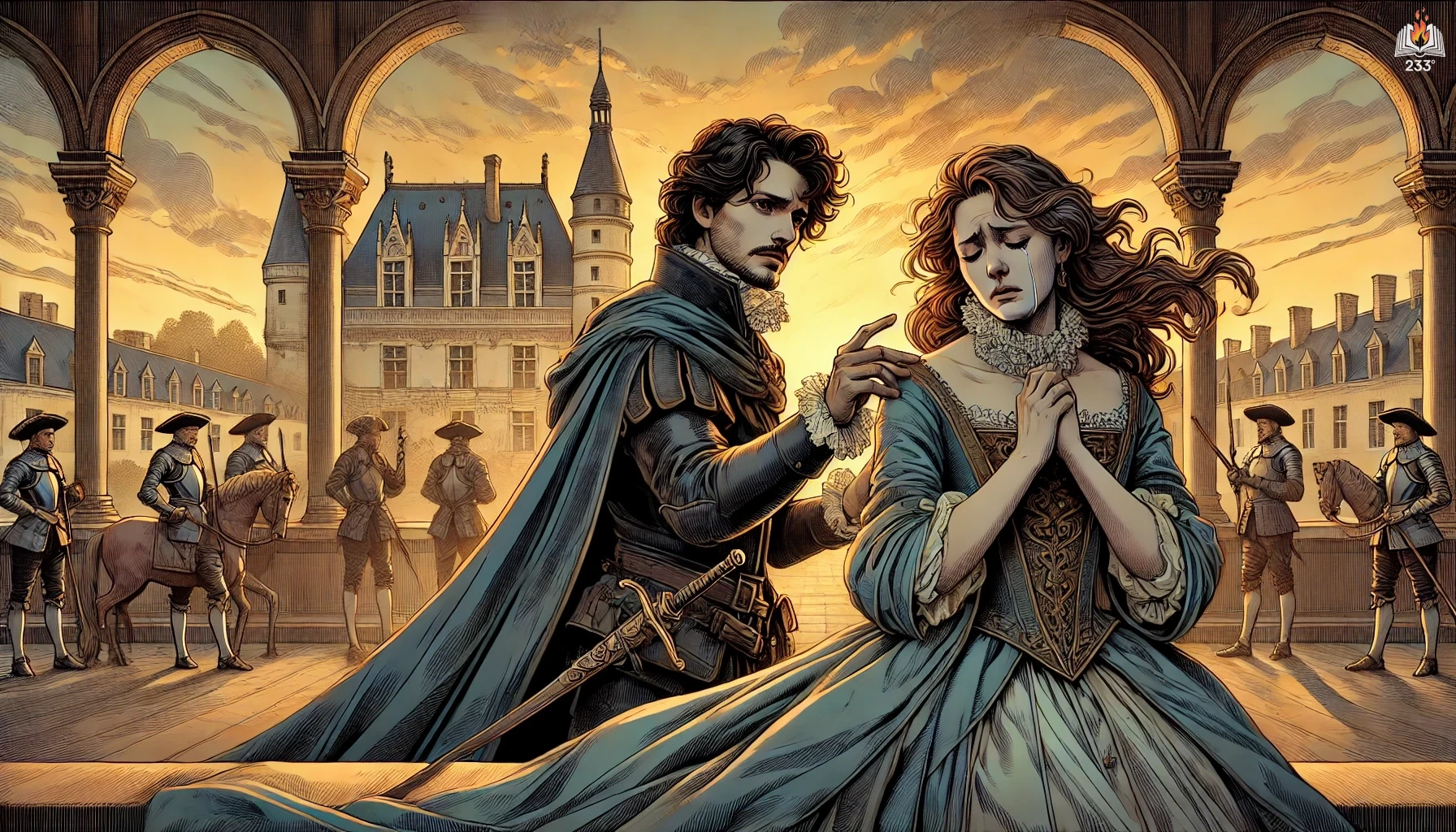
Jean had vanished, taking with him the historian’s passport, car, and very name. In his place stood the new Comte de Gué, ushered away by a loyal chauffeur to an old chateau in the Sarthe countryside. There, behind thick stone walls and the shadows of family portraits, a web of secrets clung to every corridor. The stranger was welcomed not as a guest, but as a husband, son, father, brother. His protests were met with gentle smiles, with affectionate rebukes. His denial of identity only deepened the belief in who he must be.
The chateau pulsed with unrest. Madame de Gué, the matriarch, was a monstrous figure of decaying grandeur, her need for power hidden beneath folds of flesh and velvet wraps. Blanche, Jean’s sister, wore her piety like armor, her fervent religiosity concealing a storm of anger and envy. Paul, the resentful younger brother, simmered with disappointment and self-loathing, bound to the estate yet never truly a part of it. Françoise, the fragile wife, lived like a ghost beside a man who never loved her, her voice barely a whisper in the storm of others’ needs.
Then there was Marie-Noel – the daughter – vivid, sharp, and unsettlingly wise. She moved through the house like a sprite, too knowing for her age, too tender for her own safety. She sensed the change in her father and welcomed it, clinging to the stranger with affection and hope, as if she had dreamed him into being. She spoke truths that others buried, and in her gaze, the imposter found both a reflection and a reason.
Béla, the mistress, lived apart in a simple cottage, serene and self-contained. She had loved Jean, accepted his faults, but saw through the pretense with calm clarity. She recognized the new man behind the old face and said nothing. In her presence, the stranger found a balm – a woman who asked nothing, yet offered understanding.
The days passed, each one deepening his entanglement. He stepped into Jean’s role not through intention, but through necessity. The glass factory attached to the estate was failing, the workers restless, the accounts in disarray. He met with managers, soothed tempers, made decisions. He attended mass, dined with family, offered comfort where Jean had given cruelty. And in doing so, he began to feel – truly feel – for the first time.
But peace was never meant to last in such a house. Shadows crept in, whispered secrets curled beneath the dinner table and beside the sickbed. Françoise watched him with growing unease, torn between the warmth he offered and the fear that he was not her husband at all. Blanche’s fanaticism grew feverish, and Marie-Noel, ever sensitive to the tremors of change, clung to him as if afraid the dream might end.
The tipping point came with Françoise’s pregnancy. The news shattered what fragile balance remained. In the face of betrayal – both real and imagined – the emotional tides rose. Françoise, tormented and uncertain, spiraled into despair. On a cold, fateful night, she fell from a high window, leaving only silence and grief in her wake.
Her death cracked open the soul of the house. The shock forced each inhabitant to face their own failures and needs. The stranger, still carrying the mask of Jean, remained. He offered comfort, mended what he could. The mother’s addiction waned, the workers found stability, the family drew closer in their strange, reshaped way. Even Blanche softened, drawn to Marie-Noel’s resilience and her brother’s newfound gravity.
But then, one morning, Jean returned. Tanned, rested, indifferent. He strolled back into the chateau as if nothing had happened, as if the world he had abandoned had simply waited for him in suspended time. There were no accusations, no outbursts. Only the quiet recognition that one man had lived while the other had fled.
The historian, now stripped again of name and family, prepared to leave. He had mended what Jean had broken, held lives in his hands, and offered what grace he could. Yet it was not his world to stay in. He visited Béla one final time. She offered him warmth, forgiveness, and the knowledge that someone had seen him, truly seen him, and not the face he wore.
He walked away as quietly as he had arrived, back into the vast, indifferent world. Changed not by history, but by living it. His solitude was no longer a void, but a choice. Somewhere behind him, the chateau stirred to new rhythms, lives bent but not broken, the echo of one man’s borrowed time leaving its mark on them all.
Main Characters
John: A solitary, disillusioned English historian specializing in French culture. John is introspective, emotionally detached, and plagued by feelings of failure and isolation. His longing to connect deeply with others and escape his unremarkable existence makes him vulnerable to the bizarre encounter that changes his life. Throughout the story, John undergoes a profound transformation as he is thrust into Jean’s chaotic family and slowly begins to engage emotionally with the people around him, experiencing both peril and unexpected redemption.
Jean de Gué: A French aristocrat and the physical double of John. Jean is manipulative, charismatic, and morally ambiguous. He is burdened by family obligations and entangled in personal betrayals and failures. Unlike John, Jean is deeply enmeshed in the lives of others, though largely for selfish ends. His decision to switch places with John is spontaneous and cunning, driven by a desire to escape the responsibilities he resents.
Marie-Noel: Jean’s perceptive young daughter, caught between childhood and adolescence. She exhibits a striking mix of innocence and insight, sensing the deep currents of familial tension around her. Marie-Noel’s emotional intelligence and open affection for her “father” (John in disguise) play a key role in his emotional awakening and moral reckoning.
Françoise: Jean’s depressed and neglected wife. Emotionally fragile and isolated within the cold, complicated family dynamic, she is suspicious and observant, offering both a challenge and a moral mirror to John as he navigates his new life. Her eventual fate is tragic, shaping the emotional and ethical climax of the novel.
Madame de Gué: Jean’s domineering and manipulative mother, a grotesque figure who embodies the decay and control of old family power. Her physical and emotional demands represent a major burden within the de Gué household, and she serves as a grotesque symbol of familial legacy and repression.
Béla: Jean’s mistress, warm and grounded. Béla functions as a moral compass and a point of quiet resistance to the chaos surrounding the de Gué family. Her empathy and calm contrast with the dysfunction elsewhere, and she ultimately offers John a glimpse of authentic emotional connection.
Theme
Duality and Identity: At the heart of The Scapegoat lies the theme of doubling – physical, psychological, and moral. The uncanny resemblance between John and Jean explores the thin line between self and other, and the terrifying ease with which identity can be assumed, reshaped, or lost.
Alienation and Belonging: John’s initial detachment from the world around him contrasts starkly with Jean’s entangled life. His journey into another man’s existence becomes a quest for connection and belonging, reflecting post-war existential concerns about purpose and selfhood.
Family and Inheritance: The novel examines the burdens of lineage, duty, and generational dysfunction. The de Gué family is haunted by secrets, power plays, and moral rot, all of which are inherited as much as chosen. These familial entanglements echo broader themes of societal decay.
Sacrifice and Redemption: As John grows emotionally involved in the lives of Jean’s family, he becomes an unwitting redeemer – a scapegoat – who takes on the emotional labor and moral reckoning that Jean avoids. The motif of sacrifice is tied deeply to themes of guilt, transformation, and personal responsibility.
Religion and Morality: Through characters like Blanche (Jean’s pious sister) and the setting of the Abbaye de la Grande-Trappe, du Maurier threads questions of faith, atonement, and moral ambiguity. The novel resists neat moral judgments, portraying good and evil as interwoven and unstable.
Writing Style and Tone
Daphne du Maurier’s style in The Scapegoat is spare, precise, and psychologically rich. Eschewing elaborate description in favor of taut introspection and understated dialogue, she crafts an atmosphere of slow-building unease. Her prose is lean and economical, yet charged with emotional undercurrents and symbolic resonance. The novel’s structure – told from John’s first-person perspective – invites readers into his inner world of doubt, confusion, and reluctant courage, effectively blurring the boundary between reality and delusion.
The tone of the novel is brooding and meditative, tinged with existential dread and dark irony. While there are moments of levity and human warmth, the overall atmosphere is one of quiet menace, reflective of both the gothic tradition and the post-war literary preoccupation with identity and dislocation. Du Maurier deftly balances psychological realism with the uncanny, making the improbable premise of the doppelgänger disturbingly believable. Her narrative tone maintains a fine tension between empathy and detachment, giving the story its haunting, melancholic power.
Quotes
The Scapegoat – Daphne du Maurier (1957) Quotes
“I could not ask for forgiveness for something I had not done. As scapegoat, I could only bear the fault.”
“So you see, when war comes to one’s village, one’s doorstep, it isn’t tragic and impersonal any longer. It is just an excuse to vomit private hatred. That is why I am not a great patriot.”
“Do you know so little about children, Monsieur Jean,' she asked, 'that you imagine, because they don't cry, therefore they feel nothing? If so, you're much mistaken.”
“Death was an executioner, lopping a flower before it bloomed.”
“Years of study, years of training, the fluency with which I spoke their language, taught their history, described their culture, had never brought me closer to the people themselves.”
“the rank and melancholy smell of charred wet wood and sodden leaves coming towards me on a wisp of air.”
“Nothing that was happening had reality & in a state of blurred confusion I asked myself what I was doing here.”
“The good monks are waiting upon eternity, they can wait a few more hours for you.”
“So you see, when eat comes to one's own village, one's own doorstep, it isn't tragic and impersonal any longer. It's just an excuse to vomit private hatred.”
“When there’s a sudden silence, and nobody speaks, it means there’s an angel in the room, so”
“I could not be sure if anything good ever came through a lie. I thought not—only trouble, war, disaster—but I did not know.”
“The château was a tomb, and only the cattle lived, grazing beside me, snuffling the wet grass, and the jackdaws, fluttering to roost, and a dog barking in the village beyond the church.”
“towards them came a great hulking fellow with a nut-brown velvet coat, his face purple with good cheer from a near-by bistro, his eyes blurred, his walk unsteady.”
“We are every one of us failures. The secret of life is to recognize the fact early on, and become reconciled. Then it no longer matters.”
“rain stinging the windows”
“lonely, neglected, sought after solely for her fortune.”
“an isolated figure clinging to the treasures of the home she had”
“I thought how incongruous it was that the family of de Gué came here to pray and ask forgiveness of their sins, when two members of it had not spoken to each other for fifteen years.”
We hope this summary has sparked your interest and would appreciate you following Celsius 233 on social media:
There’s a treasure trove of other fascinating book summaries waiting for you. Check out our collection of stories that inspire, thrill, and provoke thought, just like this one by checking out the Book Shelf or the Library
Remember, while our summaries capture the essence, they can never replace the full experience of reading the book. If this summary intrigued you, consider diving into the complete story – buy the book and immerse yourself in the author’s original work.
If you want to request a book summary, click here.
When Saurabh is not working/watching football/reading books/traveling, you can reach him via Twitter/X, LinkedIn, or Threads
Restart reading!