The House on the Strand, written by Daphne du Maurier and published in 1969, is a haunting psychological novel that blends time travel, historical mystery, and inner turmoil against the evocative landscape of Cornwall. In one of her most ambitious narratives, du Maurier explores the fragility of identity and reality through the lens of a scientific experiment gone awry, involving a hallucinogenic drug and the shifting boundaries of past and present. The novel is a masterful blend of gothic atmosphere and speculative science, built around a deeply personal journey of discovery and obsession.
Plot Summary
A man arrived at Kilmarth, a house nestled in the Cornish countryside, expecting nothing more than a tranquil summer. He was between jobs, his marriage strained, his life paused in limbo. His friend, Professor Magnus Lane, had lent him the house, offering a retreat and a secret – a drug of mysterious origin, a blend of plant and chemical designed to open a door in the mind. The man accepted the challenge, curious more than convinced. When he swallowed the liquid, nothing happened at first. But then the transformation came swiftly, like a flood breaking through a weakened dam.
The world sharpened. The air became crystalline, colors more vivid, sounds more distinct. Yet his feet no longer felt the ground. He walked without touch, an observer in a world that looked familiar but was utterly changed. Fields shimmered silver, the sea surged into places now occupied by roads and buildings, and Par and Tywardreath were swept back in time. A horseman appeared – silent, substantial, and compelling – and the man followed.
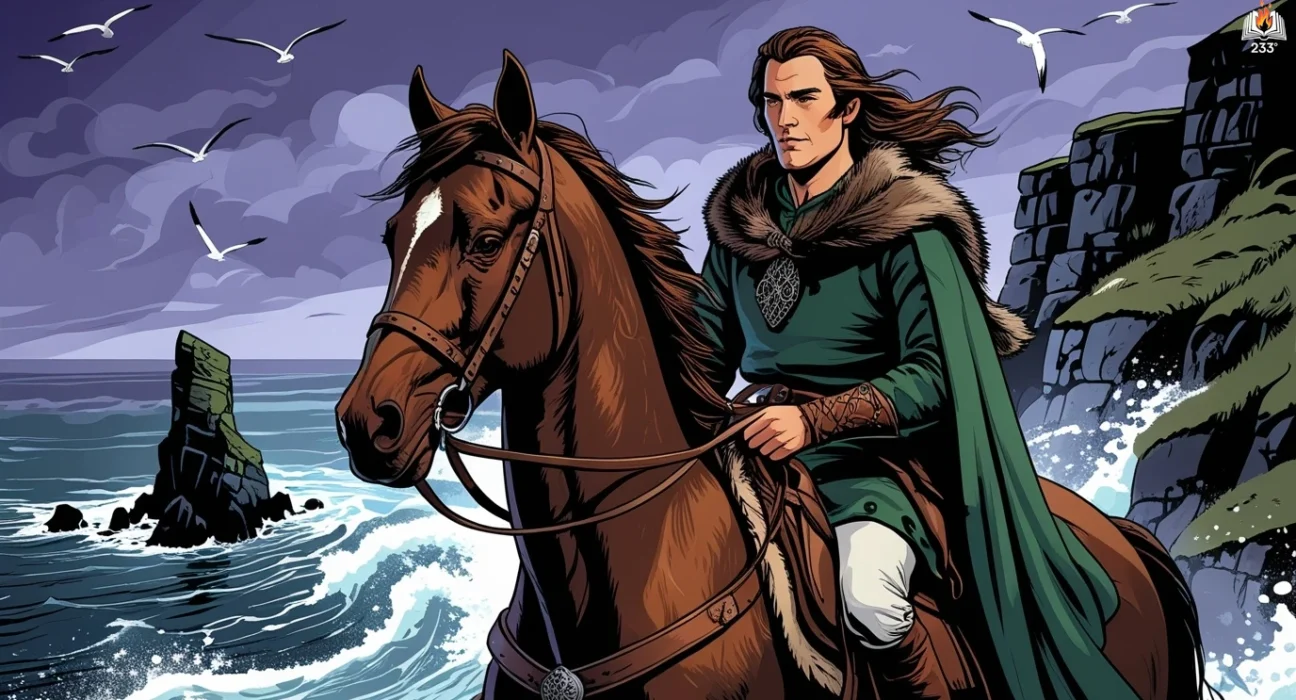
Through this strange passage, he slipped into the 14th century, a ghost watching lives long faded. The horseman, Roger Kylmerth, steward to Sir Henry Champernoune, moved with confidence through the land. The man followed him to a monastic yard, where monks chased a novice in a grotesque game of punishment. There, Roger jested with the Prior, a corpulent and lazy man more concerned with his comfort than his flock. The Priory buzzed with rumors of a bishop’s impending visit. Roger, shrewd and cynical, moved among them all with the ease of one who knew his worth.
As Roger returned home to a rough thatched cottage, the man followed, drawn ever deeper into Roger’s world. But contact with this living past was forbidden. When the man reached out, forgetting the rule, the illusion shattered violently. Glass broke, blood spilled, and the courtyard of Kilmarth returned with nauseating force. He stumbled into the boiler room, sick and shaken, but more alive than he had felt in years.
Magnus called soon after. The professor was exhilarated – his experiment had worked. They had both visited the same time, the same people. It was not hallucination but shared experience, and Roger was always the guide. Magnus had tried the drug multiple times, always returning to Roger’s world. Now he needed the man to do the same, to follow the thread further.
Despite caution, the man could not resist. The next day, he dosed again – this time away from the house, sitting in a churchyard. The transition came with a rush. He was no longer on a tombstone in the drizzle but standing behind a carved window in the Priory. A bishop had arrived in splendor, borne in a golden wagon drawn by five horses. Nobles knelt to kiss his hand – Sir Henry, his sultry wife Joanna, their son William, and Otto Bodrugan, Joanna’s brother. Sir John Carminowe, bloated with self-importance, strutted before them all, his brother Oliver trailing behind. But it was Oliver’s wife, Isolda, who stilled the air around her. Uncloaked, golden-haired, and distant, she stirred something fierce in Roger – and, by reflection, in the man who watched.
The man lingered in the Priory’s corridors, hearing gossip and murmurs. Roger and his companion wagered over Isolda’s virtue, amused by the web of alliances and debts among the nobles. At vespers, while the others bowed in prayer, the man followed Roger outside. The Priory’s green had transformed into a bloody celebration. Slaughtered animals hung from posts, torches flared, and villagers howled with joy as if feeding on the marrow of the land. It was Martinmas, the feast of flesh before winter.
Day after day, the man returned. With each journey, he watched Roger navigate treacherous loyalties. Bodrugan, bound to Sir John by debt, resented his reliance. Joanna’s affair with Sir John unfolded in shadows, with Roger acting as messenger. Isolda, luminous and aloof, remained untouchable, though Roger’s gaze lingered on her too long, his thoughts unreadable.
The past consumed the man. He no longer found peace in his present. Vita, his wife, arrived at Kilmarth with her sons, and the rift between them deepened. She wanted him in America, in business, in control. But his thoughts were with Roger, with Isolda, with the sting of sea wind and the churn of hooves in ancient mud. He lied, stumbled, broke promises, all to return to the past. The drug gripped him like a lover. Even when warned by Magnus that physical contact with the figures of the past could sever the connection violently, he risked it again and again.
He learned the layers of Roger’s world. The Prior was corrupt, indifferent to piety. The monks indulged in cruelty and drink. Sir Henry, dignified and devout, stood in contrast to his wife Joanna, whose sensual appetites bound her to Sir John. Bodrugan plotted in silence, nursing ambition and grudges. Isolda, watched by many, kept her own counsel, a cold flame drawing all eyes. Roger moved among them with wary amusement, his loyalty shifting like the tide.
When the Bishop returned, plans were laid for his inspection of the Priory. But beneath the surface, other schemes brewed. Roger, carrying letters and secrets, hinted at broader intrigues – alliances with the French, ships in coves, messages passed in darkness. The man watching grew more entangled, his emotions tied to people who had died centuries ago.
The lines blurred. One day, he took the drug too soon after his last dose. The world spun, the past crashed into the present. Vita found him wandering, delirious, speaking of people she did not know. He tried to explain, but how could he? That his soul now lived not with her, not with the boys, but beside a long-dead steward named Roger, whose hands held the fate of lords and ladies? That Isolda’s glance from across a chapel had undone him more than years of marriage?
He grew desperate. He could no longer navigate his own time. He missed appointments, forgot names, stared blankly through windows. He longed for the burn of cold air from a medieval cliff, for the clang of iron against stone, for the sweet ache of watching Isolda walk by without ever knowing his name.
The final time he took the drug, his body was found alone, lifeless in the library at Kilmarth. But he was not there. He was galloping beside Roger through the Cornish hills, the wind in his ears, the past alive beneath his feet.
Main Characters
Dick Young – The protagonist and narrator, Dick is a man in his late thirties caught between the strains of a stagnating marriage and the lure of a thrilling, alternate existence offered by the time-traveling effects of a mysterious drug. Intelligent yet emotionally conflicted, Dick’s growing obsession with the past isolates him from his present life, leading to increasing psychological instability. His struggle centers on the pull between duty and desire, between tangible reality and seductive fantasy.
Professor Magnus Lane – A brilliant and eccentric biophysicist, Magnus is both Dick’s old friend and the creator of the experimental drug that allows access to the past. Charismatic and controlling, Magnus lures Dick into the experiment, using his authority and persuasive charm. Though seemingly objective, Magnus himself is deeply fascinated—perhaps even addicted—to the past, and his motivations blur scientific curiosity with personal fixation.
Roger Kylmerth – A 14th-century steward and Dick’s “guide” in the past, Roger is charismatic, sharp-witted, and influential in the political and personal affairs of his time. Dick becomes emotionally entwined with Roger’s life, viewing him as a surrogate self in a world governed by primal forces, loyalties, and betrayals. Roger’s presence embodies the seductive danger of immersion in an alternate identity.
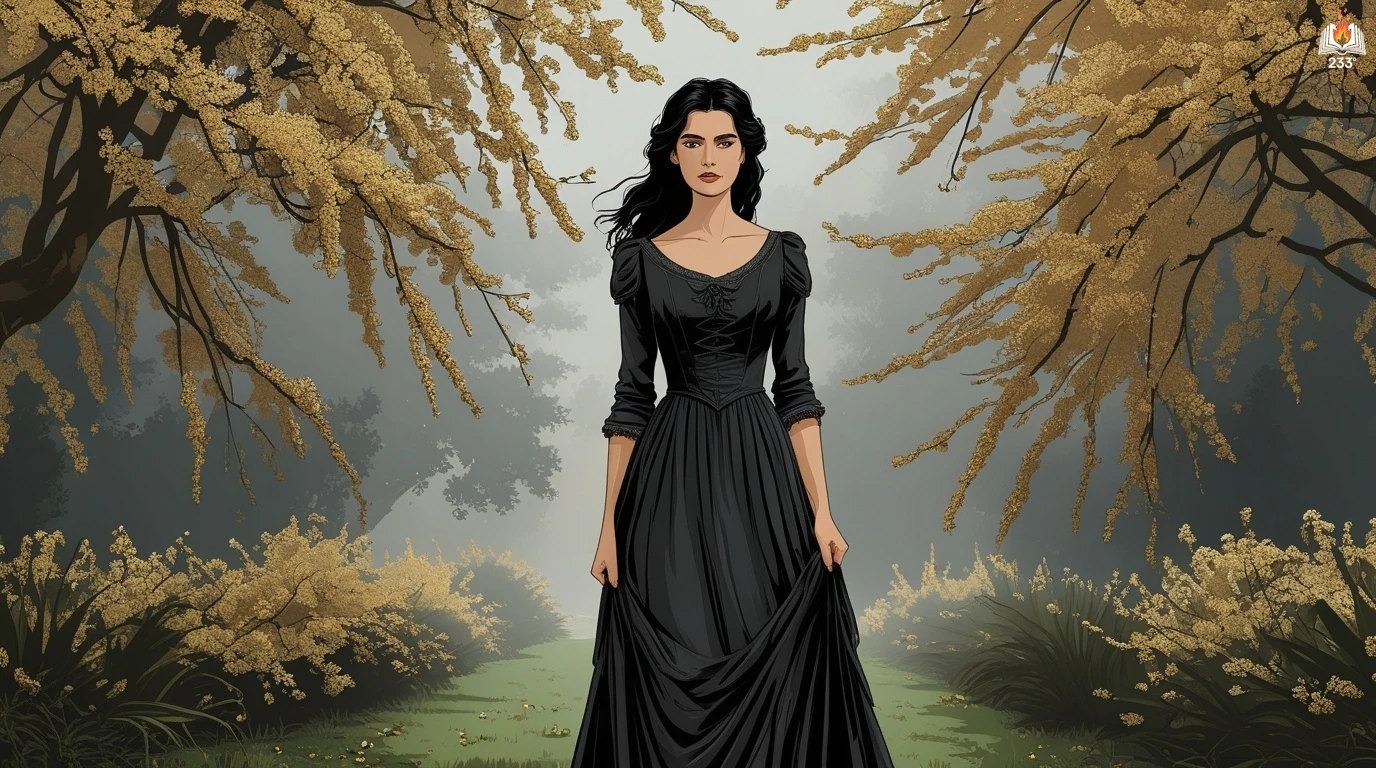
Isolda Carminowe – A mesmerizing figure from the medieval world, Isolda is beautiful, enigmatic, and emotionally distant. Dick becomes obsessed with her, viewing her through Roger’s eyes. Her detachment and allure feed into Dick’s growing disillusionment with his own reality and his wife.
Vita Young – Dick’s wife, a practical, modern woman who represents the present-day world and its responsibilities. Her ambitions for Dick—particularly her desire for him to take a job in America—contrast starkly with his emotional withdrawal into the past. The growing rift between them mirrors Dick’s internal conflict and descent.
Theme
Obsession and Escapism: The central theme of the novel is the seductive power of escapism. Dick’s growing fixation on Roger’s world highlights his desire to flee a disappointing present and immerse himself in a more vivid and meaningful past. This obsession gradually consumes his ability to function in the real world.
Time and Memory: The novel meditates on the nature of time and memory, suggesting that the past is not dead but dormant, capable of resurrection through chemical or psychological means. The overlapping of temporal realities creates a dreamlike disorientation that challenges the boundaries between recollection and hallucination.
Identity and Self-Destruction: Dick’s identity fractures as he immerses himself deeper in the past. The drug erodes the boundaries of self, raising questions about autonomy, addiction, and psychological vulnerability. His mental deterioration is both literal and symbolic—a man undone by his yearning to be someone else.
Science and Morality: Magnus’s experiment opens the door to a gothic critique of scientific hubris. The novel questions the ethical boundaries of experimentation and the cost of knowledge that tampers with the fabric of human consciousness. The past, once accessed, exerts dangerous influence over the present.
Reality vs. Illusion: Throughout the novel, the line between real and unreal blurs. Du Maurier uses the sensory richness of Dick’s trips to the past to suggest that illusion can be more potent than truth. The novel leaves the reader questioning what constitutes reality in a mind altered by obsession or drugs.
Writing Style and Tone
Daphne du Maurier’s prose is both elegant and atmospheric, steeped in tension and mood. Her style in The House on the Strand is rich with sensory detail and psychological nuance, particularly during the time-travel sequences, where the past is rendered in vivid, almost hyper-realistic terms. She crafts moments of beauty and dread with equal finesse, using tight interior monologue and stark description to reflect Dick’s unraveling mental state. The shifting tone between scenes in the modern world and those in the medieval past underscores the dissonance between the two timelines.
The tone of the novel oscillates between the rational and the hallucinatory. Du Maurier maintains a delicate balance between suspense and introspection, allowing the reader to feel both the thrill of the unknown and the unease of losing grip on reality. The modern scenes are colored by anxiety and detachment, while the past glows with intense clarity and allure. Yet, as the story unfolds, the tone darkens, pulling the reader into a psychological spiral that mirrors Dick’s descent. Du Maurier’s mastery lies in her ability to create a narrative that is as emotionally immersive as it is intellectually provocative.
Quotes
The House on the Strand – Daphne du Maurier (1969) Quotes
“To him, the drug released the complex brew within the brain that served up the savored past. To me, it proved that the past was living still, that we were all participants, all witnesses. I was Roger, I was Bodrugan, I was Cain; and in being so was more truly myself.”
“Could time be all-dimensional—yesterday, today, tomorrow running concurrently in ceaseless repetition? Perhaps”
“The world we carry inside us produces answers, sometimes. A way of escape. A flight from reality”
“The world of today asleep, and my world not awakened, or not as yet, until the drug possessed me.”
“There are few strains more intolerable in life than waiting for the arrival of unwelcome guests.”
“I had not awakened from some nostalgic dream . . . Could time be all-dimensional - yesterday, today, tomorrow running concurrently in ceaseless repetition?”
“Three years of marriage,” he said, “and the dishwasher means more to your conjugal life than the double bed I’m throwing in for good measure. I warned you it wouldn’t last. The marriage, I mean, not the bed.”
“The house was inhabited not by the dead but by the living, and I was the restless wanderer, I was the ghost.”
“This, I think, was the essence of what it meant to me. To be bound, yet free; to be alone, yet in their company; to be born in my own time yet living, unknown, in theirs.”
“What they had dreamed of, schemed for, accomplished, no longer mattered, it was all forgotten.”
“When I lie I like to base the lie on a foundation of fact, for it appeases not only conscience but a sense of justice.”
We hope this summary has sparked your interest and would appreciate you following Celsius 233 on social media:
There’s a treasure trove of other fascinating book summaries waiting for you. Check out our collection of stories that inspire, thrill, and provoke thought, just like this one by checking out the Book Shelf or the Library
Remember, while our summaries capture the essence, they can never replace the full experience of reading the book. If this summary intrigued you, consider diving into the complete story – buy the book and immerse yourself in the author’s original work.
If you want to request a book summary, click here.
When Saurabh is not working/watching football/reading books/traveling, you can reach him via Twitter/X, LinkedIn, or Threads
Restart reading!