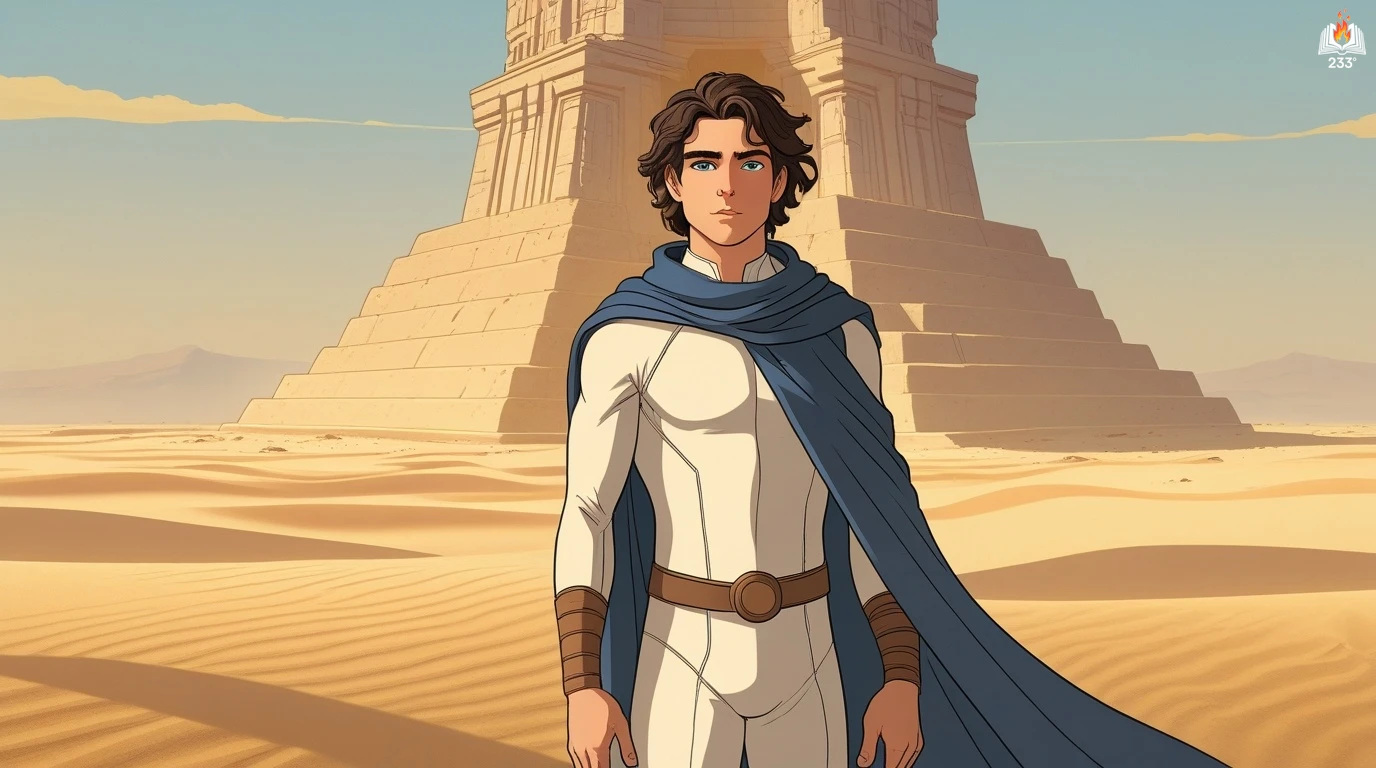


Dune: House Harkonnen (2000) by Brian Herbert and Kevin J. Anderson is the second novel in the Prelude to Dune trilogy, which delves into the decades preceding the events of Frank Herbert’s Dune. It explores the brutal rise of House Harkonnen, the crumbling power of House Atreides, and the political and personal intrigues shaping the empire’s future, all under the looming shadow of Arrakis and its precious spice.
Plot Summary
In the shadowed corners of the Imperium, where betrayal blooms and empires rise and fall on a whisper, House Harkonnen tightens its grip. Baron Vladimir Harkonnen, a man both corpulent and cunning, schemes to elevate his house to heights unimagined. His nephew, Glossu Rabban, known as The Beast, rampages across Lankiveil and Giedi Prime with brutal efficiency, while the Baron’s other nephew, Feyd-Rautha, grows beneath his sharp gaze, molded into a creature of ambition and cruelty.
Abulurd Harkonnen, the Baron’s half-brother, governs the icy world of Lankiveil. Unlike his blood, Abulurd possesses a gentle heart, seeking justice and mercy for his people. But mercy has no place among Harkonnens. When Rabban arrives to enforce spice quotas and wring every last drop of value from the planet, Abulurd finds himself a lone voice against a storm of greed. His wife, Emmi, watches helplessly as her husband’s dreams crumble under Rabban’s iron boot. Rabban’s savagery leaves the people broken and the family in tatters, as Abulurd’s quiet defiance seals his fate in disgrace.
Far across the stars, on Arrakis, Pardot Kynes, the Emperor’s appointed Planetologist, strides into the sands with his young son, Liet. Amid blistering winds and shifting dunes, Kynes dreams of a green Arrakis, a world transformed from barren waste to lush paradise. Together with the Fremen, hardened desert survivors, he begins the quiet work of change – planting grasses to anchor the dunes, cultivating moisture traps, whispering of a future free from spice addiction and imperial exploitation.
In the grand palaces of Kaitain, Emperor Shaddam Corrino IV sits restless upon the Golden Lion Throne. His wife, Anirul, of the Bene Gesserit, has borne him daughters but no son, and the weight of dynastic uncertainty gnaws at him. While court whispers stir rebellion and statues of his likeness fall defaced across the Imperium, Shaddam turns his hopes to Project Amal, a Tleilaxu experiment to create synthetic spice. In the secrecy of twisted laboratories, he gambles the future of the empire, dreaming of breaking free from the stranglehold of Arrakis and the Spacing Guild.
On Giedi Prime, the air chokes with industry and cruelty. Gurney Halleck, a farmer’s son, endures endless days in the Harkonnen fields, plowing the poison earth for meager harvests. His songs, filled with sharp wit and stubborn defiance, stir brief laughter among his fellow laborers. But laughter fades quickly in the shadow of the Harkonnen patrols. When his sister, Bheth, is seized by the Baron’s men in a brutal raid, Gurney’s world shatters. Beaten, left broken on the ground, he rises with vengeance burning in his chest, setting out on a path that will lead him to rebellion and exile.
In Arrakeen, Count Hasimir Fenring and Lady Margot weave their own web of influence. Fenring, Shaddam’s old companion and Imperial agent, presides over grand feasts and delicate intrigues, while Margot probes the currents of power for the Bene Gesserit Sisterhood. Together they walk a delicate line, balancing loyalty and ambition as tensions ripple through the Imperium. Among the glittering guests of their palace, the young Liet-Kynes observes, learns, and begins to dream of the desert’s future.
The Bene Gesserit, ever patient, pull threads unseen by most. Reverend Mother Mohiam maneuvers in the shadows, carrying the scars of past encounters with the Baron. Her secrets run deep, bound to the breeding programs that seek a prophesied Kwisatz Haderach, the one who will bridge time and space. Yet even as the Sisterhood whispers across the galaxy, their designs face threats from within and without, as worlds boil toward conflict.
The spice flows, and with it, the Harkonnen coffers swell. But on Arrakis, the desert does not yield easily. Fremen fighters strike from the dunes, vanishing like sand-wraiths. Liet-Kynes, shaped by his father’s vision, grows into a leader among them, binding the dream of ecological transformation with the sharp edge of rebellion. As Kynes’s secret work expands, the Emperor’s interest sharpens, the Baron’s spies grow restless, and the sands begin to shift beneath every foot.
Rabban’s reign on Lankiveil reaches a brutal crescendo as Abulurd, pushed to his limit, refuses to massacre innocent villagers over spice quotas. Rabban, with the Baron’s blessing, seizes control. Abulurd’s fall echoes through the Harkonnen ranks, a warning to any who might let weakness bloom in place of cruelty. Emmi, her heart shattered, holds her broken family together as best she can, while the Baron casts his gaze back toward Arrakis and the untapped wealth waiting beneath its sands.
Back on Giedi Prime, Gurney’s loss hardens into purpose. With nothing left to lose, he escapes his homeland, his baliset and his rage his only companions. His journey will carry him across worlds, shaping him into a fighter and a poet of vengeance, a thorn in the Harkonnen side that will fester for years to come.
In the opulent halls of Arrakeen, Count Fenring hosts a fateful banquet, a glittering stage for the high and mighty. Ambassadors clash in violent outbursts, old rivalries erupt in blood, and beneath the laughter and spilled wine, the empire’s fractures deepen. Pardot Kynes, seated among the noble predators, speaks softly of harmony and survival, a voice lost on most, but not on his son. Liet listens, learns, and prepares.
The Baron’s plans march forward. Feyd-Rautha, young, sharp, and cruel, takes his place at his uncle’s side, groomed for a future steeped in ambition and blood. Piter de Vries, the twisted Mentat, murmurs schemes into the Baron’s ear, every word a blade honed to cut deeper into the heart of power.
On Kaitain, Shaddam broods. Another daughter born, another disappointment. The Emperor stares into the mirror of his failures, restless, bitter, and grasping for control. The dream of synthetic spice dances just out of reach, and the shadow of rebellion creeps ever closer.
As sandstorms rage across Arrakis, the dream of a green world stirs in the desert’s heart. Liet-Kynes, shaped by loss and hope, walks into the dunes, where the seeds of transformation lie hidden beneath the sand. The Fremen gather, the spice flows, and the Imperium trembles on the edge of a storm.
Amid the wealth and power, the cruelty and defiance, every soul in the empire moves toward an uncertain dawn, their fates entangled like threads in a tapestry stretched taut over the shifting sands of Arrakis.
Main Characters
Baron Vladimir Harkonnen: A cunning, sadistic schemer obsessed with power and control. His lust for dominance and revenge fuels much of the narrative, especially in his conflicts with House Atreides and his own family, which he corrupts and manipulates.
Glossu Rabban: Known as “The Beast,” Rabban is the Baron’s brutal nephew. Loyal yet savage, he embodies Harkonnen cruelty, executing the Baron’s will without question while bringing terror to the people he rules.
Abulurd Harkonnen: The Baron’s half-brother, a gentle and idealistic man governing Lankiveil. Abulurd’s attempts at kindness and reform clash tragically with the ruthless ambitions of his family, leading to his downfall and heartbreak.
Emmi Rabban-Harkonnen: Abulurd’s wife, a figure of strength and quiet resilience. She remains devoted to her family despite the chaos, heartbreak, and betrayals that threaten to tear them apart.
Feyd-Rautha Harkonnen: The Baron’s chosen heir, raised under his uncle’s poisonous influence. Feyd is groomed to be the future of House Harkonnen, carrying both the promise and the threat of his bloodline.
Piter de Vries: A “twisted” Mentat bred by the Tleilaxu, Piter is brilliant but dangerously unpredictable. His devotion to the Baron is tempered by his addiction to drugs and his constant pursuit of deeper insight and prescience.
Liet-Kynes: The imperial planetologist and visionary of Arrakis. Alongside the Fremen, Liet emerges as a symbol of resistance, embodying a deep connection to the desert and its ecological transformation.
Theme
Power and Corruption: At its heart, the novel examines how power corrupts – the Harkonnens exploit wealth, fear, and political leverage to dominate others, but this comes at a moral and personal cost that corrodes their house from within.
Family and Betrayal: Familial ties are a battlefield in House Harkonnen. From Abulurd’s heartbreak over his son Rabban to Baron Harkonnen’s twisted manipulation of Feyd, the novel explores betrayal and the failure of love within families.
Honor vs. Brutality: The stark contrast between the honorable Abulurd and the vicious Rabban reflects the broader tension between nobility and savagery that shapes the political landscape, particularly between Houses Atreides and Harkonnen.
Ecology and Survival: Through the Fremen and Kynes, the novel weaves in the motif of environmental adaptation and survival, highlighting the harsh realities of life on Arrakis and the dream of transforming the desert into a flourishing world.
Writing Style and Tone
Brian Herbert and Kevin J. Anderson craft their narrative with an immersive, cinematic style that balances political intrigue, personal drama, and large-scale world-building. Their prose is accessible yet richly detailed, allowing readers to grasp the complexities of interstellar politics while feeling the emotional weight of intimate character moments. Descriptions of landscapes, from the icy seas of Lankiveil to the burning sands of Arrakis, are vivid and tactile, immersing the reader in every setting.
The tone throughout is dark, tense, and often brutal, reflecting the cruelty and moral decay at the heart of House Harkonnen. Moments of tenderness, such as between Abulurd and Emmi, stand out as rare oases in a narrative marked by violence, greed, and despair. Yet, threads of hope and resistance—embodied by the Fremen and Kynes—run parallel, hinting at the future upheavals that will reshape the known universe. The authors maintain a careful balance between personal stakes and epic scope, staying true to Frank Herbert’s spirit while giving their own voice to the saga.
Quotes
Dune: House Harkonnen – Brain Herbert (2000) Quotes
“The capacity to learn is a gift; The ability to learn is a skill; The willingness to learn is a choice.”
“How will I be remembered by my children? This is the true measure of a man.”
“The greatest and most important problems of life cannot be solved. They can only be outgrown.”
“Never underestimate the power of the human mind to believe what it wants to believe, no matter the conflicting evidence.”
“Look inside yourself and you can see the universe.”
“No person can ever know everything that is in the heart of another. We are all Face Dancers in our souls.”
“Discovery is dangerous . . . but so is life. A man unwilling to take risk is doomed never to learn, never to grow, never to live.”
“Let the future remain uncertain, for that is the canvas to receive our desires.”
“It is said that there is nothing firm, nothing balanced, nothing durable in all the universe -- that nothing remains in its original state, that each day, each hour, each moment, there is change.”
“If you surrender, you have already lost. If you refuse to give up, though, no matter the odds against you, at least you have succeeded in trying.”
“The Universe operates on a basic principle of economics: everything has its cost. We pay to create our future, we pay for the mistakes of the past. We pay for every change we make . . . and we pay just as dearly if we refuse to change.”
“The universe is our picture. Only the immature imagine the cosmos to be what they think it is.”
“Freedom is an elusive concept. Some men hold themselves prisoner even when they have the power to do as they please and go where they choose, while others are free in their hearts, even as shackles restrain them.”
“We create our own future by our own beliefs, which control our actions. A strong enough belief system, a sufficiently powerful conviction, can make anything happen. This is how we create our consensus reality, including our gods.”
“There is no reality -- only our own order imposed on everything.”
“No one has yet determined the power of the human species . . . what it may perform by instinct, and what it may accomplish with rational determination.”
“We are indeed miserable, my friends, but we don’t have to be dismal about it.”
“A man may fight the greatest enemy, take the longest journey, survive the most grievous wound -- and still be helpless in the hands of the woman he loves.”
“Some say that the anticipation of a thing is better than the thing itself. In my view, this is utter nonsense. Any fool can imagine a prize. I desire the tangible.”
“The Unknown surrounds us at any given moment. That is where we seek knowledge.”
“Though death will cancel it, life in this world is a glorious thing.”
“What is this Love that so many speak of with such apparent familiarity? Do they truly comprehend how unattainable it is? Are there not as many definitions of Love as there are stars in the universe?”
“You carve wounds upon my flesh and write there in salt!”
“Baron Vladimir Harkonnen had made a lifetime career of seeking new experiences. He dabbled in hedonistic pleasures - rich foods, exotic drugs, deviant sex - discovering things he had never done before. But a baby in Harkonnen Keep...how would he handle that?”
“War, as the foremost ecological disaster of any age, merely reflects the larger state of human affairs in which the total organism called “humanity” finds its existence. —PARDOT KYNES, Reflections on the Disaster at Salusa Secundus”
“Dreams are as simple or as complicated as the dreamer. —LIET-KYNES,”
“Looking closely at de Vries, he added, 'You are a very ugly man, Piter. Even with my disease, I'm still prettier than you.”
“Quite a body count around here today, Fenring mused. And I didn't kill any of them.”
“Love is the highest achievement to which any human may aspire. It is an emotion that encompasses the full depth of heart, mind, and soul. —Zensunni Wisdom from the Wandering”
We hope this summary has sparked your interest and would appreciate you following Celsius 233 on social media:
There’s a treasure trove of other fascinating book summaries waiting for you. Check out our collection of stories that inspire, thrill, and provoke thought, just like this one by checking out the Book Shelf or the Library
Remember, while our summaries capture the essence, they can never replace the full experience of reading the book. If this summary intrigued you, consider diving into the complete story – buy the book and immerse yourself in the author’s original work.
If you want to request a book summary, click here.
When Saurabh is not working/watching football/reading books/traveling, you can reach him via Twitter/X, LinkedIn, or Threads
Restart reading!