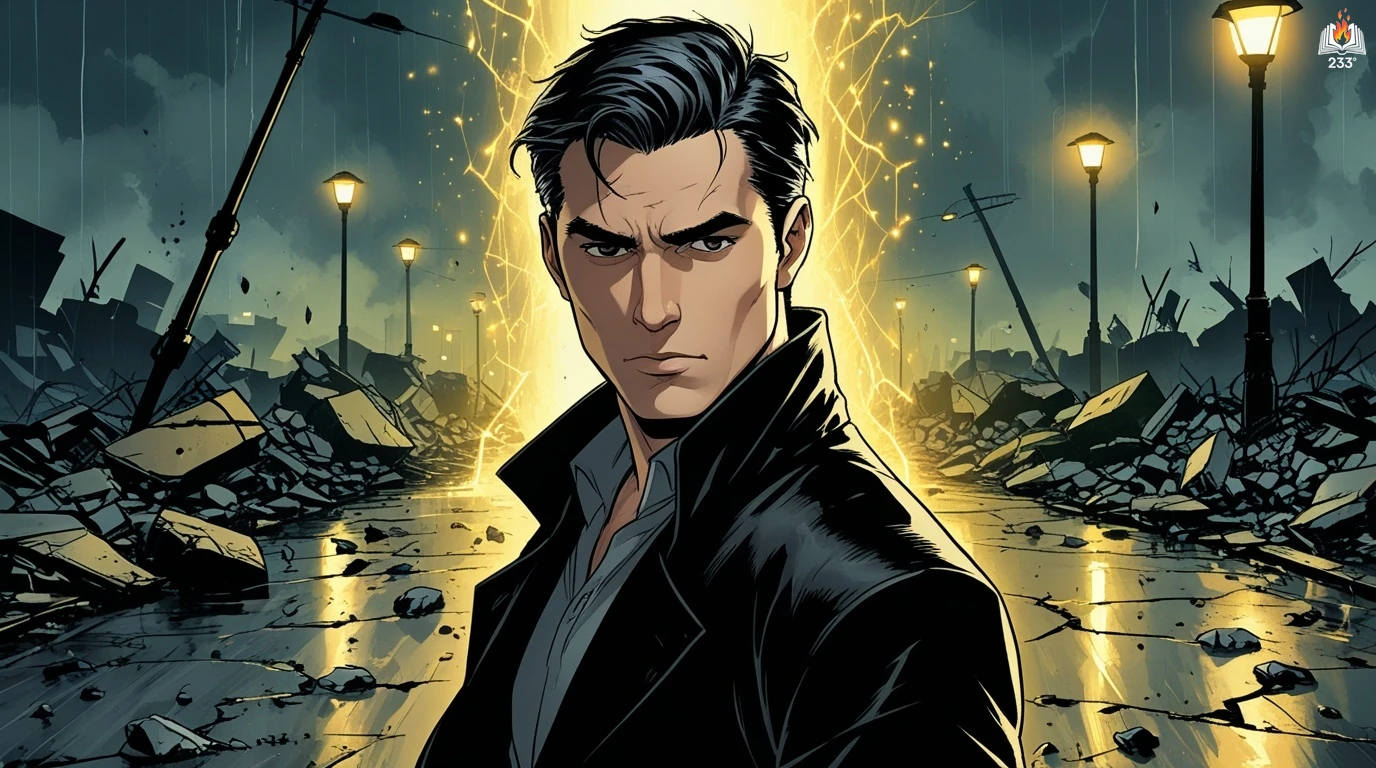
John Carter of Mars by Edgar Rice Burroughs, published posthumously in 1943, is the eleventh and final book in the celebrated Barsoom series. The volume comprises two stories – John Carter and the Giant of Mars and Skeleton Men of Jupiter – both chronicling the continued adventures of the titular Earthman-turned-Martian hero. Though composed during different stages of Burroughs’ life and partially in collaboration with his son John Coleman Burroughs, the collection maintains the spirit of the Martian saga. These stories explore Carter’s battles against formidable foes on Mars (Barsoom) and even extend his heroic legacy to Jupiter (Sasoom), showcasing Burroughs’ signature blend of high adventure and imaginative world-building.
Plot Summary
In the bright, silent skies above Barsoom, John Carter of Helium soared ahead of his forces atop a massive malagor, Dejah Thoris by his side, as the City of Helium lay under siege. Pew Mogel, a grotesque synthetic man forged from the experiments of Ras Thavas, had unleashed chaos upon the red planet. His army of white apes, monstrous and unnaturally intelligent, now rode giant winged malagors, encircling Helium in a black spiral of conquest. The walls had been shattered, the streets smoldering. Yet still, Helium’s defenders fought on.
John Carter, the Warlord of Mars, surveyed the devastation. There was no time to mourn, no time to hesitate. Tars Tarkas and his green warriors waited in the mountains, prepared to strike. A plan, desperate and audacious, was forged beneath the twin moons. Half the Tharkian force would rush the city gates at dawn. The other half would take to the crags and engage the enemy in guerrilla war, buying time until the arrival of Kantos Kan and the Heliumite fleet. But fate would not wait.
As the morning light crested the scarlet peaks, John Carter led the charge. Green warriors thundered across the plain on their eight-legged thoats. Above them, Carter and Dejah Thoris sliced through the sky. Just as the battle broke, banners rose on the horizon – Kantos Kan had returned with the fleet. Helium’s trim metal ships screamed over the battlefield, and for a moment, the tide turned. But then Joog appeared.
Joog, the colossus, towered like a living mountain. Over a hundred feet tall, born from mad science and imbued with regenerative serum, he stood invincible. Pew Mogel, nestled within a steel howdah atop the giant’s head, directed his attacks through shortwave commands. With a massive tree trunk as his weapon, Joog swung at the airships, smashing twenty in a single blow. Panic threatened the skies.
Carter, never one to yield, enacted a plan of his own. He vanished into the mountains, taking with him ten of the largest Heliumite ships, each stripped of warriors and loaded with two hundred parachutes. When he returned a day later, Dejah Thoris watched the skies anxiously. From the ships fell thousands of parachutes – and clinging to them, the most feared enemies of Martian birds: the three-legged rats of Korvas. The air filled with shrieks as the malagors bolted in terror, tossing their ape riders into the wind. On the ground, the rats landed among the entrenched white apes. Chaos ignited.
Above it all, Carter had guided his ship in a comet-like plunge. He dove toward Joog’s howdah, aiming for the circular skylight. Slowing his craft with parachutes, he crashed through the glass, sword in hand. Inside, he confronted Pew Mogel, whose twisted face distorted in disbelief. A duel followed in the cramped, rocking chamber, steel clashing amid flying shards and jerking movements as Joog stormed across the battlefield.
Pew Mogel tried to call out to his beast, commanding it to kill. But Carter, swift and merciless, struck down the synthetic tyrant. Severed from control, Joog stood bewildered. Carter grasped the microphone, issuing his own commands. Joog paused, hesitated, and obeyed. At the signal – the raising and lowering of Joog’s arm three times – Kantos Kan understood. The fleet swept low in formation. Tars Tarkas led the Tharks into the trenches. The apes broke and fled. Victory loomed.
But Joog remained a threat. Though the white apes scattered and the rats vanished into the hills, the giant still loomed. He had heard the last order to kill, and even as Carter shouted new commands, Joog raged. A moment more and Carter calmed him. The giant, confused and alone, lowered himself among the wreckage.
On the plains soaked in the blood of war, Dejah Thoris rushed to meet her chieftain. Joog, no longer a weapon of war, was ordered to leave. Toward the mountains he wandered, vanishing into the mists of Korvas. Tars Tarkas questioned why the beast had not been slain, but Carter understood – Joog had been a tool, not the hand behind the destruction.
The secret of the rats was revealed – Carter had smoked them unconscious from their cavern, strapped parachutes to their backs, and dropped them from the skies like a living avalanche. The malagors, terrified, had done the rest. It was a gamble only Carter would dare.
That night, Helium lit its towers in celebration. Warriors and civilians danced beneath banners of crimson and gold. Tardos Mors wept at the sight of his granddaughter returned and his city preserved. In the royal palace, songs of praise rose in honor of the man from another world who had once again saved Barsoom.
Under the light of Cluros and Thuria, John Carter and Dejah Thoris stood on the palace balcony, their shadows mingling as one. Peace had returned, for now.
Far from Mars, across the sea of stars, another drama unfolded.
Within the palace gardens of Lesser Helium, an officer from the Jeddak summoned John Carter for an urgent meeting. Leaving Dejah Thoris with promises of a swift return, he climbed to the hangar – only to be ambushed by skeletal creatures with parchment skin and hollow eyes. He was bound, disarmed, and taken aboard a mysterious ship, one that flew without sound and left the red world behind. Its course was set for Sasoom – Jupiter.
Carter discovered that his betrayer was U Dan, a man from Zor, who had once loved a woman named Vaja. Her abduction had led him to desperation, and he had cooperated with the mysterious skeletal Morgors in hopes of finding her. The Morgors, beings of living bone, brought Carter before their leader, who revealed their sinister plans – to conquer Barsoom and enslave its people.
In the depths of Jupiter, Carter was imprisoned, tortured, and observed. Yet even here, he remained undaunted. His mind, ever sharp, sought escape. He allied with fellow captives, outwitted guards, and resisted indoctrination. Though surrounded by an alien world of cavernous cities and soulless overseers, he never forgot the face of Dejah Thoris or the honor of Helium.
From the steaming jungles of Mars to the cold prison towers of Jupiter, John Carter’s saga continued – sword in hand, unyielding.
Main Characters
John Carter: The unwavering hero of the Martian series, Carter is a former Confederate soldier who has carved out a new life on Mars. Possessing incredible physical prowess due to the planet’s gravity and atmosphere, he is as gallant as he is deadly. In this volume, Carter’s strategic mind and warrior’s courage are put to the test as he confronts synthetic monsters, invading armies, and bizarre skeleton men, all while striving to protect Mars and its people.
Dejah Thoris: The Princess of Helium and Carter’s beloved wife, Dejah Thoris remains a symbol of regal beauty, intelligence, and loyalty. She accompanies John into danger and defends herself with dignity and grace, never reduced to a mere damsel in distress. Her presence is integral to Carter’s motivations, anchoring his cosmic battles with deeply personal stakes.
Tars Tarkas: A towering green Martian and loyal ally of John Carter, Tars Tarkas is a fierce warrior of Thark and a figure of great nobility and honor. His strength and loyalty in the face of overwhelming odds add depth to the story’s central alliance and martial camaraderie.
Kantos Kan: A high-ranking officer and friend to John Carter, Kantos Kan is a shrewd military mind and a key player in the defense of Helium. His support during the battles against Pew Mogel’s forces demonstrates his unwavering dedication to Mars and its rightful leaders.
Pew Mogel: The central antagonist in John Carter and the Giant of Mars, Pew Mogel is a synthetic man of twisted intelligence and megalomaniacal ambition. His ghastly creation of monstrous white apes and the giant Joog highlights the dangers of unbridled scientific manipulation.
Joog the Giant: A Frankensteinian creation of Pew Mogel, Joog is a towering behemoth whose brute strength wreaks havoc on Helium. Controlled via shortwave, Joog is both terrifying and pitiable, a victim of his creator’s lust for domination.
U Dan: Introduced in Skeleton Men of Jupiter, U Dan is a former soldier of Zor who inadvertently betrays Carter under duress. His conflicted loyalty and romantic backstory enrich the Jupiterian segment of the book, emphasizing themes of redemption and resistance.
Multis Par: A tyrannical prince from Zor, Multis Par emerges as a villainous figure orchestrating cosmic-scale abductions. His association with the eerie Skeleton Men suggests a broader and more sinister interplanetary threat.
Theme
Heroism and Sacrifice: Central to both stories is John Carter’s willingness to risk his life for the greater good. His daring aerial tactics, his battle against overwhelming odds, and his personal sacrifices embody the classic hero archetype Burroughs so often celebrated.
Synthetic Life and Scientific Hubris: Pew Mogel’s grotesque creations and the artificial monstrosities on Jupiter reveal Burroughs’ wariness toward unchecked science. The manipulation of life forms for power is presented as not only unethical but disastrously unstable.
Loyalty and Friendship: The enduring alliances between Carter, Tars Tarkas, Kantos Kan, and Dejah Thoris reinforce the theme that true strength lies in unity. Their mutual loyalty forms the emotional backbone of the narrative.
Colonial Anxiety and Empire: As in many Barsoom tales, political upheaval and military conquest reflect concerns about the fragility of civilizations. The invasions of Helium and plots from Jupiter mirror terrestrial anxieties about imperialism, rebellion, and sovereignty.
Man vs. Monstrosity: Whether fighting white apes, mutant rats, or skeletal warriors, Carter’s enemies are often grotesque distortions of humanity. This motif underlines the contrast between noble character and corrupt power, natural versus unnatural life.
Writing Style and Tone
Edgar Rice Burroughs’ prose is characterized by its energetic momentum, florid descriptions, and martial lyricism. He employs a brisk, pulp-style narrative that favors action, dialogue, and cliffhangers over introspection or deep psychological realism. In John Carter of Mars, this is evident in the vivid battle scenes, fantastical creatures, and high-stakes scenarios that unfold with cinematic intensity. Burroughs paints with broad, bold strokes, making the fantastic seem tangible and the improbable feel inevitable.
The tone throughout the book is one of romantic adventure fused with exotic spectacle. Burroughs’ Barsoom remains a place of honor, beauty, danger, and technological wonder, where the stakes are always personal and epic at once. Even when exploring darker elements, such as synthetic monstrosities or the skeletal denizens of Jupiter, the tone never strays far from a swashbuckling spirit. There’s an undercurrent of nostalgic heroism, a belief in the power of a single, righteous man to defy tyranny and reshape destiny with sword and courage.
Quotes
John Carter of Mars – Edgar Rice Burroughs (1943) Quotes
“Traveling through space is stupifyingly monotonous.”
“The path of the mighty beast was guided telepathically by the two people who sat in a huge saddle that was cinched to the thoat's broad back.”
“The Morgors, like death, were without art.”
We hope this summary has sparked your interest and would appreciate you following Celsius 233 on social media:
There’s a treasure trove of other fascinating book summaries waiting for you. Check out our collection of stories that inspire, thrill, and provoke thought, just like this one by checking out the Book Shelf or the Library
Remember, while our summaries capture the essence, they can never replace the full experience of reading the book. If this summary intrigued you, consider diving into the complete story – buy the book and immerse yourself in the author’s original work.
If you want to request a book summary, click here.
When Saurabh is not working/watching football/reading books/traveling, you can reach him via Twitter/X, LinkedIn, or Threads
Restart reading!