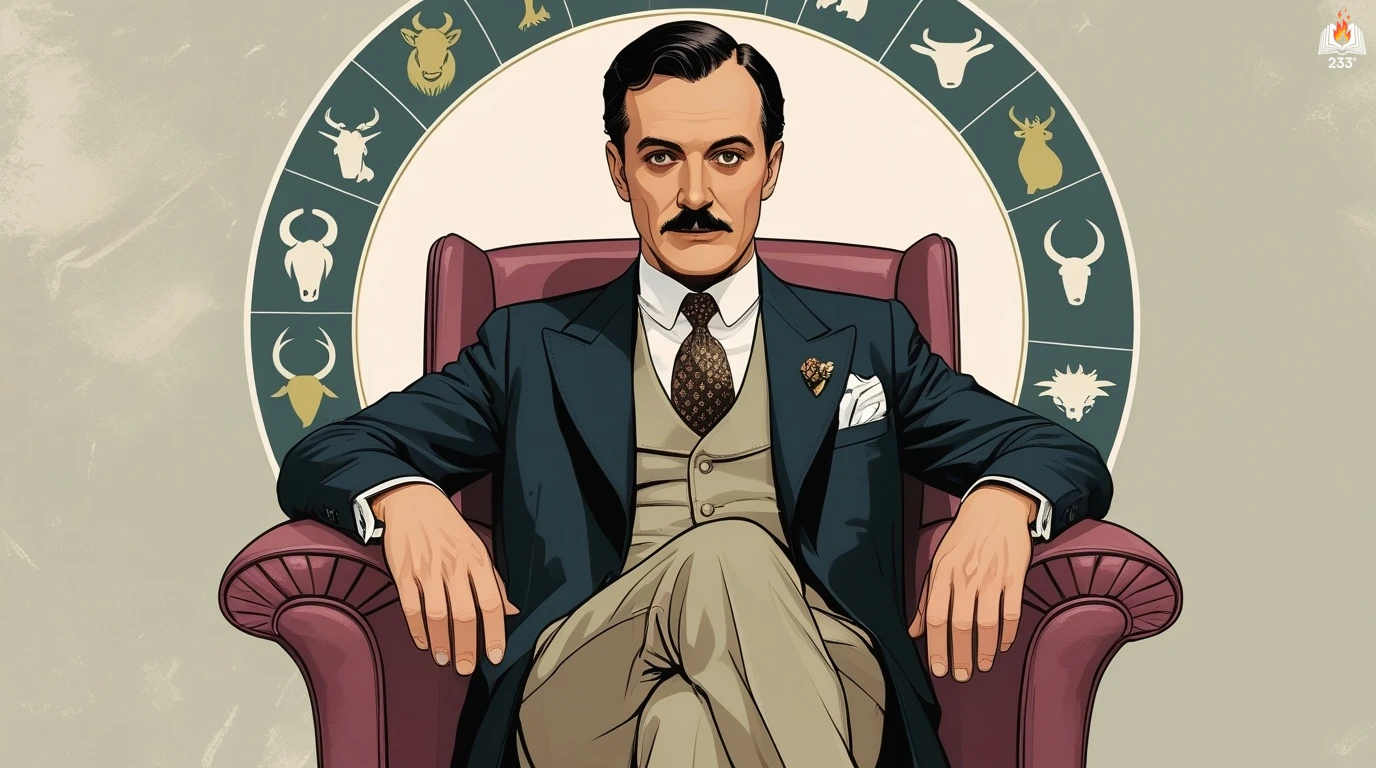
This House Is Haunted by John Boyne, published in 2013, is a chilling and atmospheric ghost story set in Victorian England. With stylistic nods to the classic Gothic tradition of writers like Charles Dickens and Henry James, Boyne crafts a suspenseful tale about a young woman who finds herself entwined with a haunted manor and the mysterious children who reside there. A deep homage to 19th-century ghost fiction, the novel is both a haunting narrative and a character study wrapped in a fog-drenched tale of grief, isolation, and otherworldly secrets.
Plot Summary
The fog hung heavy over London in the autumn of 1867, thick with the scent of damp cobblestones and ghost stories waiting to unfold. Eliza Caine, a young schoolteacher living with her aging father near Hyde Park, finds her modest world shattered when a night of inclement weather and misjudged optimism leads to her father’s sudden death. Left adrift, burdened with sorrow and without family or fortune, she scans the pages of a morning newspaper and stumbles across a peculiar advertisement – a governess urgently required at Gaudlin Hall in Norfolk.
With little more than grief and instinct to guide her, she answers the call, boards a train into the mist-veiled countryside, and arrives in a realm where reason grows faint and silence speaks more clearly than words. Her first encounter in the new land is almost her last. Shoved towards an oncoming train by unseen hands and rescued by a stranger, she arrives at her destination unnerved and disoriented. The man who collects her, Heckling, is a slovenly, reticent coachman whose brusqueness offers no reassurance. Gaudlin Hall, when it emerges from the grey haze, seems less a home than a monument to secrets. Its towering facade stands sullen against the sky, windows like eyes that have seen too much.
Within, she meets the children – Isabella and Eustace – composed beyond their years, articulate, self-sufficient, and unsettlingly unchildlike. No adult greets her, no employer introduces themselves. There is no trace of their parents. The servants are silent and evasive. The very walls seem to watch. The air in the hall is frigid, thick with some intangible dread. Eliza soon learns she is not the first governess. Others have come. Others have vanished. The hall, it seems, accepts new occupants grudgingly.
Before long, she finds herself at the mercy of the house. Windows fling open with no breeze. Candles extinguish themselves. Her bedclothes are torn away by invisible forces. One morning, a violent force seizes her and throws her down a staircase, cracking bones and splintering calm. And yet the children say nothing. They behave as if this is all expected, as if the house itself is alive and vengeful, punishing each new intrusion.
Determined not to flee, Eliza begins to uncover fragments of Gaudlin Hall’s history. From whispers in the village and cold clues hidden in letters and portraits, she learns of Thomas and Helena Bennet, the children’s long-dead parents. Helena, a radiant actress of modest origins, had captured the heart of Thomas, the heir to Gaudlin. Their marriage, a scandal to the family, had ended in tragedy. Helena perished in a fire during childbirth. But Eliza comes to believe this version is a fabrication, carefully crafted to shield darker truths.
A visit to the solicitor, Mr. Raisin, yields more – hints of a will contested, of guardianship passed into murky hands, and of violence buried beneath civility. Each revelation brings her closer to understanding the fate of those who dared serve the children before her. The house, she begins to suspect, does not merely contain ghosts – it is possessed by a singular, wrathful spirit.
When she dares confront the children, Isabella breaks the silence. It was not an accident that their mother died. She had been betrayed. Cast aside. Silenced. And now her spirit rules Gaudlin Hall. Her presence is not a specter seeking peace, but a force defending its wounded memory, attacking any woman who dares approach her children.
But Eliza, unlike the others, does not retreat. She walks into the fire. She presses on with her investigation, even as the house strikes harder. A noose awaits her above her bed. The wind grows teeth. The silence echoes with whispers. She finds Helena’s grave. Empty. She finds journals and letters, scattered remnants of a life erased. In these pages, she sees not a madwoman, but a mother wronged. Her death was not the accident the family claimed, but murder disguised as misfortune.
At last, Eliza pieces together the bitter truth. Thomas Bennet, under pressure from his family, sought to rid himself of Helena. In the act of childbirth, the murder was staged. The fire was no accident. The hall covered the crime in stone and ash. And ever since, the house has guarded her revenge.
Still, Eliza will not yield. She will not be another victim in a chain of nameless governesses. In a final act of defiance, she confronts the spirit. Not with fire or rites or violence, but with justice. She offers truth in place of silence. She speaks Helena’s name. She demands the past be heard, not hidden.
The house does not relent easily. In one last storm of fury, Helena’s spirit lashes out, clawing at the windows, dragging the children into danger, shaking the very bones of the house. But Eliza, bruised and broken, pulls them free. In saving them, she forces the spirit to see what it had become – not a guardian, but a destroyer.
And then, at last, the house quiets.
Gaudlin Hall stands still. Its windows no longer glare. The silence remains, but it no longer threatens. The children, once orphans in every sense, look to Eliza now with something like trust. She stays, not as a governess, but as a guardian in her own right. The air remains cold. Shadows still linger. But the darkness no longer owns them.
The past, once buried in fog and silence, now lies exposed, like the bones of the drowned. And with it, a measure of peace. Not perfect, not full – but enough.
Main Characters
Eliza Caine – A determined and fiercely independent young woman, Eliza is the narrator and heart of the novel. Reeling from the sudden death of her beloved father, she accepts a governess position at Gaudlin Hall in Norfolk. Though she is rational and practical, her experiences at the Hall challenge her beliefs and courage. Eliza’s stoicism and sense of duty drive her to uncover the secrets of the house, even as her own grief and vulnerability make her sympathetic and deeply human.
Isabella and Eustace – The enigmatic children under Eliza’s care, Isabella and Eustace are composed beyond their years, unnervingly calm, and frighteningly self-reliant. Their cryptic behavior and mature conversations suggest lives far too complicated for their young age. Their haunted past is tightly interwoven with the dark legacy of Gaudlin Hall, and their interactions with Eliza shift from guarded to intimate as the narrative unfolds.
H. Bennet / Previous Governesses / Mr. Raisin – While H. Bennet remains shrouded in ambiguity, the various adults who orbit Gaudlin Hall (including the mysteriously absent employers and the doomed line of former governesses) underscore the sense of dread. Mr. Raisin, a solicitor, eventually becomes an ally in Eliza’s quest for the truth, offering some rationality and assistance in an increasingly irrational world.
Theme
Grief and Isolation: Grief permeates the novel like the omnipresent fog in Norfolk. Eliza’s mourning for her father propels her into an isolated environment, physically and emotionally. Her solitude at Gaudlin Hall echoes her emotional desolation, amplifying the story’s Gothic loneliness.
The Supernatural vs. Rationality: A key tension in the story is between reason and the unexplained. Eliza, a woman of logic and education, is gradually forced to accept supernatural events she cannot rationalize. This clash reflects the broader Victorian struggle between scientific progress and spiritual belief.
Corruption of Innocence: The children, especially in their quiet resilience, personify a childhood twisted by trauma. Their abnormal self-sufficiency and eerie calm suggest lives marred by tragic events and reveal how innocence can be bent—though not necessarily broken—by evil forces and adult failings.
Social Class and Gender Roles: Eliza’s narrative is informed by the constraints placed upon women in Victorian society. As an educated but unmarried woman, she is both empowered and trapped by her position. Her resistance to being dismissed or manipulated is an assertion of female agency in a patriarchal world.
The Haunted House as a Symbol: Gaudlin Hall itself stands as a metaphor for the weight of secrets, family legacy, and unspoken trauma. The house’s malevolent atmosphere mirrors the psychological unease of its inhabitants, and its walls seem to pulse with a memory of every hidden sin.
Writing Style and Tone
John Boyne writes This House Is Haunted in a pastiche of 19th-century prose, capturing the cadence, diction, and sensibilities of Victorian literature. The novel is narrated by Eliza in the first person, and Boyne’s careful use of period-appropriate language makes her voice believable and immersive. The storytelling is restrained and elegant, laden with long, descriptive passages and meticulous attention to atmospheric detail. His choice of sentence structure, idiomatic expressions, and dialogue evoke the era with both authenticity and affectionate homage.
The tone throughout is ominous and melancholy, tinged with irony and flashes of dark humor. Boyne builds suspense not through shock or gore but through mood, setting, and a slow unspooling of dreadful revelations. There’s a constant undercurrent of dread, expertly woven into the mundane, so even ordinary moments seem fraught with unease. The emotional tenor is driven by loss and longing, making the novel’s supernatural horror resonate all the more deeply as an expression of personal grief and human vulnerability.
Quotes
This House Is Haunted – John Boyne (2013) Quotes
“There is cruelty in the world Eliza, you can see that, can't you? It surrounds us. It breathes on us. We spend our life trying to escape it.”
“Should women read, Miss Caine? There’s a question for you. Does it excite them too much?”
“before we learn to feel afraid of things, our bodies know how to do them anyway. It’s one of the more disappointing aspects of growing older. We fear more so we can do less.”
“I never really noticed it any more, in the way that one often ignores familiar things, like seat cushions or loved ones.”
“You are not there, Father,” I cried. “I wake up at Gaudlin Hall, I spend most of my day there, I sleep there at night. And throughout it all there is but one thought running through my mind.” “And that is?” “This house is haunted.”
“Life is suffering. Until the great day of judgement, when peace and equanimity may be restored for those who are pure of heart and deed.”
“No woman will ever take care of my children but me, she said. I will not allow it, do you understand? And after I am gone Madge Toxley, if you try to make them yours, then you will live to regret it.”
“In school, the other girls formed alliances which always excluded me. They called me names; I will not repeat them here. They made fun of my unshapely body, my pale skin, my untamed hair. I do not know why I was born this way.”
“Well, I’m not advocating it,” I said. “I just mean that before we learn to feel afraid of things, our bodies know how to do them anyway. It’s one of the more disappointing aspects of growing older. We fear more so we can do less.”
“His position, like so many of his ilk, was one of uncontested and unearned respect.”
“I blame Charles Dickens for the death of my father'.”
“It’s not so long ago that men of your ilk believed in witches and superstition,” I pointed out. “Medieval times,” he said, waving a hand in the air to dismiss the notion. “This is 1867. The Church has come a long way since then.”
“death was a natural phenomenon, albeit a sorrowful one for those left behind, but one that every man and woman must accept as the price we pay for life.”
“leaving me an orphan like those characters I had spoken of the night before, if one can truly be called an orphan at twenty-one years of age.”
“I've always considered myself to be the sturdy type. You know, the sort who can put up with any unpleasant situation if I have to.”
“There is cruelty in the world, Eliza, you can see that, can’t you? It surrounds us. It breathes on us. We spend our life trying to escape it.”
“There are days when I rather detest living in the year 1867. Everything moves so quickly. Change is happening at such a pace. I preferred the way of life thirty years ago when I was a boy.”
“the ground for I know not how long. Of course”
“I just mean that before we learn to feel afraid of things, our bodies know how to do them anyway. It’s one of the more disappointing aspects of growing older. We fear more so we can do less.”
“The portrait was a familiar one, of course. It had been hanging on that wall for so long that perhaps I never really noticed it any more, in the way that one often ignores familiar things, like seat cushions or loved ones.”
“Other people had friends. Of course they did; it was the natural way of things. There are those who are comfortable in the company of others, with the sharing of intimacies and common secrets.”
“and been committed to a home for the bewildered”
We hope this summary has sparked your interest and would appreciate you following Celsius 233 on social media:
There’s a treasure trove of other fascinating book summaries waiting for you. Check out our collection of stories that inspire, thrill, and provoke thought, just like this one by checking out the Book Shelf or the Library
Remember, while our summaries capture the essence, they can never replace the full experience of reading the book. If this summary intrigued you, consider diving into the complete story – buy the book and immerse yourself in the author’s original work.
If you want to request a book summary, click here.
When Saurabh is not working/watching football/reading books/traveling, you can reach him via Twitter/X, LinkedIn, or Threads
Restart reading!