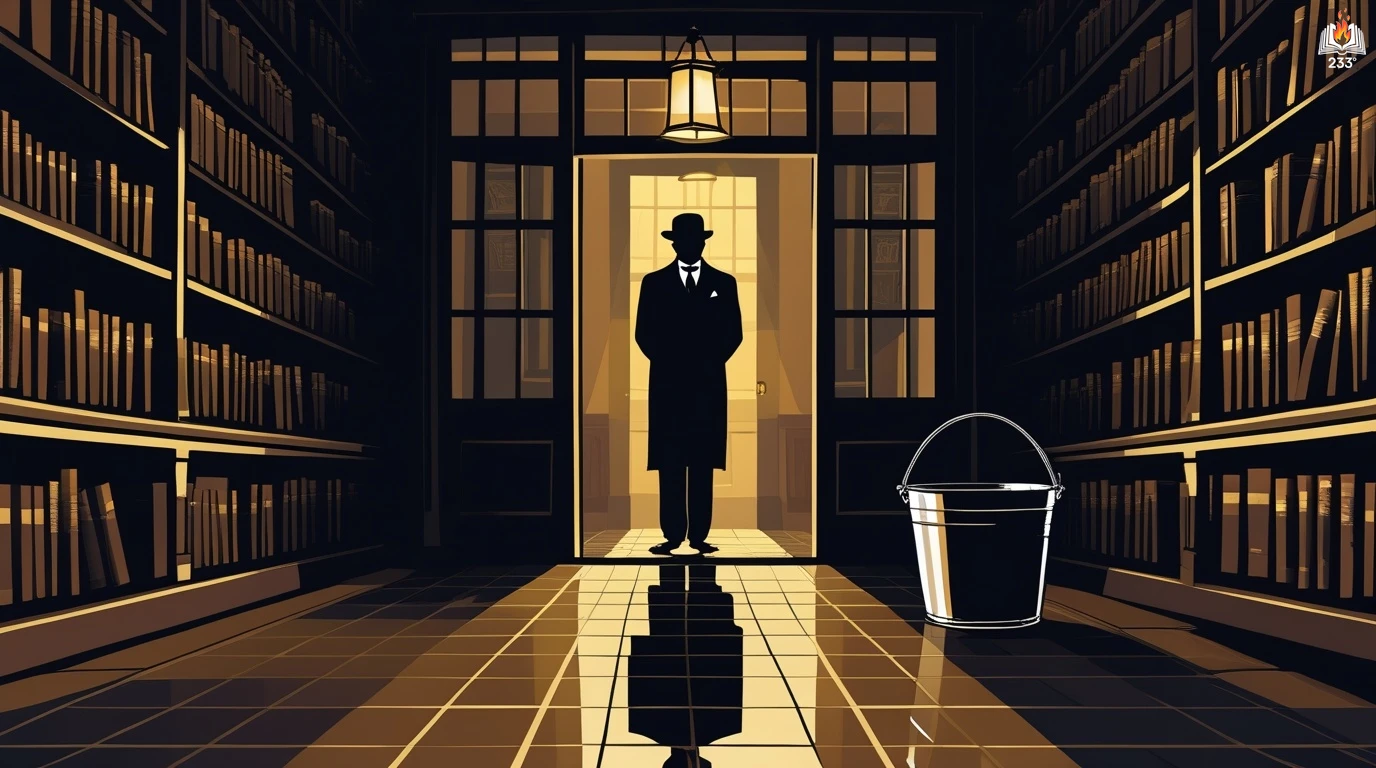
By the Pricking of My Thumbs, published in 1968, is one of Agatha Christie’s later novels featuring the married detective duo Tommy and Tuppence Beresford. Part of Christie’s well-known Tommy and Tuppence series, this novel weaves together the quiet menace of an English village with unsettling disappearances, cryptic clues, and a chilling undercurrent of evil. The title is drawn from Shakespeare’s Macbeth, foreshadowing the ominous atmosphere that permeates the book.
Plot Summary
The rain trembled on the edge of falling the morning Tommy and Tuppence Beresford sat at their breakfast table, the ordinariness of their day upended by a single letter. Aunt Ada, elderly and sharp-tongued, resided at Sunny Ridge, a home for the aged where she ruled with a tyrannical air. Tommy, prompted by guilt and a vague sense of duty, decided they ought to visit. Tuppence, mischievous yet loyal, insisted on accompanying him, knowing full well Aunt Ada would greet her with disdain.
Sunny Ridge greeted them with its faded gentility – a sprawling Victorian mansion with creeping ivy and sun-warmed benches. Miss Packard, calm and ever-competent, led them through rooms humming with the murmurs of old age. Aunt Ada, defiant as ever, dismissed Tuppence as an interloper but warmed, unexpectedly, to Tommy. Their conversation meandered through memories and grievances, until Ada’s attention turned to the odd newcomers in the home – particularly a new doctor she suspected, with some relish, of being a fraud.
While Tommy endured Aunt Ada’s pointed barbs upstairs, Tuppence waited in the garden room, where she met Mrs. Lancaster, a delicate old woman with a milk glass trembling in her hands. Mrs. Lancaster’s voice was gentle, her face lined with kindness, but her words unsettled Tuppence. Was it your poor child? she whispered, eyes flicking to the fireplace. Behind the fireplace, always the same time of day.
Not long after, Aunt Ada died peacefully in her sleep, her worldly possessions reduced to a small desk, some jewelry, a fur stole, and a peculiar painting of a pale pink house beside a canal bridge. Tommy and Tuppence returned to Sunny Ridge to sort through the remnants of her life. It was then Tuppence noticed the painting, its image prickling something at the back of her mind. She had seen that house before – but where?
As they prepared to leave, they asked after Mrs. Lancaster, only to be told that she had been taken away by relatives – rather suddenly, and with evident reluctance on her part. Tuppence felt a shiver of unease. Mrs. Lancaster had seemed so settled, so much a part of Sunny Ridge, and now she was simply gone.
At home, the painting haunted Tuppence. It stared down at her from the mantelpiece, its pink walls and narrow bridge tugging at half-formed memories. Determined, she began to investigate, sifting through Aunt Ada’s papers and tracking the painting’s origins. Threads of coincidence tangled into suspicion. Mrs. Lancaster’s sudden removal felt too abrupt, too neatly explained. And the old woman’s murmurs of a lost child behind the fireplace clung to Tuppence’s mind like cobwebs.
Tuppence’s search led them to Sutton Chancellor, a village wrapped in the hush of the English countryside. There, beneath the surface of rose-covered cottages and polite smiles, they unearthed a past threaded with darkness. Years ago, children had gone missing. Their disappearances had been folded into village memory, softened by time but never fully erased.
Tuppence visited the village under the pretense of amateur curiosity, knocking on doors, making polite conversation, pressing for details. A vicar, hesitant and sorrowful, spoke of the tragedies but had little to offer. A woman remembered a house that had once matched the painting – now long gone, swallowed by renovations. Slowly, puzzle pieces clicked into place.
Meanwhile, Tommy pursued the trail of Mrs. Lancaster’s supposed relatives. He traced the name Johnson to Africa, but every lead dissolved like mist. Mrs. Lancaster, it seemed, had no family at all.
As Tuppence followed the ghost of the pink house, she met a woman who had once been a maid in that very home. The woman, old now and nearly forgotten herself, remembered Mrs. Lancaster as a young mother, and a child whose existence had been quietly erased. The child had died – or so the family insisted – but no grave was ever marked, no service ever held.
A creeping certainty grew within Tuppence. Mrs. Lancaster’s mind, drifting through the fog of age, had tried to confess something all those years at Sunny Ridge. The fireplace. The child. A secret buried beneath layers of politeness and time.
Returning to the village, Tuppence and Tommy found the house from the painting, altered and modernized but still holding its old bones. They uncovered records, confronted neighbors, and pieced together a past everyone had tried to forget. Behind the fireplace, sealed away, they found the remains of a child long vanished from the world’s memory.
The police swept in then, bringing order and resolution, but for Tuppence and Tommy, the victory was quiet, bittersweet. The painting was no longer a mystery but a marker of a life marred by sorrow. Mrs. Lancaster, wherever she had been taken, would live out her days never knowing the truth had finally surfaced.
As they drove home through the wet English countryside, Tommy reached across to squeeze Tuppence’s hand. There was no triumph, no celebration. Only the quiet satisfaction of the truth reclaimed, a secret no longer whispering behind walls, and the comfort of returning to a world that, for all its ordinary days, held moments of unexpected darkness and light.
Main Characters
Tommy Beresford: A genial, level-headed retired intelligence agent, Tommy is practical and steady, providing the calm anchor to Tuppence’s impulsive curiosity. His sense of duty propels him into investigating unsettling events when his beloved aunt dies, and his relationship with Tuppence deepens as they navigate danger together.
Tuppence Beresford (Prudence): Vivacious, curious, and sharp-witted, Tuppence is the heart of the investigation. Her insatiable desire for adventure and innate empathy drive her to uncover hidden truths, especially when she senses something sinister behind a seemingly harmless elderly woman’s ramblings.
Aunt Ada Fanshawe: Tommy’s elderly aunt, Ada is a sharp-tongued and acerbic woman who lives in a retirement home. Her death becomes the catalyst for the unfolding mystery, leaving behind subtle clues that Tuppence instinctively picks up.
Mrs. Lancaster: An enigmatic and fragile elderly resident at Sunny Ridge Home, Mrs. Lancaster’s cryptic remarks about a “child behind the fireplace” ignite Tuppence’s suspicions. Her sudden disappearance deepens the mystery and becomes central to the unraveling plot.
Miss Packard: The competent and composed matron of Sunny Ridge Home, Miss Packard exudes control and kindness on the surface, yet the layers of secrets under her watch contribute to the novel’s tension.
Theme
The Persistence of Evil: Christie explores the unsettling notion that evil is not always loud or obvious but can lurk quietly beneath the surface of polite society. This theme is amplified by the cozy village setting, where behind every smile may hide a sinister motive.
Aging and Vulnerability: The novel poignantly examines the isolation, dismissal, and neglect that elderly people often experience. Through characters like Aunt Ada and Mrs. Lancaster, Christie touches on society’s uneasy relationship with aging and the dangers of underestimating the elderly.
Memory and Madness: Blurred lines between memory, senility, and delusion permeate the story. Mrs. Lancaster’s seemingly disjointed memories and the residents’ fancies at Sunny Ridge challenge the characters—and the reader—to separate truth from confusion.
Marriage and Companionship: Tommy and Tuppence’s relationship is a tender and grounding element, showcasing the comfort and friction of a long-term partnership. Their playful banter, mutual respect, and quiet reliance on each other provide a warm counterpoint to the novel’s darker elements.
Writing Style and Tone
Agatha Christie’s writing here is marked by her signature clarity, wit, and precision. The prose balances light domestic humor with mounting suspense, drawing readers into a world where danger hides behind the ordinary. Christie’s clipped, economical dialogue brings characters vividly to life, while her sharp eye for social detail enriches the backdrop.
The tone of By the Pricking of My Thumbs is subtly ominous, layered with an almost gothic eeriness that distinguishes it from Christie’s more straightforward detective tales. There’s an undercurrent of dread that builds slowly, evoking a psychological tension rather than relying solely on physical danger. Christie employs a gentle, almost teasing humor, particularly in Tommy and Tuppence’s exchanges, which offsets the chilling atmosphere and lends the novel a bittersweet charm.
Quotes
By the Pricking of My Thumbs – Agatha Christie (1968) Quotes
“That's where all the trouble in life comes from. Thinking.”
“I don’t particularly want to think of your funeral because I’d much prefer to die before you do. But I mean, if I were going to your funeral, at any rate it would be an orgy of grief. I should take a lot of handkerchiefs.”
“I've got a very nice staff here. People with patience, you know, and good temper, and not too brainy, because if you have people who are brainy, they are bound to be very impatient.”
“The things she said seemed to have very little relation to the last thing she had said a minute before. She was the sort of person, Tommy thought, who might know a great deal more than she chose to reveal.”
“They're like children, really. Only children are far more logical which makes it difficult sometimes with them. But these people are illogical, they want to be reassured by your telling them what they want to believe. Then they're quite happy again for a bit.”
“I’ve become a killer of the Lord. It’s the Lord’s will that I should kill you. So that makes it all right. You do see that, don’t you? You see, it makes it all right.”
“She was an expert in the exact amount of condolence which would be acceptable.”
“I loved her- I always loved her- no matter what she was-I wanted her safe- not shut up- a prisoner for life, eating her heart out. And we did keep her safe- for many years" Phillip Stark”
“I daresay people have liked murderers,” said Tuppence very reasonably. “It’s like swindlers and confidence tricksmen who always look so honest and seem so honest. I daresay murderers all seem very nice and particularly softhearted. That sort of thing.”
“You don't stop being in love with anyone because you get old. People like Derek and Deborah think you do. They can't imagine anyone who isn't young being in love.”
“Time goes a different pace in different places. Some places you come back to, and you feel that time has been busting along at a terrific rate and that all sorts of things will have happened - and changed.”
“Besides a burial service is rather lovely. Makes you feel uplifted, the grief is real. It makes you feel awful but it does something to you. I mean, it works it out like perspiration.”
“Real grief is real. It makes you feel awful but it does something to you. I mean, it works it out like perspiration.”
“Subdue your melodramatic fancies", said Tommy.”
We hope this summary has sparked your interest and would appreciate you following Celsius 233 on social media:
There’s a treasure trove of other fascinating book summaries waiting for you. Check out our collection of stories that inspire, thrill, and provoke thought, just like this one by checking out the Book Shelf or the Library
Remember, while our summaries capture the essence, they can never replace the full experience of reading the book. If this summary intrigued you, consider diving into the complete story – buy the book and immerse yourself in the author’s original work.
If you want to request a book summary, click here.
When Saurabh is not working/watching football/reading books/traveling, you can reach him via Twitter/X, LinkedIn, or Threads
Restart reading!