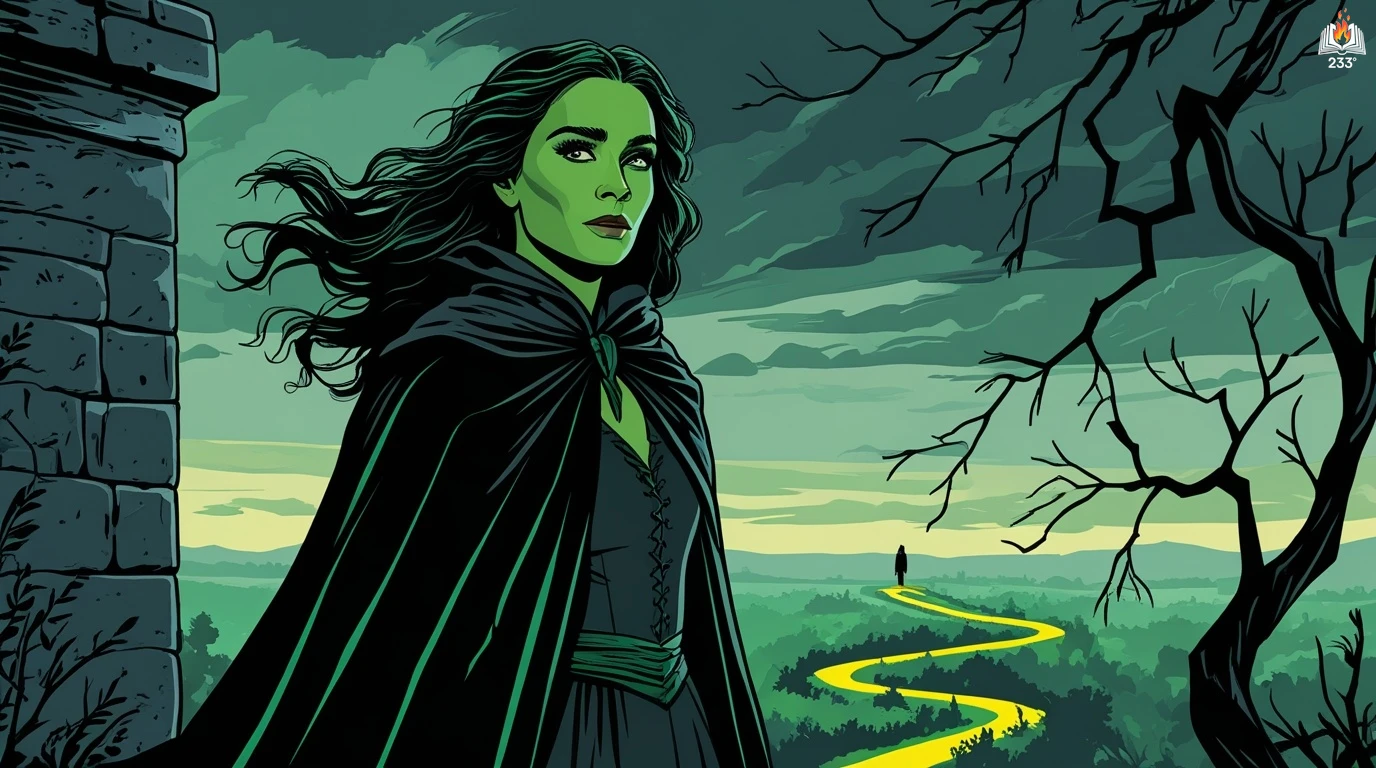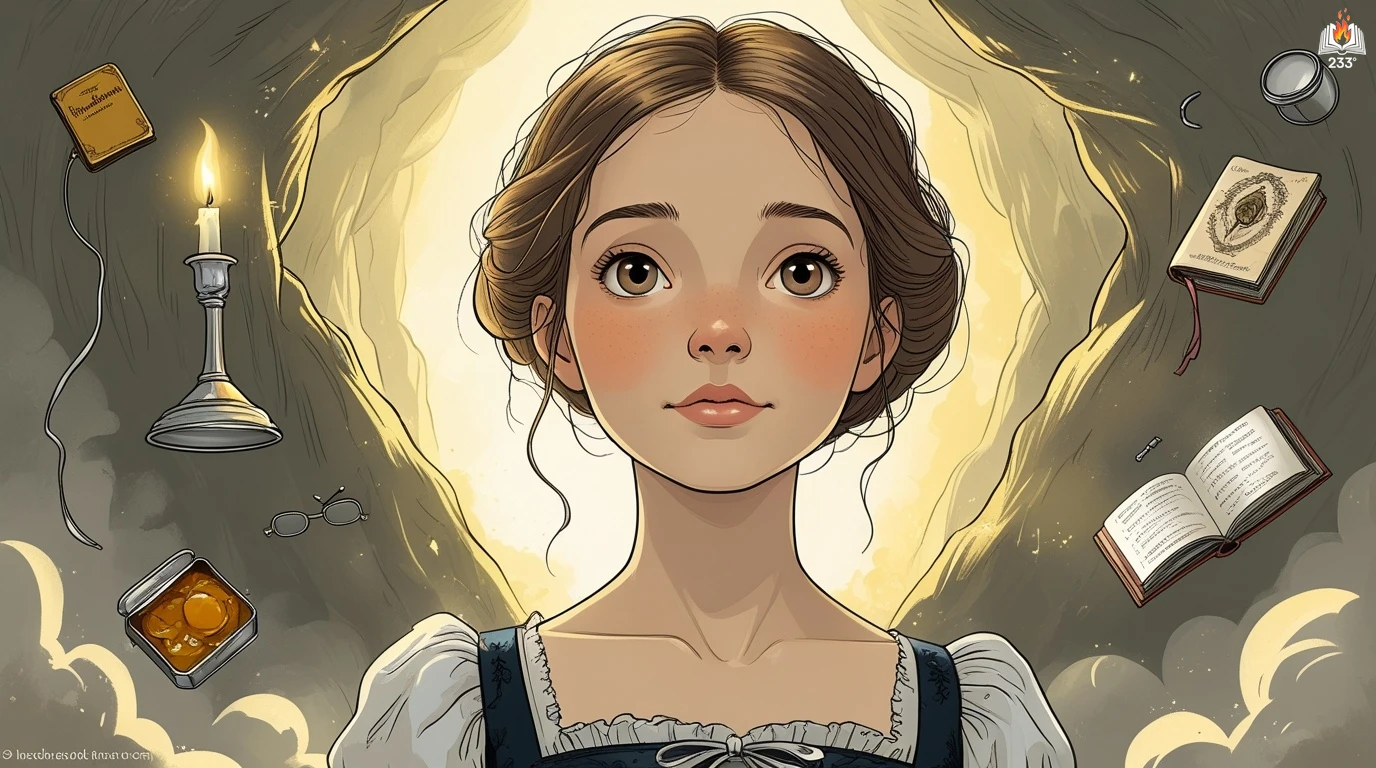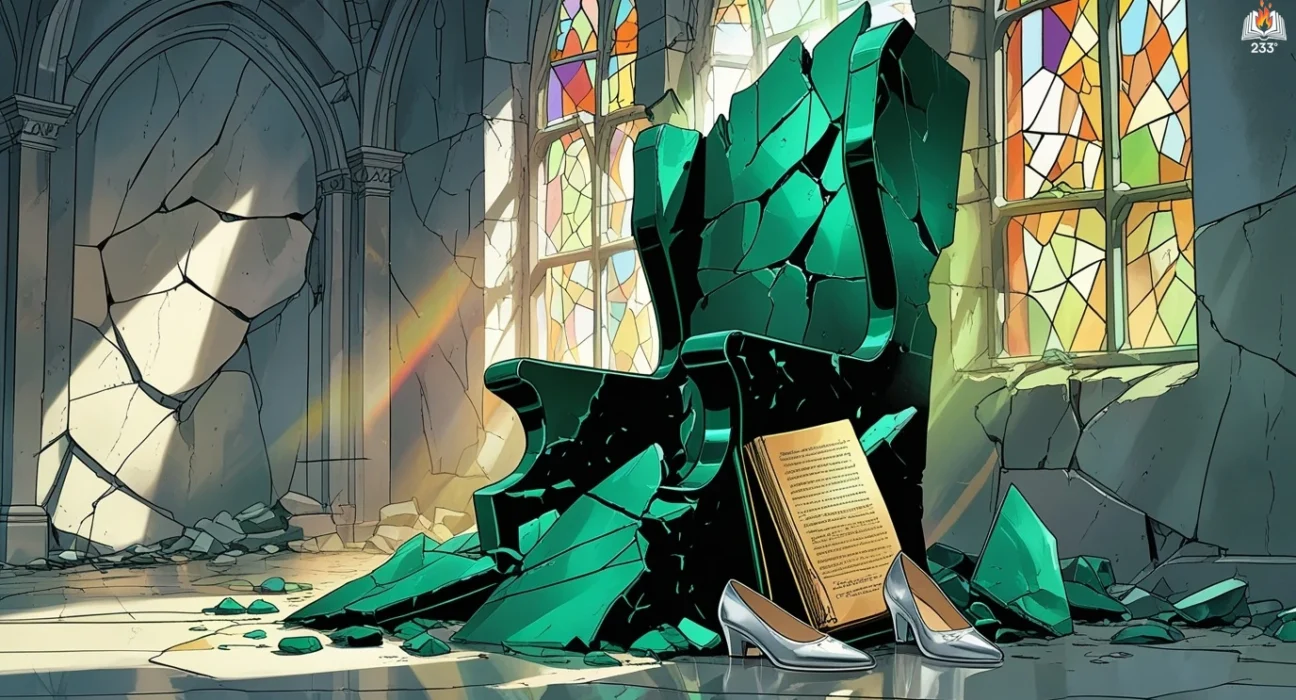
Out of Oz, written by Gregory Maguire and published in 2011, is the final installment in The Wicked Years series—a sweeping, politically and emotionally charged reimagining of L. Frank Baum’s The Wizard of Oz. Set in a world steeped in revolution, loss, and magic, this conclusion brings together threads from the earlier books (Wicked, Son of a Witch, and A Lion Among Men), centering on the next generation, particularly a young girl named Rain. The novel begins in a war-ravaged Oz, where old enemies clash, secrets are unearthed, and destinies intertwine in a land that no longer knows peace.
Plot Summary
In the silent chambers of Mockbeggar Hall, where time pooled in velvet drapes and rain traced solemn paths down stained glass, Lady Glinda kept her rituals sharp as crystal. Once Throne Minister of Oz, now politely exiled under Loyal Oz’s scrutiny, she spent her days among withering bouquets and memories too stubborn to fade. The world beyond her estate had frayed into war. Munchkinland had seceded, and the Emerald City, under the zeal of Emperor Apostle Shell Thropp, pressed its claim through steel and decree.
Into this cracked empire stepped General Traper Cherrystone, all charm and polished boots, requisitioning Mockbeggar Hall as a temporary military headquarters. With half a smile and unyielding orders, he occupied the estate, displacing Glinda’s staff and flooding her world with soldiers. And yet, under the tension of house arrest and whispered sedition, one overlooked figure remained: a young servant girl named Rain, quiet and small, her skin disguised with powders to conceal its pale green hue.
Rain was no ordinary child. She was Elphaba’s granddaughter, daughter of Liir and Candle, heir to the mysterious Grimmerie – the ancient tome of unspoken spells. Hidden among linens and duties, Rain learned to sweep, to obey, to survive. But magic, even when forgotten, does not sleep forever. Glinda, weary of ceremonies and wary of war, slowly realized what she harbored in her halls. Rain’s gift, fragile and forming, was too potent to remain untouched by the widening struggle.
Outside the estate, Oz splintered. The Emerald City’s forces advanced through Restwater, seeking to choke Munchkinland by capturing its lifeblood. Rumors stirred like wind through wheat – Dorothy Gale, the girl once hailed for melting the Wicked Witch, was back in Oz and held prisoner. Her trial, a public spectacle of blame and myth, would determine not only her fate but the shape of memory itself. To the rulers of Oz, she was a relic of inconvenient legend; to those who believed, she was a scapegoat.
Liir, missing from court and battlefield, had vanished into the misted edges of the map. The Cowardly Lion, Brrr, now a disgraced and drifting figure, wandered in search of redemption, carrying the burden of old allegiances and fractured ideals. Yackle, the blind oracle older than reckoning, stirred once more, her life now tethered to something beyond prophecy – perhaps to Rain herself.
When Rain was whisked away from Mockbeggar in secret, tucked inside the traveling troupe of the Clock of the Time Dragon, Oz turned again. Disguised as a boy, her green skin unmasked, she traveled through ravaged provinces and rebel camps, chased by both those who feared her lineage and those who sought to use it. With the Grimmerie at her side – alive with hidden language and spells only Rain could coax – she began to read the truth buried beneath Oz’s legends.
The troupe’s journey led them through mountains, across battlefronts, and into the heart of shifting loyalties. They passed by towns painted in propaganda, where children chanted for unity and men vanished into recruitment lines. Each village bore scars – from drought, from division, from the weight of history pressing on the present like a boulder on a brittle root.
Meanwhile, Dorothy’s trial unfolded in spectacle. She was judged not for her own choices but for the stories others had written about her. Every question dripped with strategy, every answer tangled in politics. Rain, watching from the shadows, recognized something in Dorothy – not a killer, but a girl caught in a story far older and crueler than her own.
In hiding, Rain found allies unexpected and true. Brrr returned, his courage no longer a joke but a quiet determination to protect her. Glinda, defiant behind her smiles, used her waning influence to shield Rain’s name. Liir, thought lost, surfaced again with a hollow stare and a father’s ache. Yackle, in the end, gave herself entirely, unraveling her last threads of prophecy to point the way forward. Each played their part in a world fraying at the seams.
As the war reached its fever pitch and the Grimmerie began to speak more fluently through Rain’s hands, choice became a question not of sides but of ends. The power to rewrite Oz lay not in an army or a throne, but in the silent syllables of spells unspoken for generations. Rain stood between destruction and something stranger – mercy.
Yet power refused to be clean. The spells she could summon were not weapons, but doors – possibilities, questions, undoings. Rain’s magic did not burn cities or fell armies. It unstitched illusions, peeled away lies, and left those who remained to face one another without the comforts of myth. Dorothy was released, not in celebration, but with the bitter taste of unresolved wounds.
Mockbeggar stood empty, stripped of soldiers. Glinda remained within it, old in grace, watching as the world spun without her, yet changed in part because of her. Liir left again, drawn to places he could not name. Brrr disappeared into the hinterlands, seeking no audience, no reward. Rain walked away from the center of Oz, leaving the Grimmerie behind, not in defeat but in understanding.
There would be no crowns, no grand speeches. Only a country learning to live with the truths it had hidden, the children it had silenced, and the stories it could no longer afford to believe.
Main Characters
Rain Thropp: The green-skinned granddaughter of Elphaba (the Wicked Witch of the West), Rain begins the story in hiding, unaware of her lineage and the immense magical legacy she carries. Initially shy, impressionable, and overlooked, her journey is one of self-discovery, growing courage, and inherited responsibility as she gradually steps into the tumultuous center of Oz’s destiny.
Glinda (Lady Glinda Chuffrey): Once a Throne Minister and now a faded symbol of elegance and privilege, Glinda is placed under house arrest as war divides Oz. Despite her sharp tongue and feigned superficiality, she demonstrates surprising resilience and intelligence, becoming a key protector of Rain and subtly resisting the authoritarian grip of Loyal Oz.
Liir Thropp: Elphaba’s son and Rain’s father, Liir is now a jaded and weary figure, still wrestling with the shadow of his mother’s reputation and his own inadequacies. His arc is marked by disillusionment, reluctant heroism, and personal loss.
General Traper Cherrystone: A chilling blend of civility and tyranny, Cherrystone represents the authoritarian Loyal Oz regime. His courteous demeanor masks a calculating mind and ruthless ambition. His interactions with Glinda and Rain form some of the novel’s most politically and emotionally layered scenes.
Brrr (The Cowardly Lion): Still grappling with guilt, reputation, and his own ambiguous sense of loyalty, Brrr continues his journey of redemption. His evolution from a reluctant, morally grey figure into someone willing to take risks for others marks one of the novel’s quieter but most affecting character arcs.
Dorothy Gale: Returned to Oz once again, Dorothy faces a highly publicized trial for past events. Her presence serves as a symbolic reckoning with history, myth, and the politics of blame.
Yackle: The ancient oracle, enigmatic and persistent, plays her final part in guiding fate, offering cryptic truths and culminating lifetimes of manipulation and insight into a single moment of transcendence.
Theme
Power and Corruption: The novel delves deep into the cyclical nature of power—how it seduces, blinds, and ultimately betrays those who seek it. Both the Emerald City and Munchkinland are mired in political deception, and Maguire uses these fractured governments to reflect real-world systems of oppression and resistance.
Legacy and Inheritance: Rain’s journey is framed by the legacy of Elphaba. The weight of her ancestry becomes both a burden and a compass, mirroring how history shapes identity. In contrast, others, like Brrr and Glinda, wrestle with the impact of their own past decisions.
Truth vs. Narrative: A recurring motif is the manipulation of stories—who gets to tell them, how they’re recorded, and what’s remembered. Dorothy’s trial and Rain’s hidden identity both highlight how “truth” is constructed by power and propaganda.
Exile and Belonging: Many characters—Rain, Glinda, Brrr, Liir—are estranged from their homes or selves. The struggle to belong in a land riven by distrust and war underscores the emotional heart of the story, making every reunion or act of solidarity poignant and hard-won.
Magic and Meaning: The Grimmerie, a mysterious spellbook, reappears as both a symbol of dangerous knowledge and a relic of hope. Maguire questions the very purpose of magic in a world where politics and fear often drown out wonder.
Writing Style and Tone
Gregory Maguire’s prose in Out of Oz is rich, layered, and unapologetically literate. His style weaves irony, lyricism, and philosophical inquiry, demanding careful attention. He balances satire with deep emotion, often embedding poetic reflections within sharp political commentary. The dialogue is particularly notable for its wit and double meaning—characters like Glinda wield language as both mask and weapon. Maguire often employs shifting points of view, expanding the emotional and intellectual scope of the story.
The tone oscillates between elegiac and satirical. While the novel maintains a consistent undercurrent of melancholy—reflecting the loss of innocence and the cost of war—it also teems with sly humor, especially in Glinda’s scenes. This contrast gives the narrative a complex emotional texture, never allowing it to drift into sentimentality or didacticism. Even at its most fantastical, Out of Oz is grounded in human concerns—identity, loyalty, justice, and survival—making Maguire’s reimagined Oz a place of deep moral ambiguity and resonant humanity.
Quotes
Out of Oz – Gregory Maguire (2011) Quotes
“I may not know how to fly but I know how to read, and that's almost the same thing.”
“Birds know themselves not to be at the center of anything, but at the margins of everything. The end of the map. We only live where someone's horizon sweeps someone else's. We are only noticed on the edge of things; but on the edge of things, we notice much.”
“There were people everywhere but no one was mine, and I was no one's.”
“Don't wish,"said Rain, "don't start. Wishing only...”
“Of course. You get everything from books.”
“She wasn't afraid of doing good or of resisting evil. She was merely afraid she might not be able to tell the difference.”
“To read, even in the half-dark, is also to call the lost forward.”
“The world rarely shrieks its meaning at you. It whispers, in private languages and obscure modalities, in arcane and quixotic imagery, through symbol systems in which every element has multiple meanings determined by juxtaposition.”
“Light will blind us in time, but what we learn in the dark can see us through.”
“O beautiful, to make escape And leave this world behind. Had I to stay another day I'd lose my fucking mind...”
“The sweet accident of coincidence is the best foundation on which to build.”
“When you get right down to it, every collection of letters is a magic spell, even it it's a moronic proclamation ... Words have their impact, girl. Mind your manners. I may not know how to fly but I know how to read, and that's almost the same thing.”
“[Puggles] "What population signs on willingly for slavery?" "You mean other than wives?" [Glinda]”
“It appears history is going to keep happening, despite our hopes for retirement.”
“This is what fun is like," said Rain, almost to herself.”
“Is that, in the end - that capacity to hurt - the most essential ingredient for a ruler?”
“As years pass, and the abundance of the future is depleted, the crux of old mistakes and the cost of old choices are ever recalibrated. Resentment, the interest in umbrage derived from being wronged, is computed minute by minute, savagely, however you try to ignore it.”
“Every choice brings wisdom in its wake. If you got to have the wisdom first, it wouldn't be a choice--just policy”
“I never talk about the end game." He winked at her. "I've lived so long without death that I've stopped believing in it.”
“...Where shall I say you've gone?" She threw an arm about airily. "Oh, way up high. Over the rainbow somewhere, I guess.”
“Every child makes its peace with abandonment. That's called growing up.”
“It's been a long rocky life, with plenty of possibility but too much human ugliness.”
“Do good though, will you?" She blinked brightly at the green girl. "If not for your parents or your grandmother, then for me?”
“My job is to protect you, Lady Glinda even if you are loosing your mind.”
We hope this summary has sparked your interest and would appreciate you following Celsius 233 on social media:
There’s a treasure trove of other fascinating book summaries waiting for you. Check out our collection of stories that inspire, thrill, and provoke thought, just like this one by checking out the Book Shelf or the Library
Remember, while our summaries capture the essence, they can never replace the full experience of reading the book. If this summary intrigued you, consider diving into the complete story – buy the book and immerse yourself in the author’s original work.
If you want to request a book summary, click here.
When Saurabh is not working/watching football/reading books/traveling, you can reach him via Twitter/X, LinkedIn, or Threads
Restart reading!