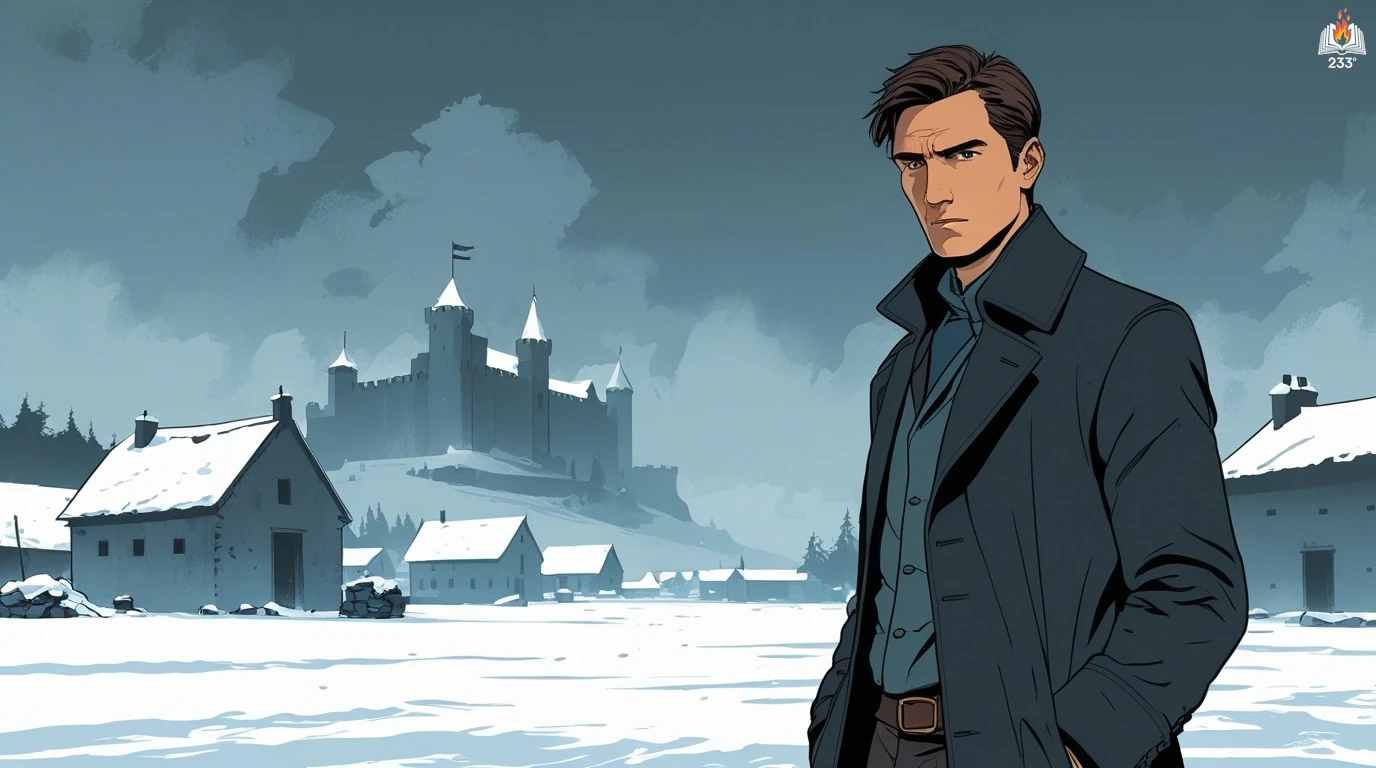
The Burrow by Franz Kafka, written in 1923-24 and published posthumously, is part of the celebrated body of Kafka’s shorter fiction that includes works rescued and compiled by his friend and literary executor Max Brod. This story appears in a collection of Kafka’s late prose, emblematic of his preoccupation with anxiety, control, and existential dread. Like Kafka’s other unfinished works such as The Castle and The Trial, The Burrow reveals an inward psychological realism filtered through a surrealistic lens. The story follows a burrowing creature, a sentient beast obsessed with the security and perfection of its underground fortress, as it confronts escalating paranoia.
Plot Summary
Beneath the surface of a silent and nameless world lies a labyrinthine burrow, carved with meticulous care and an obsessive devotion to design. Its creator, a mole-like creature of ambiguous form but unnervingly human thought, has devoted a lifetime to building and perfecting this underground fortress. The structure is vast, filled with tunnels, chambers, escape routes, and a single, deceptive entrance meant to conceal the complex world within. The air is thick with quiet calculation, every corridor etched with the imprint of fear.
The creature inhabits this subterranean maze not for comfort, but for survival. Life outside is never visible, only suggested – a faint scratching at the walls, a distant tremor beneath the earth, the imagined sound of something hunting. In this realm of silence and soil, danger is never seen, but always felt. The creature lives not in peace but in the constant anticipation of intrusion. It praises the burrow’s design – how cleverly the entrance is hidden, how the central chamber offers both safety and control – yet no amount of architectural ingenuity brings rest.
There is pride, of course. The burrow is not merely shelter but a monument to vigilance. The creature revisits its corridors as if inspecting a shrine, admiring the way each path loops into another, the way it could vanish instantly if it needed to. Yet, there is a vulnerability in such pride. For all its complexity, the burrow becomes a mirror for the creature’s own mind – intricate, dark, looping endlessly back upon itself.
At the heart of this structure lies a place called the Castle Keep – not truly a castle, nor a keep, but the creature’s chosen term for its sanctuary. It is a hollowed dome, round and quiet, where the creature attempts to rest. From here, it listens. Always listening. The silence is never silent enough. There is a rhythm to the quiet that begins to unsettle it – an imagined pulse, a vibration that might be nothing at all, or might be the whisper of an invader. It waits. It tries to dismiss it. But the sound – faint, persistent – refuses to leave.
This sound becomes a presence, a thing without body that haunts the burrow without stepping foot in it. The creature attempts to trace it. It follows the tunnels, retraces its own steps, inspects the walls for cracks, the soil for tremors. Nothing is found. But the presence remains. In the absence of evidence, the creature’s thoughts fill the void. It begins to question its own senses, then questions the reliability of its questioning. Thought becomes suspicion, suspicion becomes obsession.
Work resumes, frantic and determined. The creature begins to re-dig sections of the burrow, reinforcing old chambers, testing new designs. It experiments with acoustics, lying belly-down on the cold floor, hoping to catch some proof that the sound is real. Its claws are worn and its senses frayed, but it cannot stop. The burrow, once a creation of genius, becomes a paranoid shell – a nervous adaptation to every imagined threat. Where once there was confidence in its complexity, now there is only doubt in its stability.
The noise continues – always subtle, never revealing itself. Perhaps it is a beast, lurking just beyond the farthest edge of the tunnel. Perhaps it is the vibration of its own heartbeat, echoing within a hollow chamber. Perhaps it is the burrow itself, groaning under the weight of its own perfection. There is no way to know. Knowing becomes impossible, and so the creature begins to turn inward, not toward introspection but into a deeper burrowing of the mind.
Each corridor that once offered escape now feels like a trap. The intricacies of the design, once a source of safety, become a puzzle with no clear exit. The creature fears sleep. In sleep, the sound might move closer. In waking, the sound is all it hears. It tries to imagine confronting the intruder – a swift attack, a victorious defense – but even fantasy offers no relief. The enemy has no form, no face, no certainty.
As the creature grows more exhausted, its perception of the burrow changes. The walls seem closer than before. The paths more twisted. It loses confidence in its own knowledge of the terrain. It begins to suspect that changes are being made when it sleeps – not by it, but by the presence, which may now be inside. Paranoia births hallucination. It sees shadows where there are none, hears breathing where the air is still. The Castle Keep, once sacred, now feels exposed. Vulnerable.
The creature contemplates leaving – surfacing into a world it barely remembers. But what lies above is unknown, unmeasured, dangerous in ways the burrow at least pretends to control. The idea is unbearable. This earth-walled prison is all it has, and yet it cannot rest inside it. The presence, whatever it is, has not attacked. Perhaps it never will. Perhaps it is waiting. Or perhaps it simply is – a condition of the burrow, a condition of fear.
Every effort to eliminate the sound only deepens its resonance. Earth is moved, tunnels altered, silence pursued with manic devotion. But the sound remains, untouched and untouchable. In time, the creature stops trying to explain it. It stops believing in solutions. It lies in the dark, eyes open, breathing slowed, listening. The soil is dense, the air damp, the quiet unbearable. There is no confirmation, only continuation.
Somewhere far from the Castle Keep, the sound persists. The creature does not move toward it now. It simply listens, wide-eyed in the darkness, and waits.
Main Characters
- The Narrator (Unnamed Burrowing Creature):
The narrator is a mole-like, intelligent animal who is deeply introspective and obsessive. Its entire existence revolves around constructing, maintaining, and worrying about its elaborate underground home. The character exhibits intense paranoia and an overwhelming need for control, believing that its extensive preparations will protect it from unseen threats. Over time, its mental state deteriorates, becoming increasingly consumed by fear and hypothetical dangers. The narrative is driven entirely by its inner monologue, reflecting a mind unraveling under the weight of its own vigilance and isolation.
Theme
Paranoia and the Illusion of Security:
The creature’s obsessive efforts to protect its burrow highlight the futility of trying to attain absolute safety. No matter how meticulously it plans or how many defenses it installs, the creature remains plagued by dread and suspicion. This theme reflects Kafka’s broader meditations on anxiety, control, and existential uncertainty.Isolation and Solitude:
The burrow represents both sanctuary and prison. While the narrator constructs it as a haven, its solitude becomes suffocating. Kafka explores the paradox of desiring solitude yet fearing the loneliness and vulnerability it breeds. This theme is amplified through the narrator’s lack of interaction with any other being, rendering its fears increasingly hallucinatory.Obsessive Thought and Self-Destruction:
Kafka delves into the destructive power of overthinking. The narrator becomes a victim of its own mind, replaying fears and scenarios that may not exist. The more it tries to solve or prevent danger, the more entangled it becomes in its compulsions, eventually undermining its own peace and safety.Incompleteness and Ambiguity:
True to Kafka’s style, the story ends ambiguously, with unresolved threats and an increasing sense of unease. The unfinished nature of both the manuscript and the plot reinforces a theme central to Kafka’s work: the impossibility of closure in a world ruled by uncertainty and disconnection.
Writing Style and Tone
Kafka’s prose in The Burrow is dense, introspective, and claustrophobic, mirroring the physical and psychological space of the narrator. The first-person narrative is unrelentingly focused on the creature’s interiority, capturing every flicker of doubt, every meticulous calculation, and every creeping fear. Sentences spiral and loop, often taking on a recursive quality that mirrors obsessive thought. There is a rhythmic quality to Kafka’s syntax that simulates the pulsating anxiety of a trapped mind.
The tone is anxious, disoriented, and intensely introspective. Kafka’s genius lies in his ability to conjure unease not through external events but through internal disintegration. The narrator’s thoughts, at first methodical and confident, gradually unravel into panicked speculation. The story’s tension doesn’t arise from action but from dread, its power residing in what is not said or not known. Kafka uses ambiguity to sustain this mood, drawing readers into the narrator’s disintegrating psyche.
Quotes
The Burrow – Franz Kafka (1924) Quotes
“Please, Father, let he future rest, as it deserves. If you wake it ahead of time, the only result is a sleepy-headed present. You shouldn’t need your son to remind you of that.”
“If you were to articulate it, who would be able to resist you? The great chorus of caninity would chime in with you, as if it had just been waiting for this moment.”
We hope this summary has sparked your interest and would appreciate you following Celsius 233 on social media:
There’s a treasure trove of other fascinating book summaries waiting for you. Check out our collection of stories that inspire, thrill, and provoke thought, just like this one by checking out the Book Shelf or the Library
Remember, while our summaries capture the essence, they can never replace the full experience of reading the book. If this summary intrigued you, consider diving into the complete story – buy the book and immerse yourself in the author’s original work.
If you want to request a book summary, click here.
When Saurabh is not working/watching football/reading books/traveling, you can reach him via Twitter/X, LinkedIn, or Threads
Restart reading!