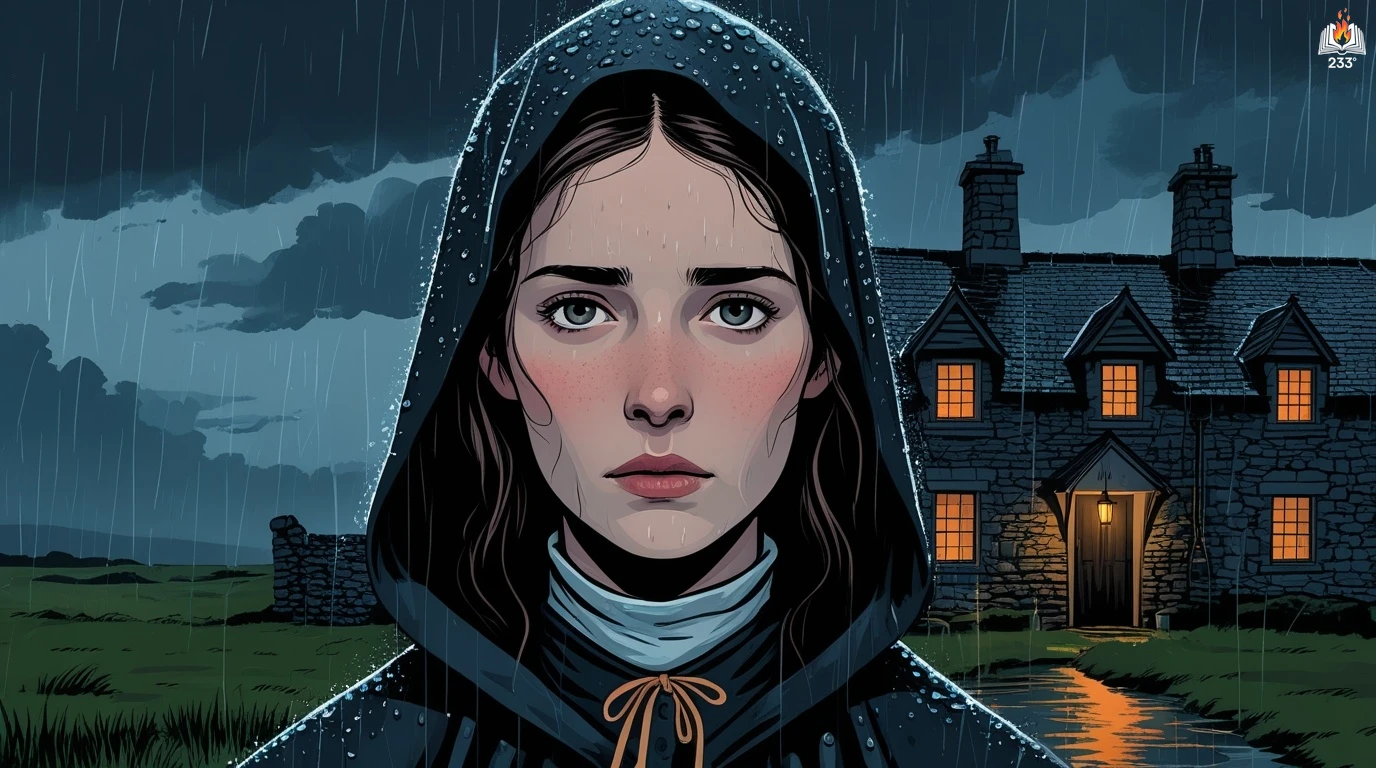
Ordeal by Innocence by Agatha Christie, published in 1958, ventures beyond her traditional whodunit formula into a chilling psychological mystery. It explores the devastating aftermath of a wrongful conviction in a tightly-knit family. When Dr. Arthur Calgary, a scientist recently returned from the Antarctic, presents evidence that clears Jack Argyle – a young man convicted posthumously of his adoptive mother’s murder – he believes he is delivering justice. Instead, his revelation unravels a nest of repressed secrets and incites dread among the surviving Argyle family members. As the case reopens, each member is forced to confront not only the truth but the disturbing realization that one of them may be a murderer.
Plot Summary
Arthur Calgary arrived at Sunny Point as the evening light ebbed from the sky, the cold wind off the river brushing against his face. He had come with a burden – a truth long delayed, a revelation meant to bring peace. But as the ferryman eyed him curiously and the house loomed above Viper’s Point, he sensed already that peace would not come easily here.
Two years earlier, Rachel Argyle, the strong-willed matriarch of Sunny Point, had been bludgeoned to death in her home. Her adopted son, Jacko Argyle, was swiftly arrested, tried, and convicted of her murder, dying in prison not long after. Jacko’s alibi – that he had been hitchhiking to town and picked up by a stranger – was dismissed as the desperate lie of a scoundrel. Yet, here stood Dr. Calgary, the stranger Jacko spoke of, finally returning from an Antarctic expedition, finally remembering the face of the young man he had picked up that night.
The Argyle family greeted him not with gratitude, but with wary eyes and stiff backs. Leo Argyle, the reserved father, watched from his library chair, his long fingers tapping absently on the armrest. Hester, the fiery youngest daughter, bristled with suspicion, her blue eyes sharp and unforgiving. Gwenda Vaughan, Leo’s composed secretary, offered a flicker of sympathy, while Kirsten Lindstrom, the housekeeper who had stayed on through the years, stood as a silent sentinel, her lined face unreadable.
Calgary’s announcement shattered the uneasy calm that had settled over the house. Jacko, they had told themselves, was guilty – a charming but violent man, a thief, a liar, a misfit. His guilt was a bitter comfort, wrapping the family in a cocoon of resignation. Now, with Jacko declared innocent, the air thickened with an unspoken fear. If Jacko had not killed Rachel, then one of them must have.
In the days that followed, the house became a stage for a delicate unraveling. Mary Durrant, the eldest daughter, arrived with her husband Philip, a once-vigorous pilot now confined to a wheelchair. Mary, with her cool control and neat precision, tried to impose order, but her husband, sharp-eyed and restless, sensed the fracture lines beneath the surface. Mickey Argyle, the rebellious youngest son, burst in with restless energy, his anger thinly veiling his dread. Each arrival tightened the knot around the family, drawing old wounds to the surface.
Rachel’s memory hovered over them all. She had been a force of nature – charitable, brilliant, exacting – gathering five adopted children under her wing during the war. Yet beneath her motherly ambition had lurked an iron will, and each child bore the imprint of her influence: Mary with her polished restraint, Hester with her restless defiance, Mickey with his simmering rebellion, Jacko with his wild recklessness. Rachel had given them a home but had also bound them in expectations none could fully meet.
Calgary watched as the family recoiled from his efforts to set things right. Leo retreated into abstraction, more disturbed than relieved. Mary clung to appearances, Philip chuckled bitterly at the family’s crumbling façade, and Mickey oscillated between bravado and trembling suspicion. Hester, fierce and unpredictable, haunted the halls, whispering sharp questions in the night. And through it all, Kirsten watched, offering brandy, offering comfort, always present, always quiet.
Outside, the police stirred. The case was reopened, the once-settled facts now shifting like sand. Questions lingered over Sunny Point. Who had the opportunity? Who had the motive? And why had the family, for all its fractured bonds, preferred to live with the lie of Jacko’s guilt?
Calgary’s presence became a mirror in which each family member glimpsed their own fears. Mary feared the collapse of her carefully managed world. Philip, sharp-tongued and probing, sensed truths that had long been buried. Mickey raged against the injustice of being dragged back into the past. And Hester trembled at the thought that someone she loved could be a killer. Gwenda, so calm and efficient, moved through the house like a shadow, her eyes meeting Leo’s a little too often, her devotion to the family revealing edges no one had noticed before.
Then came the shift. Suspicion turned inward. Mistrust spread from room to room, threading through the household like a dark whisper. Old grievances resurfaced – the moments when Rachel’s love had been suffocating, when her generosity had been laced with control. The house, once a place of refuge, became a cage of locked doors and stolen glances.
Calgary, once determined to set things right, came to understand that innocence, too, could be an ordeal. The truth, once unleashed, was no balm but a blade. In clearing Jacko’s name, he had unsettled the foundations of a family already rotted with silence and resentment. The police pressed in, but it was within the walls of Sunny Point that the reckoning unfolded.
It was not a stranger who had struck Rachel down, nor a wandering thief, but one who had eaten at her table, laughed in her presence, and known the weight of her expectations. The killer had been hiding in plain sight, their guilt folded into the routines of everyday life. And when the truth finally came, it was not the loud crash of justice, but the quiet collapse of a family, each member left to reckon with the part they had played in creating a home where love had curdled into fear.
As the house emptied and the voices quieted, Calgary stood once more at the edge of Viper’s Point, the wind cold against his face. He had crossed a river to bring a message of innocence, but on the far shore, he had found only ruin. Behind him, Sunny Point remained, a house no longer defined by its name, but by the long shadow cast by the woman who had ruled it and the silence she had left behind.
Main Characters
Dr. Arthur Calgary: A geophysicist and the inadvertent catalyst for the novel’s events. His belated alibi for Jack Argyle, due to a post-accident memory lapse, sets the story in motion. Calgary is burdened with guilt and a sense of moral duty, compelling him to face suspicion and hostility as he attempts to right a terrible wrong.
Leo Argyle: The intellectual and emotionally withdrawn patriarch of the Argyle family. Devoted to his late wife Rachel, Leo seems relieved when Jack is found guilty, allowing him to grieve within the safe boundaries of certainty. Calgary’s news forces him to reopen wounds he had compartmentalized.
Rachel Argyle (deceased): The murdered matriarch, a powerful woman who adopted five children and ran her home with authority and progressive ideals. Though dead, her domineering legacy looms over the entire family dynamic, shaping how each character reacts to the investigation.
Jacko Argyle: The supposed murderer, who died in prison before Calgary could present the alibi. Known for his manipulative charm and violent temper, Jacko was universally disliked, making it easy for his family to believe in his guilt. His true innocence complicates their perceptions of themselves and each other.
Hester Argyle: The youngest daughter, fiercely loyal and emotionally volatile. She idolized Jacko despite his flaws. Calgary’s revelation sends her spiraling into confusion and rage, fearing what the truth might mean for the family she clings to.
Mary Durrant: The composed, aloof eldest daughter. Married to the disabled Philip Durrant, Mary represents order and control, yet the reemergence of the case exposes cracks in her emotionally sterile persona.
Philip Durrant: Mary’s husband, a former pilot now confined to a wheelchair. Intelligent and cynical, Philip becomes a perceptive observer and commentator, using his limitations to probe into the family’s dark secrets with detached curiosity.
Mickey Argyle: Rebellious and bitter, Mickey’s resentment toward Rachel and Jacko’s legacy is deeply ingrained. As the case unfolds, his anger masks fear – fear of guilt by association, or worse, implication.
Gwenda Vaughan: Leo’s secretary and emotional confidante, whose role in the family becomes increasingly complex. Her quiet presence and watchfulness hint at deeper involvement, blurring the line between loyalty and complicity.
Kirsten Lindstrom: The Argyles’ long-serving housekeeper and a maternal figure to the children. Stern and protective, her deep ties to the family harbor long-buried emotions and secrets crucial to the plot’s resolution.
Theme
Guilt vs. Innocence: The novel’s title encapsulates its core conflict – the tension between being legally exonerated and emotionally redeemed. Each character must reevaluate their own conscience, questioning how guilt extends beyond the courtroom.
Family and Identity: The Argyle children, all adopted, wrestle with the roles assigned to them within a manufactured family. Christie delves into the psychological strain of constructed kinship and the expectations that arise from it.
Justice and Truth: The idea that truth must always be served is challenged repeatedly. Calgary’s quest for justice is noble but naive, illustrating how truth can be disruptive and justice, when delayed, deeply traumatic.
Resentment and Suppression: Emotional repression is a motif across the characters – from Leo’s intellectual detachment to Mary’s icy control. Calgary’s return acts like a wedge, forcing these emotions into the open, with dangerous consequences.
Time and Memory: Memory plays a critical role, especially Calgary’s lost recollection that could have saved Jacko. The novel underscores how the past shapes the present, and how misremembering (or forgetting) can cost lives.
Writing Style and Tone
Agatha Christie adopts a darker, more introspective tone in Ordeal by Innocence compared to her traditional murder mysteries. The prose is somber and reflective, often probing the inner lives of her characters with psychological depth rather than relying solely on plot-driven suspense. The narrative maintains a third-person omniscient voice, but it subtly shifts focus to reveal the layered inner conflicts and unspoken anxieties of each character.
Christie’s writing here is stripped of the light wit and deductive flamboyance typical of Poirot or Miss Marple. Instead, the novel leans into moral ambiguity and emotional complexity. Dialogue is taut and revealing, often pregnant with subtext and dread. Descriptions, particularly of the Argyle home and its landscape, evoke a suffocating sense of isolation and stagnation. The tone is one of increasing claustrophobia, as familial façades crumble and the weight of repressed truths comes to bear.
Quotes
Ordeal By Innocence – Agatha Christie (1958) Quotes
“How can I go on living here and suspecting everybody ?”
“Justice is, after all, in the hands of men and men are fallible.”
“He felt lost without his hatred–lost and afraid. About Mickey Argyle”
“Men, they never think.”
“A man is responsible for his deeds, and not just the deeds, but for the consequences of those deeds, as well.”
“O maid most dear, I am not here. I have no place, no part, No dwelling more by sea nor shore, But only in thy heart.”
“The old gentleman refuses to have the telephone which he regards as a device of the devil, and on a par with radio, television, cinema organs and jet planes, so I had to take a chance of finding him at home.”
“Devotion was all very well when you could get away from it for nine or ten hours of the day. It was a nice thing to come home to. But now he was lapped round with it; watched over, cared for, cherished. It made one yearn for a little wholesome neglect”
“The truth often does sound unconvincing. – Philip Durrant”
“It’s so awful when people are always right. It’ makes you feel more and more inadequate. - Hester Argyle”
“One must take responsibility for one’s actions and not only one’s actions but for the result of one’s actions. - Dr. Arthur Calgary”
“Appearances are sometimes deceptive. – Dr. Arthur Calgary”
“This river... it's a crossing over Rubicon.”
“I perceive your devilish intention,' said Major Finney.”
“Not selfish things, not things for herself; who could give to unwanted children love, care, a home. All these things she could buy for them, but not their love for her.”
“and fair hair combed off her face and arranged in a large bun at the back of her neck; a style which at the moment happened to be fashionable although that was not her reason for wearing it so. She was a woman who always kept to her own style.”
We hope this summary has sparked your interest and would appreciate you following Celsius 233 on social media:
There’s a treasure trove of other fascinating book summaries waiting for you. Check out our collection of stories that inspire, thrill, and provoke thought, just like this one by checking out the Book Shelf or the Library
Remember, while our summaries capture the essence, they can never replace the full experience of reading the book. If this summary intrigued you, consider diving into the complete story – buy the book and immerse yourself in the author’s original work.
If you want to request a book summary, click here.
When Saurabh is not working/watching football/reading books/traveling, you can reach him via Twitter/X, LinkedIn, or Threads
Restart reading!